People of Reconstruction |
|
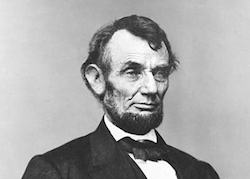 |
Abraham Lincoln led the United States through its greatest internal crisis, the Civil War, preserving the Union while transforming the nation by ending slavery. His leadership was marked by determination, empathy, and a commitment to principle, even during the most divisive and difficult times. |
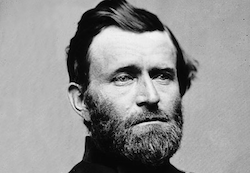 |
Ulysses S. Grant was the leading Union general during the Civil War, known for his aggressive strategy and determination to defeat the Confederacy. His leadership in battles like Vicksburg and the Overland Campaign led to the surrender of Robert E. Lee and the Union’s ultimate victory. |
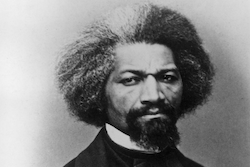 |
Frederick Douglass was a former slave who became one of the most powerful voices for abolition and equality in American history. Through his speeches, writings, and activism, he inspired generations to fight for justice, education, and civil rights. |
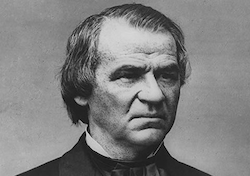 |
Andrew Johnson was the 17th president of the United States, taking office after Abraham Lincoln's assassination in 1865. He led the country through the early years of Reconstruction but clashed with Congress, becoming the first U.S. president to be impeached. |
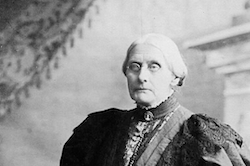 |
Susan B. Anthony was a leading activist in the women’s suffrage movement who fought tirelessly for equal rights. She played a key role in helping women gain the right to vote, and her efforts helped lead to the passage of the 19th Amendment in 1920. |
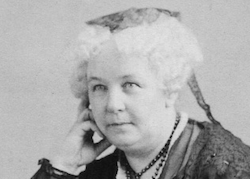 |
Elizabeth Cady Stanton was a pioneering women's rights activist who helped organize the Seneca Falls Convention in 1848 and co-authored the Declaration of Sentiments, demanding equal rights for women, including the right to vote. She worked closely with Susan B. Anthony and spent her life advocating for gender equality, social reform, and women's suffrage. |
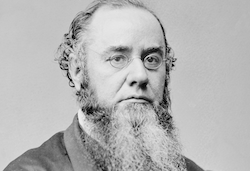 |
Edwin M. Stanton was the U.S. Secretary of War during most of the Civil War and played a vital role in organizing the Union Army’s efforts. Known for his strong leadership and firm stance, he later clashed with President Andrew Johnson, leading to the impeachment crisis of 1868. |
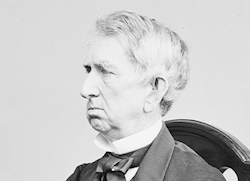 |
William H. Seward was the U.S. Secretary of State under Presidents Abraham Lincoln and Andrew Johnson, known for his leadership in foreign affairs during the Civil War. He is most famous for negotiating the purchase of Alaska from Russia in 1867, a deal initially mocked as "Seward's Folly" but later recognized as a strategic success. |
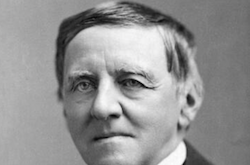 |
Samuel Tilden was a Democratic politician who ran for president in the disputed election of 1876, winning the popular vote but ultimately losing the presidency to Rutherford B. Hayes. He was known for his anti-corruption efforts as Governor of New York, particularly for helping to dismantle the infamous Tweed Ring in New York City. |
 |
Charles Sumner was a leading American abolitionist and U.S. senator known for his passionate opposition to slavery and advocacy for civil rights during the 19th century. He survived a brutal attack in the Senate chamber and later played a key role in shaping Reconstruction policies and supporting African American suffrage. |
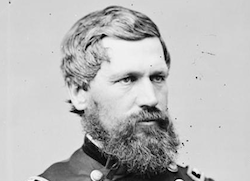 |
Oliver Otis Howard was a Union general during the Civil War who later became a key leader in supporting the rights of formerly enslaved people. He founded Howard University and served as commissioner of the Freedmen’s Bureau, working to provide education and civil rights for African Americans. |
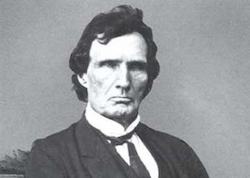 |
Thaddeus Stevens was a powerful U.S. Congressman and a leader of the Radical Republicans during and after the Civil War. He was a fierce opponent of slavery and a key architect of Reconstruction policies aimed at securing civil rights for newly freed African Americans. |
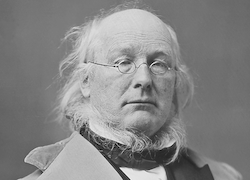 |
Horace Greeley was a prominent 19th-century American journalist and founder of the New York Tribune, where he advocated for social reforms like abolition, women's rights, and labor protections. He also ran unsuccessfully for president in 1872 as the candidate of both the Liberal Republican and Democratic parties. |
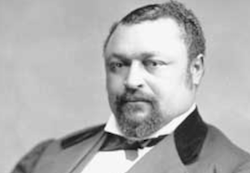 |
Blanche K. Bruce was the first African American to serve a full term in the U.S. Senate, representing Mississippi during the Reconstruction era. Born into slavery, he became a prominent advocate for civil rights and later served as the Register of the Treasury under President Garfield. |
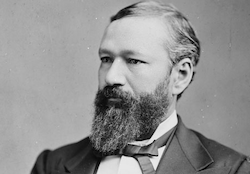 |
Pinckney B.S. Pinchback was the first African American to serve as governor of a U.S. state, holding the office of governor of Louisiana for a brief period in 1872 during Reconstruction. A Union Army officer and later a politician, Pinchback also served in the Louisiana state legislature and advocated for civil rights and education for Black Americans. |