Events of Reconstruction |
|
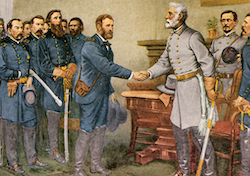 |
On April 9, 1865, Confederate General Robert E. Lee surrendered to Union General Ulysses S. Grant at Appomattox Court House, effectively ending the Civil War. Grant offered generous terms, allowing Confederate soldiers to return home with their horses and promised no punishment if they obeyed the law. |
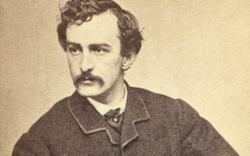 |
The Assassination of Abraham Lincoln President Abraham Lincoln was assassinated on April 14, 1865, by actor and Confederate sympathizer John Wilkes Booth while attending a play at Ford’s Theatre in Washington, D.C. Lincoln died the next morning, making him the first U.S. president to be assassinated, just days after the Civil War had effectively ended. |
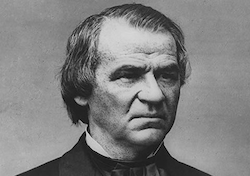 |
Andrew Johnson became president in 1865 after the assassination of Abraham Lincoln, making him the first U.S. vice president to succeed a president due to assassination. His unexpected rise to power came during the tense early days of Reconstruction, when the nation was still recovering from the Civil War. |
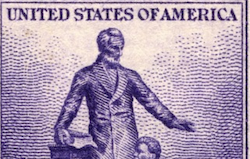 |
The 13th, 14th, and 15th Amendments The 13th, 14th, and 15th Amendments were added to the U.S. Constitution after the Civil War to expand civil rights. Together, they ended slavery (13th), granted citizenship and equal protection under the law (14th), and gave African American men the right to vote (15th). |
 |
The Civil Rights Act of 1866 was the first federal law to affirm that all people born in the United States—regardless of race or color—were citizens with equal legal rights. Passed over President Andrew Johnson’s veto, it aimed to protect the rights of newly freed slaves and laid the foundation for future civil rights legislation. |
 |
The Radical Republicans were a group of U.S. politicians during the Reconstruction era who believed the South should be strictly punished for the Civil War and that formerly enslaved people should be granted full citizenship and voting rights. They led efforts to pass laws and amendments securing civil rights for African Americans, including the Civil Rights Act of 1866 and the 14th and 15th Amendments. |
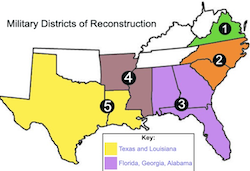 |
The Military Districts of the South After the Civil War, Congress created five military districts in the South as part of the Reconstruction Acts of 1867 to enforce federal laws and protect the rights of newly freed African Americans. Each district was overseen by a Union general who helped rebuild the region and ensure Southern states met the conditions for rejoining the Union. |
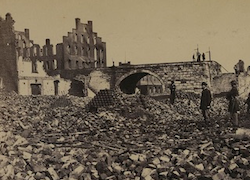 |
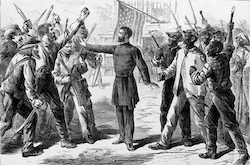
Rebuilding the Southern Economy After the Civil War, the South faced the difficult task of rebuilding its economy, which had relied heavily on slavery and agriculture. During Reconstruction, the federal government and private investors worked to restore infrastructure, encourage industry, and support freed slaves, but progress was slowed by resistance from Southern elites and ongoing racial violence. |
 |
Coming Back to the Union - Reconstruction Acts of 1867 The Reconstruction Acts of 1867 were laws passed by Congress to rebuild and reorganize the Southern states after the Civil War. These acts required the South to ratify the 14th Amendment, create new state constitutions that protected Black voting rights, and accept military rule until the changes were made. |
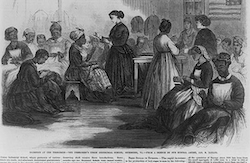 |
The Freedmen's Bureau was a U.S. government agency created in 1865 to help formerly enslaved African Americans transition to freedom after the Civil War. It provided food, housing, education, medical care, and legal support during the early years of Reconstruction. |
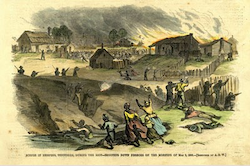 |
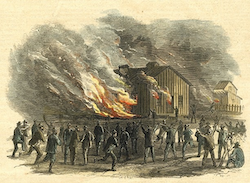
During Reconstruction, several violent riots broke out in the South as white supremacists reacted to the increased political and social rights of African Americans. These riots, including the Memphis Riot of 1866 and the Colfax Massacre of 1873, reflected deep racial tensions and aimed to suppress Black progress through intimidation and violence. |
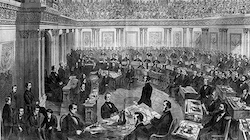 |
Andrew Johnson was impeached in 1868 for violating the Tenure of Office Act after he removed Secretary of War Edwin M. Stanton without Senate approval. Although the House voted to impeach him, the Senate fell one vote short of removing him from office, allowing him to finish his term. |
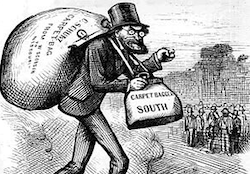 |
Scalawags were white Southerners who supported Reconstruction and worked with Northern Republicans to rebuild the South after the Civil War. Carpetbaggers were Northerners who moved South during Reconstruction, often to help with reform efforts or to seek political and economic opportunities. |
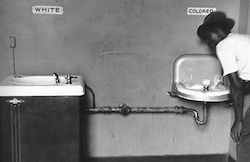 |
Jim Crow Laws were state and local laws enacted in the Southern United States after Reconstruction that enforced racial segregation and discrimination against African Americans. These laws created separate public facilities for black and white people and were upheld by the 1896 Supreme Court decision Plessy v. Ferguson, which allowed "separate but equal" treatment until the Civil Rights Movement began overturning them in the 1950s and 60s. |
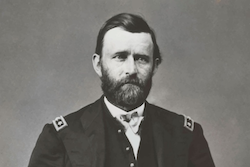 |
The United States presidential election of 1868 was a pivotal moment in American history, marking the nation's first major election following the Civil War. Republican Ulysses S. Grant, celebrated Union general, defeated Democrat Horatio Seymour, securing 214 electoral votes to Seymour's 80. This election was notable for the significant participation of newly enfranchised African American voters in the South, whose support was instrumental in Grant's victory. Grant's campaign, centered on the slogan "Let us have peace," underscored his commitment to Reconstruction and the protection of civil rights for freedmen. |
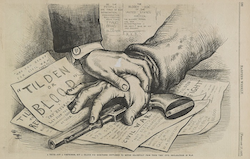 |
The Compromise of 1877 ended the disputed 1876 presidential election by awarding Rutherford B. Hayes the presidency in exchange for the withdrawal of federal troops from the South. This agreement effectively ended Reconstruction and led to the rise of Jim Crow laws and the loss of civil rights protections for African Americans. |