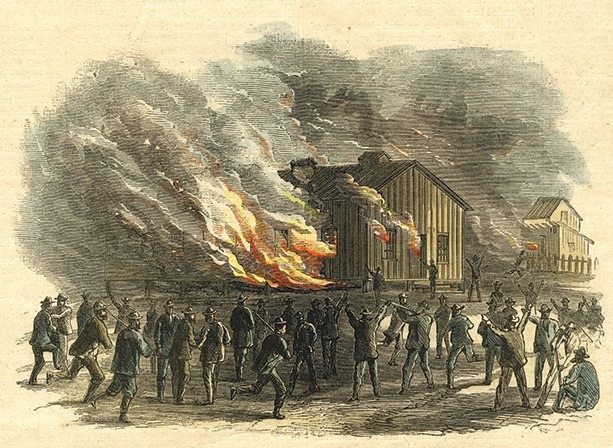
Riots in the South

Memphis Riot of 1866

Introduction

Reconstruction was a tumultuous period in American history, marked by significant social, political, and economic changes. In the South, these changes were met with resistance and violence, and a series of riots erupted in several states. These riots were a reflection of the deep divisions and tensions that existed in the region during Reconstruction.

The Memphis Riot of 1866

One of the most significant riots during Reconstruction was the Memphis Riot of 1866. The riot broke out after a group of white policemen attempted to arrest a group of black soldiers, leading to a violent confrontation between white residents and black soldiers. The riot resulted in the deaths of 46 people, most of whom were black, and hundreds of others were injured.

The New Orleans Riot of 1866

Another significant riot was the New Orleans Riot of 1866. The riot broke out after a group of black soldiers attending a Republican political meeting were attacked by a group of white residents. The riot resulted in the deaths of 35 people, mostly black, and hundreds were injured.

The Colfax Massacre of 1873

In 1873, the Colfax Massacre took place in Louisiana, where a group of white Democrats attacked a group of black Republicans who were trying to defend the local courthouse. The attack resulted in the deaths of more than 60 black men, and the perpetrators were later acquitted of their crimes.

The Wilmington Insurrection of 1898

The Wilmington Insurrection of 1898 was another significant riot that occurred during Reconstruction. The riot broke out after a group of white supremacists overthrew the local government, which was led by African Americans. The riot resulted in the deaths of an estimated 60-300 black residents and the displacement of thousands more.

Impact and Legacy

The riots during Reconstruction were a reflection of the deep-seated racial tensions and social upheaval that existed in the South during this period. They were also a response to the significant changes taking place in the region, as African Americans gained new rights and political power.

The violence and unrest during Reconstruction underscored the challenges of creating a more equal and just society. It also highlighted the continued struggle for civil rights and the need for legal protections against discrimination and violence.

Discussion Questions

  1. Why were some people in the South angry about the changes during Reconstruction?
  2. What were some common causes of the riots during this time?
  3. How did these violent events affect African Americans in the South?
  4. Why do you think many of the people who started these riots were not punished?

Introduction

Reconstruction was a time of big changes after the Civil War. The South faced new laws, new leaders, and new rights for African Americans. Some people in the South did not like these changes, and violence broke out in several places.

The Memphis Riot of 1866

In Memphis, Tennessee, a fight started when white police officers tried to arrest black soldiers. This turned into a large riot where 46 people were killed, most of them black, and many others were hurt.

The New Orleans Riot of 1866

Later that year, a similar riot happened in New Orleans. Black soldiers and Republicans were meeting when a group of white men attacked them. Around 35 people died and many were injured.

The Colfax Massacre of 1873

In Colfax, Louisiana, white Democrats attacked black Republicans who were protecting a courthouse. Over 60 black men were killed. The attackers were not punished.

The Wilmington Insurrection of 1898

In Wilmington, North Carolina, white supremacists took over the local government that was led by African Americans. Between 60 and 300 black people were killed, and many more were forced to leave.

Conclusion

These violent events showed that many people still resisted equal rights for black Americans. The riots were a sign of how hard it was to create fairness and peace after the Civil War.