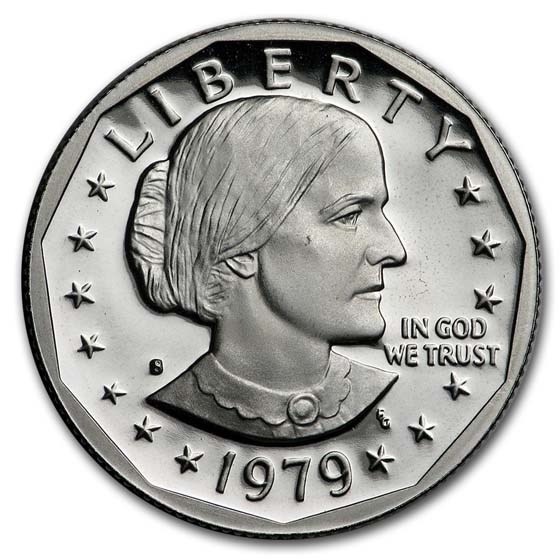
Susan B. Anthony - $1.00 Coin |
|
In 1978, President Jimmy Carter authorized the production of a one-dollar coin featuring suffragist Susan B. Anthony on the front. The authorization of the coin was considered a landmark moment, as it was the first United States coin featuring a woman. It featured an eagle in flight on the reverse side. The coin was designed to replace the much larger Eisenhower dollar. The decision to include Anthony on the coin was not without controversy. Coin collectors and purists believed that an image of Liberty should be featured, and others who agreed with the inclusion of Anthony disagreed about the age in which she should be depicted. Ultimately, the artist, chief engraver for the United States Mint, Frank Gasparro, decided to depict Anthony at age 50. The first Anthony coins were produced in 1979. In total, over a billion and a half coins were produced, partly because officials from the U.S. mint feared they’d be hoarded by collectors. Did People Use Them?While the American public seemed to enjoy the novelty at first, it quickly became apparent that the coin's time was very limited. People complained that it looked and felt too much like a quarter, and cash registers weren’t made with compartments to hold the coins. Worst of all, however, was the fact that vending machine companies refused to adopt the coin, meaning they couldn’t be used In such machines for soft drinks and snacks. By 1981, the United States Mint ceased production of the coins. The Susan B.Anthony one dollar coin was considered a great failure. Remaining coins were taken out of circulation and stored in vaults. ResurrectionIn 1984, however, the Anthony coins got a second chance at life when the Baltimore, Maryland subway and other mass transit systems started using the coins as tokens to purchase tickets, and also began dispensing them to subway patrons as change. In addition, the United States Postal Service started accepting the Anthony coins in stamp vending machines. Soon, the vaults that once held the coins were empty, but still, use of the dollar coin was very limited. In 1997, the United States Mint authorized production of the Sacagawea gold dollar coin. Because production could not meet the anticipated demand, the Susan B. Anthony dollar was temporarily brought back into circulation in 1999 during production of the gold dollar coins. At the end of that year, production of the Susan B. Anthony coins was halted forever, in favor of the Sacagawea dollar coin and other gold dollars.Discussion Questions
A Coin Honoring Susan B. AnthonyIn 1978, President Jimmy Carter approved a new one-dollar coin featuring women’s rights leader Susan B. Anthony. It was the first U.S. coin to show a real woman. The back of the coin showed an eagle in flight. Some people were upset about using Anthony’s image, and others debated what age she should be shown as. The artist chose to show her at age 50, and the first coins were made in 1979. Over 1.5 billion coins were made because officials worried collectors would grab them all. Did People Use the Coin?At first, people liked the idea, but problems came quickly. The coin looked and felt too much like a quarter, and most cash registers didn’t have space for it. Vending machines also didn’t take the coins, so they couldn’t be used easily. By 1981, the government stopped making them, and the unused coins were stored away in vaults. A Second ChanceIn 1984, some cities like Baltimore used the coins for subway tokens and change. The U.S. Postal Service also used them in stamp machines. This helped get the coins back into use for a while, but they were still not very popular. The End of the CoinIn 1997, the U.S. planned a new gold dollar coin featuring Sacagawea. While that coin was being made, the Anthony dollar was used again briefly in 1999. After that, it was retired for good. |