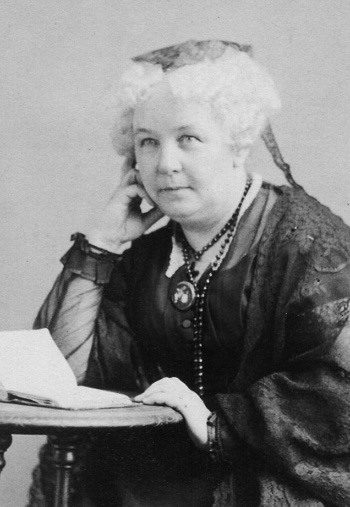
Elizabeth Cady Stanton |
|
Early LifeElizabeth Cady Stanton was an American suffragist, social activist, abolitionist, and leading figure of the early women's rights movement. Born on November 12, 1815, in Johnstown, New York, Stanton grew up in a family that valued education, social justice, and reform. Family BackgroundStanton's father, Daniel Cady, was a prominent lawyer and judge, who served in the New York State Assembly and Senate. Her mother, Margaret Livingston Cady, was a descendant of early Dutch settlers and a committed homemaker, who raised her children with a love of learning and a sense of social responsibility. Education and Early DiscriminationAs a young girl, Stanton attended Johnstown Academy, where she excelled in her studies and developed a lifelong passion for reading, writing, and debating. However, she soon realized that her opportunities for higher education and career advancement were limited by her gender. Marriage and AbolitionismStanton's early experiences of gender discrimination and inequality inspired her to become a women's rights advocate. In 1840, she married Henry B. Stanton, a prominent abolitionist, and became involved in the anti-slavery movement. Awareness of Broader EqualityStanton's involvement in the abolitionist cause deepened her awareness of the parallels between the struggles of African Americans and women for equality and freedom. She became convinced that women's rights were human rights and that women's liberation was essential for the advancement of society as a whole. Seneca Falls ConventionIn 1848, Stanton helped organize the Seneca Falls Convention, the first women's rights convention in the United States. The convention was attended by over 300 people, including many leading suffragists and abolitionists, such as Lucretia Mott, Frederick Douglass, and Susan B. Anthony. Declaration of SentimentsAt the convention, Stanton delivered her famous "Declaration of Sentiments," which called for women's right to vote, own property, receive education, and pursue their own careers. The document was modeled after the Declaration of Independence and declared that "all men and women are created equal." Leadership in the Women's Rights MovementStanton's bold and visionary leadership helped to catalyze the women's rights movement and inspire generations of activists. She co-founded the National Woman Suffrage Association with Susan B. Anthony in 1869 and served as its president until 1890. Writings and PhilosophyStanton also wrote extensively on women's rights and social justice issues. Her works include "The Woman's Bible," a critique of patriarchal interpretations of the Bible, and "Solitude of Self," a powerful defense of women's autonomy and dignity. Legacy and RecognitionDespite facing criticism and opposition from some quarters, Stanton remained steadfast in her commitment to women's rights and social justice. Her vision of a society that honored the full humanity and potential of all people continues to inspire and guide generations of activists and change-makers. HonorsIn recognition of her contributions to the women's rights movement, Stanton was inducted into the National Women's Hall of Fame in 1973, and her likeness appears on a commemorative coin issued by the U.S. Mint in 2020. Discussion Questions
Early LifeElizabeth Cady Stanton was an American leader in the fight for women's rights. She was born on November 12, 1815, in Johnstown, New York, in a family that valued education and fairness. Family and EducationHer father was a lawyer and judge, and her mother cared for their large family. Stanton did well in school and loved reading and debating, but she soon saw that girls had fewer chances than boys. Marriage and ActivismIn 1840, Stanton married Henry Stanton, an anti-slavery activist. She joined the abolitionist movement and saw that women and African Americans both faced unfair treatment. The Seneca Falls ConventionIn 1848, Stanton helped organize the Seneca Falls Convention, the first women's rights meeting in the U.S. She gave a speech called the "Declaration of Sentiments" asking for women's right to vote, own property, and get an education. Working for ChangeStanton helped start the National Woman Suffrage Association and worked closely with Susan B. Anthony. She gave many speeches and wrote books and articles to support women’s equality. Her LegacyEven though many people disagreed with her, Stanton kept fighting for women’s rights. She is remembered today as a brave and important leader, and she was honored with a U.S. coin in 2020. |