The Battle of Trenton

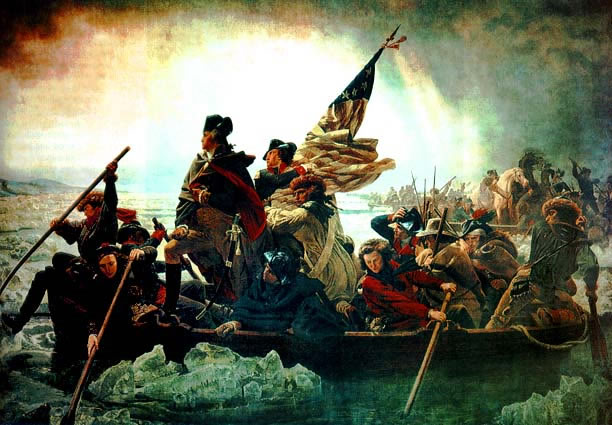
Washington Crossing the Delaware River.

Detailed Lesson Plan | Power Point Presentation

Silver Lining

For the most part, and with the exception of the publication of the Declaration of Independence, 1776 had been a brutal year for Patriot morale. The Continental Army, under the command of George Washington, had been more or less routed in and around New York City, suffering tremendous casualties. Morale was low and the ragtag Continental army was forced to retreat through New Jersey to the west side of the Delaware River into Pennsylvania. On the other side of the river, in Trenton, N.J., were three regiments of Hessian soldiers (German soldiers) numbering about 1,400.

Learn more about the Hessians

A Nine-mile Path of Blood

General Washington planned an attack on the Hessians from three directions to be executed on December 26, 1776, the day after Christmas. As the Continental Army prepared to cross the Delaware River on their way to Trenton, sleet and snow had begun to fall, delaying the crossing. With great effort and difficulty, the army eventually crossed the river in Durham boats, and the horses and artillery were ferried across. Two men fell overboard during the crossing, but both survived. Two other generals who were to assist Washington were delayed by the adverse weather. By 4:00 in the morning, however, the crossing was completed and the Continental Army began the nine mile march toward Trenton. During the march, Washington continually encouraged his troops, many of whom lacked shoes and were bleeding from their feet.

Surprising the Hessians

The first shots of the battle happened about a mile north of Trenton at a Hessian outpost, where the Hessians stationed there began a desperate retreat. Once in Trenton, Washington instructed the escape route to Princeton cut off. Washington's army was soon joined by armies under the command of Generals Nathaniel Greene and John Sullivan. Cannons and artillery were set up at the heads of King and Queen Streets, the two main streets running through the city, which did tremendous damage to the Hessian ranks. Hessian soldiers advancing up the streets were quickly repulsed. Elsewhere in the city, Hessian forces were being overrun. Eventually, the majority of Hessian forces would become surrounded by American forces in an orchard. They were forced to surrender. Others surrendered when their escape routes had been cut off.

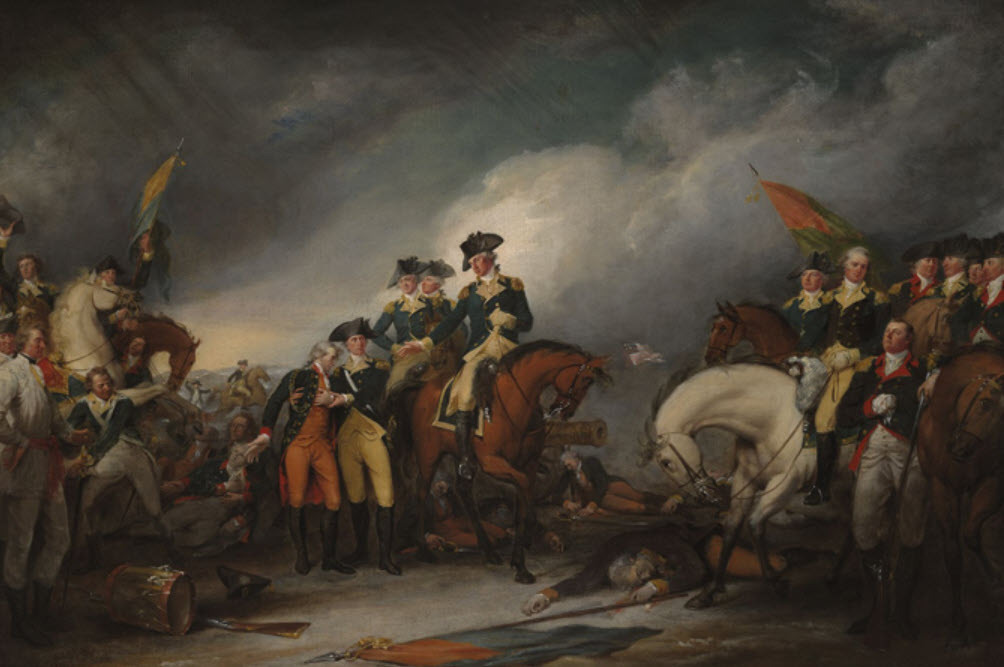
Capture of the Hessians on December 26, 1776 by John Trumbull

Capture of the Hessians at Trenton on December 26, 1776 by John Trumbull

A Key Victory for Patriot Morale

In the battle, only two American soldiers were killed and five were injured, though many more suffered from hypothermia and disease. The Hessians suffered 83 casualties, 22 of which were fatalities. 896 Hessians were captured, though several hundred did manage to escape. All four Hessian colonels, however, were killed. Although the battle was not important tactically, it inspired the American war effort and raised the morale of the army, which seemed to be threatened with dissolution.


In 1776, things were tough for the Patriots. Aside from the Declaration of Independence, the year had brought many losses. George Washington's Continental Army had been defeated around New York City and forced to retreat through New Jersey into Pennsylvania. Across the Delaware River in Trenton, New Jersey, about 1,400 Hessian (German) soldiers were stationed.

A Nine-Mile Path of Blood

Washington planned a surprise attack on the Hessians for December 26, 1776, the day after Christmas. As the army began to cross the Delaware River, a snowstorm delayed them. Despite the harsh conditions, they made it across using boats, bringing their horses and cannons too. Two men fell into the river but survived. Two other generals were delayed. By 4:00 a.m., the army was ready and began a nine-mile march to Trenton. Many soldiers had no shoes and left bloody footprints in the snow.

Surprising the Hessians

The first shots were fired at a Hessian outpost a mile outside Trenton. The Hessians tried to flee, but Washington had their escape route blocked. Generals Greene and Sullivan joined the fight, and American cannons were placed at the main streets, causing heavy damage. The Hessians were pushed back and eventually surrounded in an orchard, forcing them to surrender. Some tried to escape but were captured.

A Key Victory for Patriot Morale

The battle cost only two American lives and five injuries, though many soldiers suffered from cold and illness. The Hessians had 83 casualties, including 22 dead, and 896 were captured. All four of their colonels were killed. Though the victory wasn’t major tactically, it boosted the American army’s morale and gave new life to the Revolutionary cause.

Battle of Trenton Activities