The Populist Movement |
Populist Print |
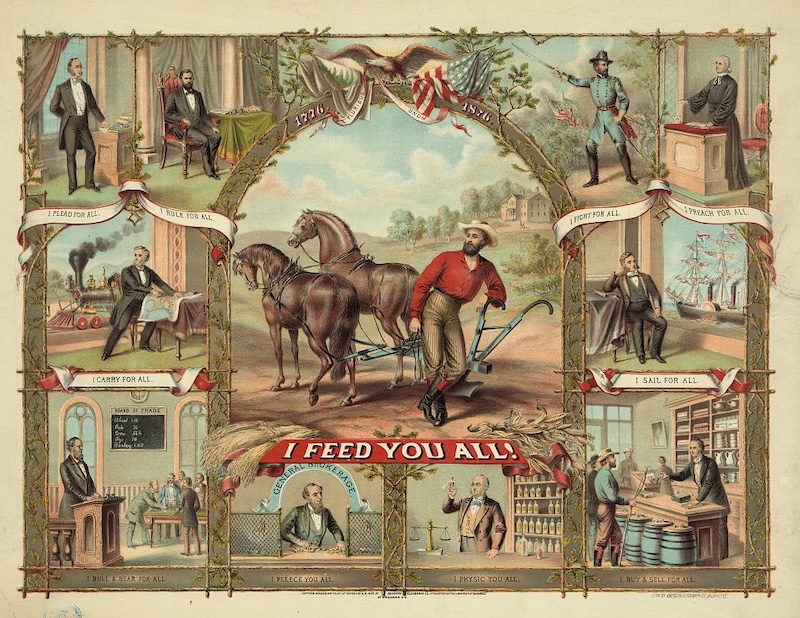
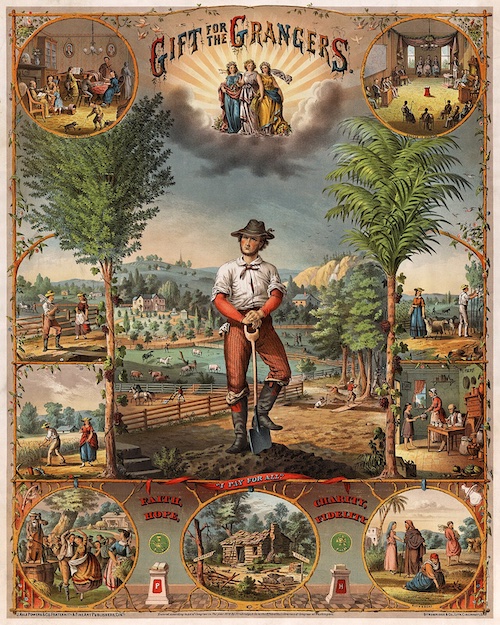
Struggles of FarmersDuring the Gilded Age, many farmers faced serious problems. Crop prices were low, railroads charged high shipping fees, and banks demanded large loan payments. Farmers felt that big businesses and the government were not helping them. They believed they needed to come together and fight for economic fairness. Rise of the PopulistsFarmers formed groups like the Grange and the Farmers’ Alliances. These groups eventually created a political party called the Populist Party or People’s Party, formed in 1892. The Populists wanted the government to control railroad prices, create fair taxes, and help farmers get low-interest loans. They also supported shorter workdays for factory workers.
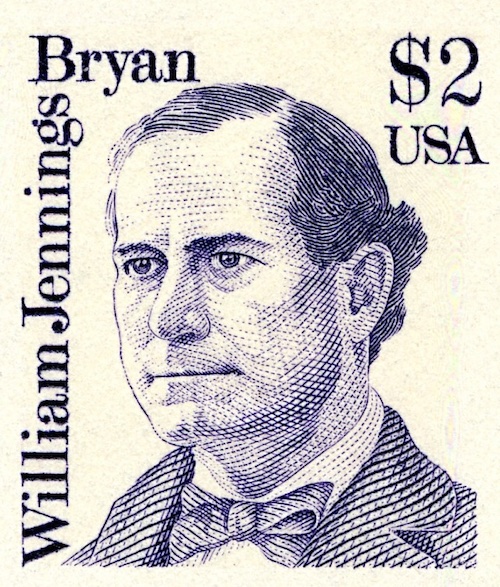
Gift for the Grangers (1873) - Public Domain William Jennings BryanOne of the most famous Populist leaders was William Jennings Bryan. He gave a powerful speech called the “Cross of Gold” speech in 1896, arguing that the government should help ordinary people, not just big business. He ran for president but lost to William McKinley. Still, his ideas greatly influenced American politics.
Why the Movement FadedThe Populist Party never fully succeeded in winning national elections. After 1896, many Populists joined the Democratic Party. However, their ideas lived on. Later reformers in the Progressive Era used many Populist ideas to regulate businesses and support workers’ rights. Lasting LegacyThe Populist Movement showed that everyday people—especially farmers and workers— could organize to demand change. Though the party faded, it helped inspire future political reforms and made Americans question the power of big business. Timeline
Glossary
Discussion Questions
Farmers in TroubleIn the late 1800s, many farmers had a hard time. Crop prices dropped, railroads charged high fees, and banks wanted their money back quickly. Farmers felt like big businesses were taking advantage of them. Farmers OrganizeFarmers formed groups like the Grange and the Farmers’ Alliances. In 1892, they created a political group called the Populist Party. They wanted fair railroad prices, better loans, and more help from the government. A Powerful VoiceOne of the leaders was William Jennings Bryan. He gave a famous speech called the “Cross of Gold” speech. He believed the government should help ordinary people, not just the rich. The Movement’s LegacyThe Populist Party did not win major elections, but their ideas were used later in the Progressive Era. They showed that workers and farmers could speak up and demand change. Timeline
Glossary
Discussion Questions
|