Events of the Gilded Age |
|
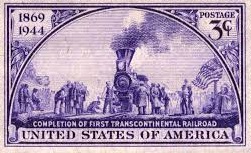 |
The Completion of the Transcontinental Railroad The transcontinental railroad connected the East and West coasts of the United States, making travel and trade much faster and easier. Its completion in 1869 helped grow cities and businesses—but also pushed Native Americans off their lands. |
 |
The Rise of Monopolies and Big Business During the Gilded Age, powerful business leaders like Rockefeller and Carnegie built huge companies that dominated entire industries. These monopolies made big profits, but they also reduced competition and worried many Americans who felt the economy was becoming unfair. |
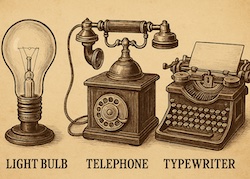 |
The Inventions of the Gilded Age During the Gilded Age, inventions like the telephone, light bulb, and typewriter transformed how people communicated, worked, and lived. These new technologies helped factories grow and made everyday life faster, easier, and more connected. |
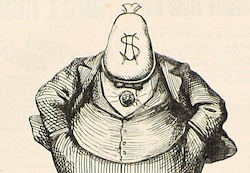 |
The Rise of Political Machines During the Gilded Age, political machines gained power in big cities by helping immigrants and the poor in exchange for votes. Over time, these machines became corrupt and used bribery and illegal methods to control elections and government decisions. |
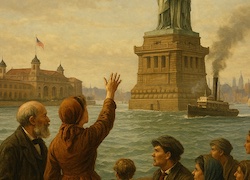 |
During the Gilded Age, millions of immigrants came to America seeking jobs, safety, and a better life. Many entered through Ellis Island, where they faced inspections and challenges before starting their new lives in crowded cities. |
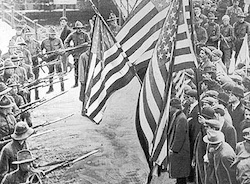 |
During the Gilded Age, labor unions formed to fight for better wages, safer working conditions, and shorter workdays. Workers went on strikes and organized protests to make their voices heard, even though they often faced strong opposition from businesses and the government. |
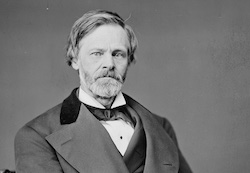 |
The Sherman Antitrust Act of 1890 was the first federal law created to stop monopolies and protect fair competition in business. Although it was weak at first, it later became an important tool for limiting the power of large corporations. |
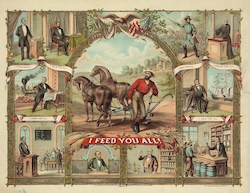 |
The Populist Movement grew during the Gilded Age when farmers and workers felt ignored by big business and the government, so they joined together to demand economic fairness. Even though the Populist Party eventually faded, its ideas helped shape later reforms that protected ordinary Americans and challenged powerful corporations. |
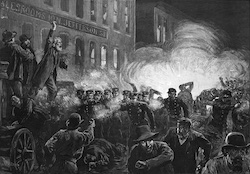 |
The Haymarket Square Riot happened in Chicago in 1886 when a peaceful labor protest turned violent after someone threw a bomb into the crowd. The event made many Americans fear labor unions, even though the bomber was never identified. |
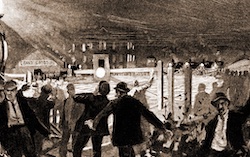 |
The Pullman Strike of 1894 began when railroad workers protested wage cuts and high rent in the company-owned town. It grew into a nationwide strike and ended only when the federal government sent troops to stop it. |