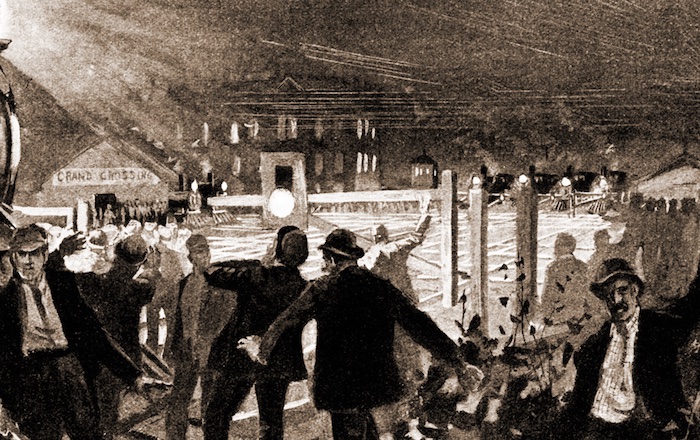
The Pullman Strike |
Pullman Strike - Public Domain |
Life in the Pullman Company TownIn the late 1800s, the Pullman Company built luxury railroad cars and created a company town near Chicago where workers lived. At first, the town seemed nice—it had clean streets, housing, and services. However, the company controlled everything, including rent and prices in stores. When the economy declined in 1893, wages were cut, but rent stayed high. Workers struggled to survive. The Workers Take ActionAngry about wage cuts and poor living conditions, workers went on strike in May 1894. They were supported by the American Railway Union (ARU), led by Eugene V. Debs. Soon the strike spread across the country as railway workers refused to operate Pullman train cars. Transportation slowed, and mail delivery was affected. The Government Gets InvolvedRailroad owners asked the federal government to step in, claiming the strike blocked the mail. President Grover Cleveland sent troops to break the strike. Violence followed, and several workers were killed. Eugene Debs was arrested for ignoring a court order to end the strike. Aftermath and ResultsThe strike failed, but it changed the labor movement. The government clearly sided with business, and many Americans began to question whether workers had a fair chance. After the strike, Labor Day became a national holiday to honor workers, and unions continued to grow stronger in the years that followed. Timeline
Glossary
Discussion Questions
Life in the Company TownThe Pullman Company built railroad cars and created a town for its workers. At first it looked like a nice place—but the company controlled rent, stores, and rules. When wages were cut, rent stayed the same, and workers could not afford food and housing. The Strike BeginsIn 1894, workers went on strike. A labor union called the American Railway Union, led by Eugene V. Debs, supported them. Soon, workers across the country refused to use Pullman cars. The Government Steps InThe strike slowed down trains and mail, so the government sent troops to stop it. There was violence, and some workers were killed. Debs was arrested. What It MeantEven though the strike failed, it helped change the labor movement. People saw how hard workers’ lives were, and Labor Day became a national holiday to honor them. Timeline
Glossary
Discussion Questions
|