Labor Unions |
|
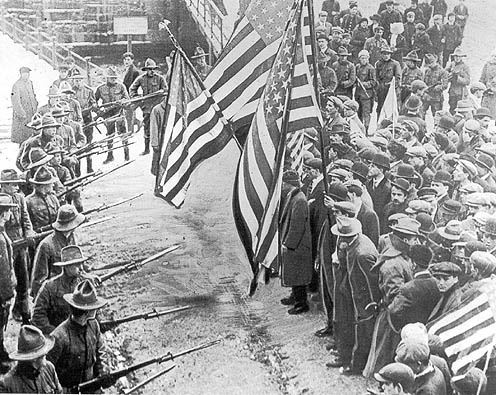
Changing Work in AmericaDuring the Gilded Age, factories, railroads, and mines expanded rapidly. Millions of people moved to cities to work, and many were immigrants looking for jobs. However, working conditions were often dangerous, pay was low, and workers spent 10–12 hours a day on the job. There were few safety rules, and injuries were common. Why Labor Unions FormedWorkers began to organize to protect themselves. They believed that if they joined together, they could demand better wages, shorter hours, and safer workplaces. These groups became known as labor unions. Instead of one worker speaking alone, an entire group could negotiate with employers. Major Labor UnionsOne of the first major unions was the Knights of Labor, founded in 1869. It accepted all workers—men, women, and even some children. They pushed for an eight-hour workday and an end to child labor. Later, the American Federation of Labor (AFL) was formed by Samuel Gompers in 1886. It focused on skilled workers and used strikes to pressure employers.
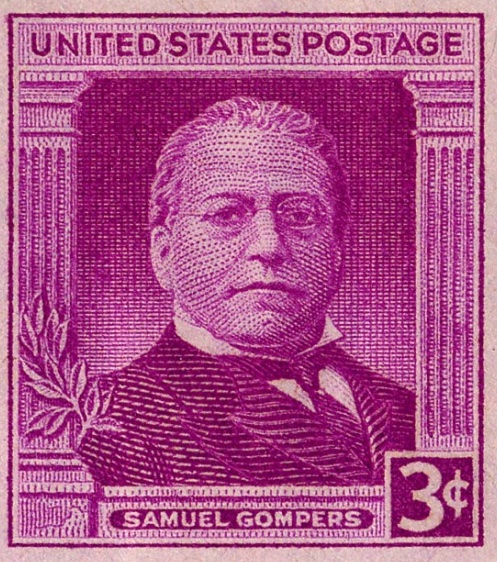
Samuel Gompers Postage Stamp Strikes and ConflictStrikes became a common way for workers to protest. However, many strikes turned violent. During the Haymarket Square Riot of 1886 in Chicago, a bomb exploded during a labor protest, killing police and workers. Newspapers blamed the unions, and membership briefly dropped. Still, unions continued fighting for workers’ rights.
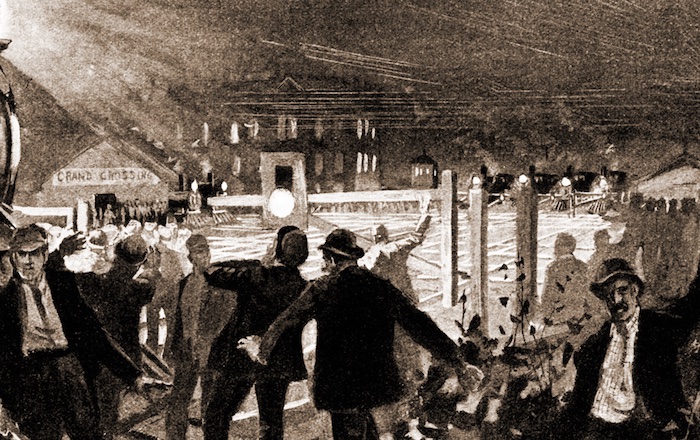
Haymarket Square Riot - Public Domain Image A Lasting ImpactBy the early 1900s, labor unions helped create new laws to protect workers. The idea of child labor laws, safer workplaces, and shorter workdays grew stronger. The Gilded Age was a time of struggle, but it helped workers gain a voice that shaped the future of labor in the United States. Timeline
Glossary
Discussion Questions
Hard Work, Low PayIn the late 1800s, factories and railroads grew quickly. Many people—especially immigrants—worked long hours for little money. Jobs were often dangerous, and there were no laws to protect workers. Workers Join TogetherTo fight for better treatment, workers formed labor unions. When they joined together, they had a stronger voice. They asked for shorter workdays, better pay, and safer factories. Important Labor UnionsThe Knights of Labor welcomed all workers. Later, another group called the American Federation of Labor (AFL) focused on skilled workers and led many strikes. Strikes and ProblemsWorkers sometimes went on strike to protest. However, some strikes became violent, like the Haymarket Square Riot in 1886. Even though it was difficult, unions kept fighting for workers’ rights. Long-Term ChangeOver time, unions helped create new laws that protected workers. They helped lead the way for safer workplaces and better hours. Timeline
Glossary
Discussion Questions
|