Big Business and the Rise of Monopolies in the Gilded Age |
Gilded Era Magnates |
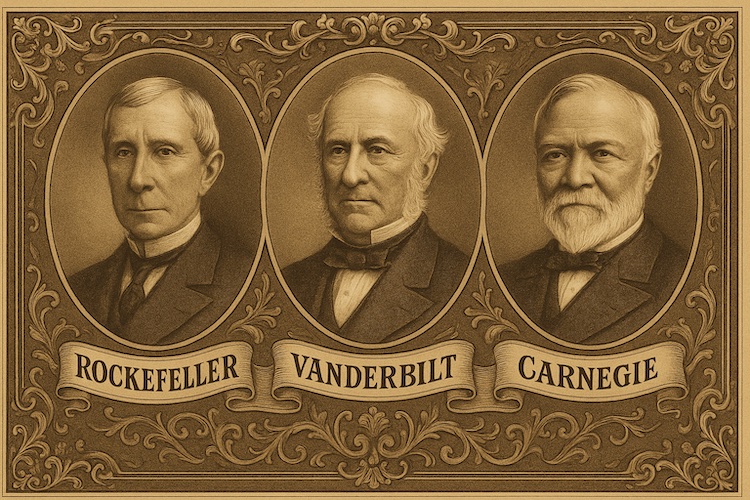
A Time of Rapid ChangeDuring the Gilded Age, from the 1870s to about 1900, the United States shifted from farming to industry. Factories, railroads, and new inventions changed daily life. Business leaders used new technology and cheap labor to grow wealthy very quickly. The Rise of Powerful LeadersThree major business leaders dominated their industries: John D. Rockefeller controlled oil, Andrew Carnegie led the steel industry, and Cornelius Vanderbilt focused on railroads. These men used smart—and sometimes harsh—methods to make profits. They were often called “captains of industry” for building the economy, but some people called them “robber barons” because they treated workers poorly and crushed competition. What Is a Monopoly?A monopoly happens when one company controls nearly all of an industry. With little or no competition, they can raise prices however they want. Rockefeller’s company, Standard Oil, controlled almost 90% of America’s oil. This worried many Americans because it gave one person too much power.
Life for WorkersWorkers often labored long hours in unsafe factories for low pay. Child labor was common, and many families lived in crowded tenements. Labor unions formed to fight for better wages and safer conditions. Strikes sometimes turned violent. Government Steps InAt first, the government did little to stop monopolies. But in 1890, the Sherman Antitrust Act was passed to limit the power of big business. It was not always enforced, but it marked the beginning of government action against monopolies. Timeline
Glossary
Discussion Questions
America Starts to ChangeIn the late 1800s, America moved from farming to factory work. Many people left the countryside to find jobs in growing cities. New machines and inventions helped businesses grow quickly. Powerful Business LeadersSome men became extremely rich and powerful. John D. Rockefeller controlled oil, Andrew Carnegie controlled steel, and Cornelius Vanderbilt focused on railroads. They helped build the country—but also wanted control over their industries. MonopoliesA monopoly happens when one company controls almost everything. With no competition, a company can raise prices and make huge profits. Rockefeller’s Standard Oil had a monopoly on oil, and many people thought this was unfair. Workers StruggleWorkers had long hours, low pay, and unsafe conditions. Children also worked in factories. Some workers formed labor unions to fight for safer jobs and better wages. The Government RespondsIn 1890, the Sherman Antitrust Act was passed to help stop monopolies. It was the first major law to control big business in America. Timeline
Glossary
Discussion Questions
|