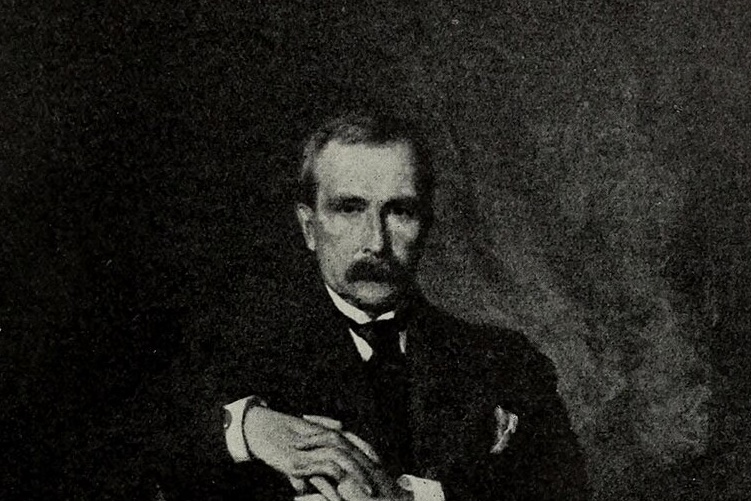
John D. Rockefeller |
Public Domain |
Early Life and AmbitionJohn D. Rockefeller was born on July 8, 1839, in Richford, New York. His family was often on the move, and money was not always steady. As a boy, Rockefeller loved numbers and kept careful records of his small earnings. He once said, “I would rather earn 1 percent from 100 men’s efforts than 100 percent of my own.” This showed his early interest in business, teamwork, and using organization to gain wealth. Building Standard OilAs a young man, Rockefeller worked as a clerk and then started his own business. In the 1860s, he entered the oil industry, which was new and chaotic. In 1870, he formed the Standard Oil Company. Rockefeller believed in efficiency and low costs. He used new methods to refine oil and made deals with railroads to ship his products cheaply. Over time, he bought out many competitors or forced them to join him. Standard Oil grew so large that it controlled almost all oil refining in the United States.
Monopoly and CriticismRockefeller’s success made him one of the richest men in history, but it also brought criticism. Many people felt Standard Oil was a monopoly that crushed competition and hurt smaller businesses. Journalists, including famous muckraker Ida Tarbell, wrote articles exposing Standard Oil’s harsh tactics. In 1911, the U.S. Supreme Court ruled that Standard Oil violated antitrust laws and ordered it to be broken into smaller companies.
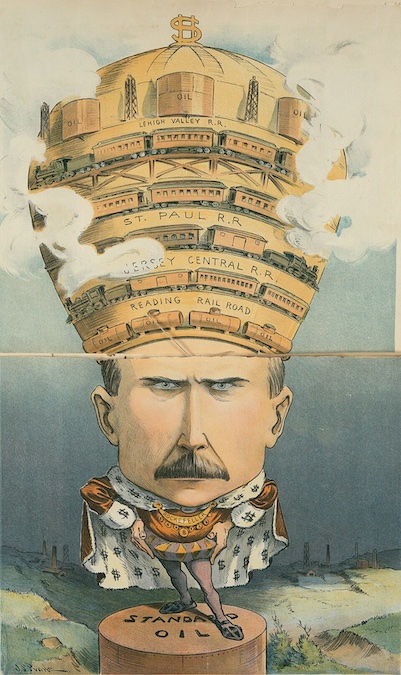
John D. Rockefeller Portrayed as an "Industrial Emperor" - Public Domain Philanthropy and LegacyLater in life, Rockefeller focused on giving away much of his fortune. He supported education, medicine, and scientific research. He helped create the University of Chicago and the Rockefeller Foundation. His donations improved public health around the world, fighting diseases like hookworm and yellow fever. Today, people still debate whether he was a “robber baron” who harmed competition or a “captain of industry” who helped build modern America. In truth, his legacy includes both aggressive business practices and powerful acts of generosity. Famous Quote“The secret of success is to do the common things uncommonly well.” Timeline
Glossary
Discussion Questions
From Small Town Boy to Business LeaderJohn D. Rockefeller was born in 1839 in a small town in New York. His family moved often, and money was sometimes tight. As a child, he liked to keep careful records of every penny he earned and spent. This habit helped him become very organized and serious about business. Starting Standard OilAs a young man, Rockefeller worked in an office and then started his own company. In the 1860s, he went into the oil business, which was very new at the time. In 1870, he created the Standard Oil Company. He tried to make oil cheaper and more reliable by building efficient refineries and making deals with railroads. Over time, Standard Oil grew so large that it controlled most of the oil in the United States. Power, Criticism, and Giving BackMany people thought Rockefeller’s company was too powerful. They called Standard Oil a monopoly because it had almost no competition. The government eventually forced Standard Oil to break into smaller companies. After he retired, Rockefeller spent much of his money helping others. He gave to schools, hospitals, and science projects. His gifts helped create the University of Chicago and the Rockefeller Foundation. Famous Quote“I always tried to turn every disaster into an opportunity.” Timeline
Glossary
Discussion Questions
|