William Paterson |
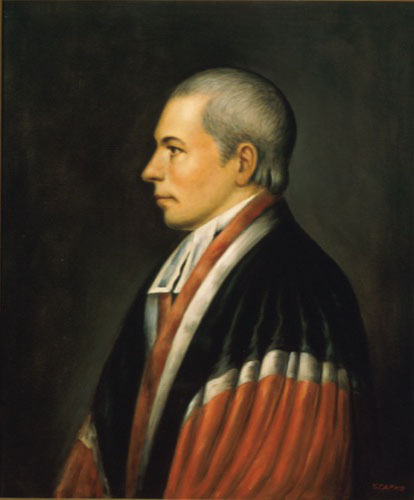 |
Early Life and EducationWilliam Paterson was born on December 24, 1745, in County Antrim, Ireland. He immigrated to the American colonies with his family as a child, settling in New Jersey. Paterson attended the College of New Jersey (now Princeton University), graduating in 1763. He studied law and was admitted to the bar in 1768, quickly establishing a successful legal career. Support for IndependencePaterson strongly supported the American patriot cause. He became a delegate to the Provincial Congress of New Jersey and helped draft the state's first constitution in 1776. That same year, he was appointed New Jersey’s first attorney general, serving until 1783. In this role, he gained a reputation for fairness and legal expertise. Role in the Constitutional ConventionPaterson played an important part in the Constitutional Convention of 1787. Concerned about the power of larger states, he introduced the New Jersey Plan, which proposed equal representation for all states in a single-chamber legislature. While the plan was not fully adopted, it influenced the final structure of Congress, particularly the U.S. Senate. Political and Judicial CareerAfter the Constitution was ratified, Paterson became one of New Jersey’s first U.S. Senators, serving from 1789 to 1790. He resigned to become the governor of New Jersey, a position he held until 1793. As governor, he worked on legal reforms and state improvements. In 1793, President George Washington appointed him as an Associate Justice of the U.S. Supreme Court, where he served until his death in 1806. His work on the Court helped shape early federal legal principles. LegacyWilliam Paterson died on September 9, 1806, in Albany, New York. Though not as widely known as some of his fellow Founders, he played a crucial role in the creation of the United States government. His contributions to the Constitution and the judiciary left a lasting impact. The city of Paterson, New Jersey, was named in his honor. Early Life and EducationWilliam Paterson was born on December 24, 1745, in Ireland. His family moved to New Jersey when he was young. He studied at the College of New Jersey (now Princeton University) and became a lawyer in 1768. Support for IndependencePaterson supported American independence from Britain. He helped write New Jersey’s first state constitution in 1776 and became the state’s first attorney general. He was known for being fair and skilled in law. Constitutional ConventionIn 1787, Paterson joined the Constitutional Convention. He introduced the New Jersey Plan, which said all states should have equal power in government. Parts of his idea were used in the final U.S. Constitution, especially the design of the Senate. Government and Court WorkPaterson was one of New Jersey’s first U.S. Senators but left in 1790 to become governor. As governor, he improved laws and public services. In 1793, President George Washington made him a U.S. Supreme Court justice. He stayed on the Court until he died in 1806. LegacyWilliam Paterson died on September 9, 1806. He helped shape the U.S. government and legal system. The city of Paterson, New Jersey, is named after him. |