Piscataway Nation |
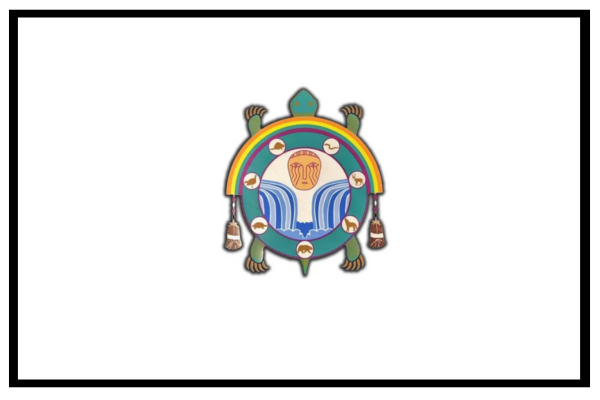
Piscataway Nation Flag |
Origin of the NameThe name Piscataway comes from an Algonquian word meaning “where the waters blend” or “great deer river.” This refers to the confluence of rivers and estuaries in their homeland along the Potomac River. The tribe is also known historically as the Conoy.
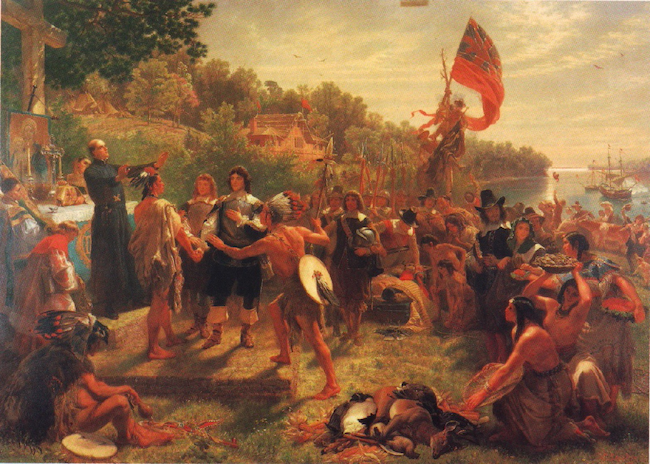
The Founding of Maryland - Settlers greeted by the Piscataway RangeThe Piscataway lived primarily in what is now southern Maryland along the western shore of the Chesapeake Bay and the lower Potomac River. Their territory included fertile river valleys, tidal marshes, and coastal plains, which provided abundant resources.
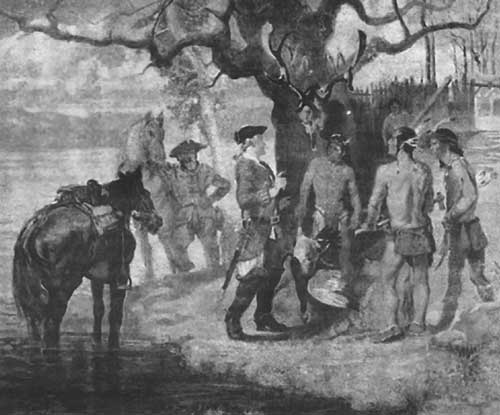
Early encounter with Piscataway People - Loudoun County, Virginia - 1699 DietThe Piscataway diet was diverse, reflecting the rich ecosystems of the Chesapeake region. They grew the “Three Sisters” — corn, beans, and squash — in addition to sunflowers. They hunted deer, wild turkey, and small game and fished for sturgeon, shad, and other fish. Shellfish such as oysters and clams were also important in their diet. Home TypeThe Piscataway lived in wigiwams (also called wigwams), which were dome-shaped structures made from saplings, bark, and reeds. These homes were efficient for the climate and could be easily repaired or moved if needed. CultureThe Piscataway were part of the larger Algonquian-speaking peoples of the Chesapeake. They organized themselves under a paramount chief, known as the Tayac, who governed a confederacy of related villages. Their society was hierarchical, with nobility, commoners, and servants. Spiritual life centered on harmony with nature, and shamans performed rituals for healing and agriculture. Myths & Beliefs: Piscataway oral traditions included stories about the creation of the world and the role of natural spirits in daily life. Seasonal festivals celebrated planting and harvest times. A Piscataway Creation Myth: One traditional Piscataway myth tells how the world began as an endless expanse of water. The Great Spirit created a giant turtle to rise from the depths, and on its back land slowly formed. Birds carried soil and plants to the turtle’s shell, creating forests and rivers. Animals came next, followed by humans, who were taught to live in harmony with nature. This story explains why the turtle is honored in Piscataway culture as a symbol of life and stability. It also reflects their deep belief in balance between people, animals, and the earth. Customs:
Crafts & Trade: They were skilled in pottery, basketry, and beadwork, often using shells and copper. They traded with neighboring tribes and later with European settlers, exchanging food, furs, and crafts. Use of Shells and Copper: The Piscataway valued shells and copper for both practical and ceremonial purposes. They crafted beads and ornaments from shells collected along the Chesapeake Bay, using them in jewelry, clothing decoration, and as trade currency. Copper, often obtained through trade with inland tribes or Europeans, was shaped into pendants, beads, and ceremonial items. These materials were symbols of wealth, status, and spiritual power, often worn by leaders and used in important rituals and gift exchanges. History Timeline
Discussion Questions
Glossary
Four Interesting Facts
Origin of the NameThe name Piscataway comes from an Algonquian word meaning “where the waters blend” or “great deer river.” This refers to the confluence of rivers and estuaries in their homeland along the Potomac River. The tribe is also known historically as the Conoy. RangeThe Piscataway lived primarily in what is now southern Maryland along the western shore of the Chesapeake Bay and the lower Potomac River. Their territory included fertile river valleys, tidal marshes, and coastal plains, which provided abundant resources. DietThe Piscataway diet was diverse, reflecting the rich ecosystems of the Chesapeake region. They grew the “Three Sisters” — corn, beans, and squash — in addition to sunflowers. They hunted deer, wild turkey, and small game and fished for sturgeon, shad, and other fish. Shellfish such as oysters and clams were also important in their diet. Home TypeThe Piscataway lived in wigiwams (also called wigwams), which were dome-shaped structures made from saplings, bark, and reeds. These homes were efficient for the climate and could be easily repaired or moved if needed. CultureThe Piscataway were part of the larger Algonquian-speaking peoples of the Chesapeake. They organized themselves under a paramount chief, known as the Tayac, who governed a confederacy of related villages. Their society was hierarchical, with nobility, commoners, and servants. Spiritual life centered on harmony with nature, and shamans performed rituals for healing and agriculture. Myths & Beliefs: Piscataway oral traditions included stories about the creation of the world and the role of natural spirits in daily life. Seasonal festivals celebrated planting and harvest times. Crafts & Trade: They were skilled in pottery, basketry, and beadwork, often using shells and copper. They traded with neighboring tribes and later with European settlers, exchanging food, furs, and crafts. WarfareThe Piscataway occasionally fought rival tribes such as the Susquehannock over hunting grounds and trade routes. Warfare involved bows, arrows, and wooden clubs. After European contact, firearms altered traditional warfare, often placing the Piscataway at a disadvantage. |