 |
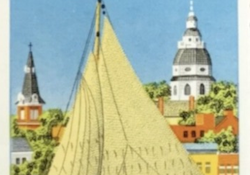
The History of Maryland
Maryland was founded in 1632 as a proprietary colony by Lord Baltimore as a refuge for English Catholics facing persecution. It played a key role in early American history, joining the original thirteen colonies and later ratifying the U.S. Constitution in 1788. |
|
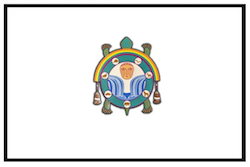 |
Piscataway Nation
The Piscataway Indians were an Algonquian-speaking tribe who lived along the Potomac River and Chesapeake Bay in what is now Maryland. They were skilled farmers, hunters, and fishers, and their confederacy played an important role in the region before and during early European colonization. |
|
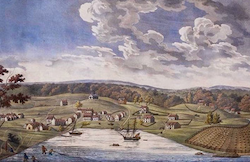 |
Maryland Colony
The Maryland Colony was founded in 1634 by Lord Baltimore as a refuge for English Catholics facing persecution. It became known for its religious tolerance and its role in passing the Maryland Toleration Act, one of the first laws protecting religious freedom in the colonies. |
|
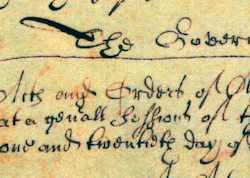 |
Maryland Toleration Act
The Maryland Toleration Act of 1649 was a law that granted religious freedom to all Christians in the colony of Maryland. It was one of the first laws in America to protect the right to practice different forms of Christianity. |
|
 |
Establishment of the Mason-Dixon Line - The War for Delaware
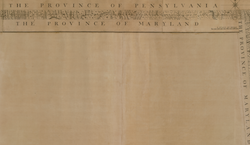
The Mason-Dixon Line was established in the 1760s by surveyors Charles Mason and Jeremiah Dixon to settle a boundary dispute between Maryland and Pennsylvania. Over time, it became an important symbolic divider between the Northern and Southern states. |
|
 |
The Maryland Economy
|
|
 |
Revolutionary War
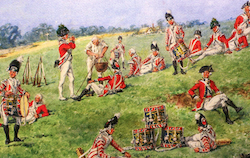
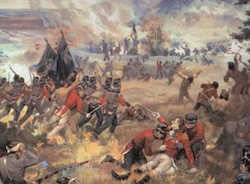
The American Revolutionary War (1775–1783) was a conflict between the thirteen American colonies and Great Britain, resulting in the colonies gaining independence. It began with growing tensions over British taxation and governance and ended with the Treaty of Paris, which recognized the United States as a sovereign nation. |
|
 |
The War of 1812
The War of 1812 was fought between the United States and Great Britain from 1812 to 1815 over issues like trade restrictions and British support of Native American attacks. It ended with the Treaty of Ghent, restoring peace but without changing territorial boundaries. |
|
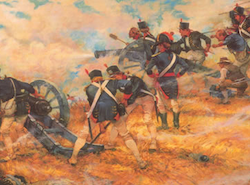 |
Battle of Bladensburg The Battle of Bladensburg took place on August 24, 1814, and ended in a quick British victory over poorly organized American forces defending Washington, D.C. The defeat allowed British troops to march into the capital and burn key government buildings. |
|
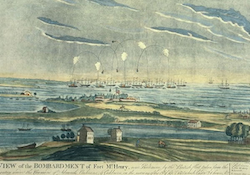 |
Siege of Baltimore - September 12-14, 1814
The Siege of Baltimore in September 1814 was a key battle in the War of 1812, where American forces successfully defended Fort McHenry from a 27-hour British naval bombardment. The defense inspired Francis Scott Key to write “The Star-Spangled Banner,” which later became the national anthem. |
|
 |
Secession of the Southern States
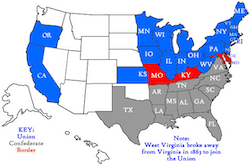
The secession of Southern states in 1860 and 1861, initiated by South Carolina, was a direct response to the election of Abraham Lincoln, whose anti-slavery stance threatened the institution central to the Southern economy and way of life. This collective withdrawal from the Union led to the formation of the Confederate States of America, setting the stage for the outbreak of the Civil War. |
|
 |
The Border States
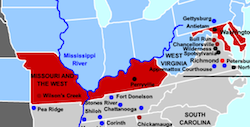
The Border States—Delaware, Maryland, Kentucky, and Missouri—were crucial to the Civil War because they provided vital resources, strategic locations, and large populations with divided loyalties. Their decision to remain in the Union helped prevent the Confederacy from gaining a significant military and political advantage. |
|
 |
Civil War
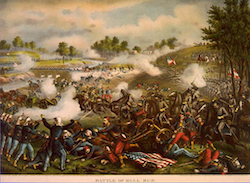
The American Civil War (1861–1865) was fought between the Northern states (Union) and the Southern states that seceded to form the Confederacy, primarily over the issues of slavery and states’ rights. It resulted in the preservation of the Union and the abolition of slavery, but at the cost of over 600,000 lives. |
|
 |
Battle of Antietam
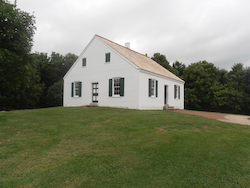
The Battle of Antietam was the bloodiest one-day battle in American history. It represented Lee's first failed foray into the Northern states. Although it is considered a tactical draw, the Confederacy failed in its efforts to bring the war to the North and to achieve foreign recognition. It also resulted in Lincoln issuing the Emancipation Proclamation. |
|
 |
Reconstruction
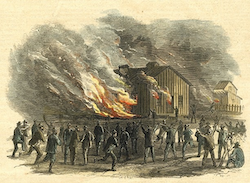
Reconstruction after the Civil War (1865–1877) aimed to rebuild the South and integrate formerly enslaved people into American society with new rights, including citizenship and voting. In South Carolina, this period saw significant political participation by African Americans but also violent resistance and the rise of groups like the Ku Klux Klan, which ultimately undermined many of these gains. |
|