Grover Cleveland |
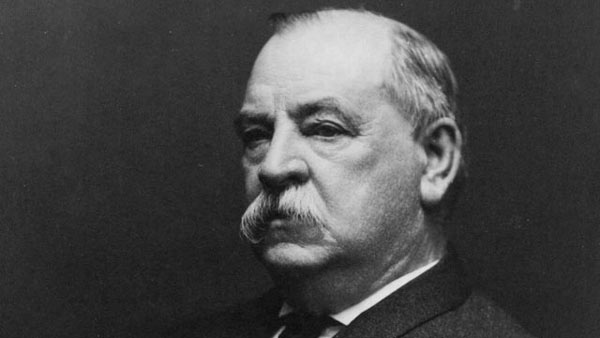 |
Early LifeGrover Cleveland was born on March 18, 1837, in Caldwell, New Jersey. His family moved to New York when he was young, but he could not attend college because of his father's death. Nevertheless, he studied hard, and in 1859 he was admitted to the New York Bar Association. First PresidencyGrover's political career quickly blossomed in Buffalo, New York. In 1863, he became assistant district attorney; in 1871, he became sheriff; in 1881, he became mayor; and in 1882, he became governor of New York. In 1884, he defeated Republican James Blaine in the presidential race. In 1885, he entered office. During his first term as president, Grover enlarged the civil service and vetoed pension raids on the Treasury. In addition, the Statue of Liberty was dedicated and the American Federation of Labor was formed. Despite his popularity, Grover Cleveland was defeated by Benjamin Harrison in his bid for reelection in 1889. Second PresidencyIn 1892, Grover Cleveland defeated Benjamin Harrison in the popular election and became the first and only president to serve two non-consecutive terms as president (his two terms were separated by Benjamin Harrison's presidency). Unfortunately for Cleveland, he entered his second term in a difficult position. The country was experiencing a money crisis brought about by a lowered gold reserve and questionable spending. Cleveland was unsuccessful in his attempt to thwart an impending depression and refused to interfere in business matters or rising unemployment. In 1894, an unemployed worker named Jacob Coxey mobilized an army of jobless workers who walked from the Midwest to Washington DC demanding unemployment relief and legislation. Cleveland rejected Coxey's demands, and Coxey was arrested for trespassing. In 1896, the Democratic Party chose to nominate William Jennings Bryan as their presidential candidate rather than Grover Cleveland. Grover Cleveland died on June 24, 1908. He was honored on the United States $1,000 bill before it was taken out of circulation. Most Well-Known Quote"A public office is a public trust." – Grover Cleveland Discussion Questions
Glossary
Five Interesting Facts
Timeline of Grover Cleveland's Life
Early LifeGrover Cleveland was born on March 18, 1837, in Caldwell, New Jersey. His family moved to New York, but after his father's death, he could not attend college. He studied law and joined the New York Bar Association in 1859. First PresidencyCleveland’s career advanced in Buffalo, New York. He was assistant district attorney in 1863, sheriff in 1871, mayor in 1881, and governor in 1882. He became president in 1885 after defeating James Blaine. During his first term, he expanded civil service and stopped pension abuses. The Statue of Liberty was dedicated, and the American Federation of Labor was created. He lost reelection to Benjamin Harrison in 1889. Second PresidencyIn 1892, Cleveland returned to the presidency, the only president to serve non-consecutive terms. His second term faced a financial crisis and unemployment, but he refused government aid. In 1894, Coxey’s Army demanded jobs, but Cleveland rejected them. In 1896, his party chose William Jennings Bryan for president. Cleveland died on June 24, 1908, and was once featured on the $1,000 bill. |
| Grover Cleveland |
|