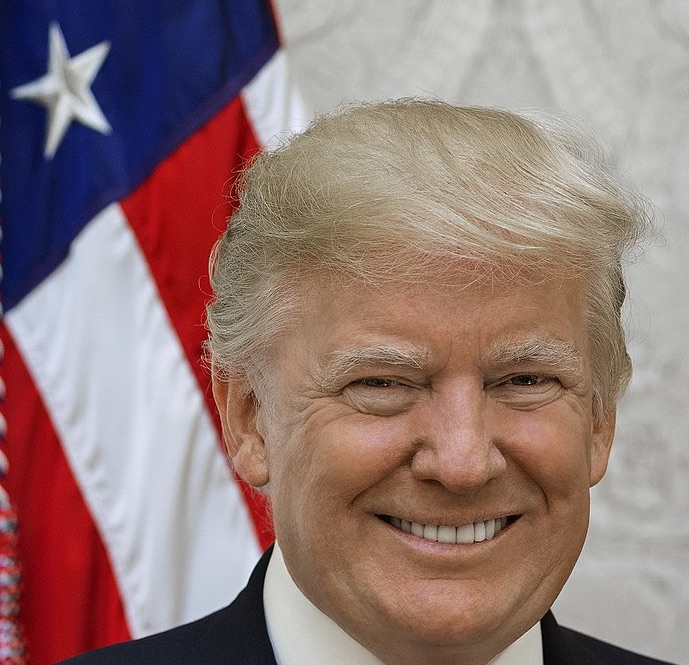
Donald J. Trump |
Early LifeDonald J. Trump was born in Queens, New York City, on June 14, 1946. His father, Fred Trump, was a prominent real estate developer specializing in middle-income housing in New York's outer boroughs. His mother, Mary Anne MacLeod Trump, was a Scottish immigrant and homemaker. Donald was the fourth of five children. He attended the New York Military Academy before enrolling at Fordham University and later transferring to the Wharton School at the University of Pennsylvania, where he graduated in 1968 with a degree in economics. After college, Trump joined his father's company, eventually taking control and renaming it the Trump Organization. Trump Organization ProjectsThe Trump Organization expanded under Donald Trump's leadership into a global brand. It developed and managed a wide range of properties, including luxury hotels, golf courses, resorts, and residential buildings. Its most notable holdings included properties in New York City, Las Vegas, Chicago, Scotland, and Dubai. Trump also licensed his name for branding purposes on various buildings and products worldwide. Trump in the MediaIn addition to real estate, Trump gained national fame through television. He co-authored several books on business and personal branding, most notably The Art of the Deal. He became a household name in the 2000s as the host of the NBC reality show The Apprentice, which further elevated his public persona as a successful businessman and media personality. Election of 2016In 2016, Donald Trump entered politics as a Republican and won the party's nomination after defeating a crowded field of candidates. He went on to win the presidency by defeating Democratic nominee and former Secretary of State Hillary Clinton in the Electoral College, despite losing the popular vote. His campaign slogan was “Make America Great Again.” Presidency (2017–2021)Donald Trump served as the 45th President of the United States from January 20, 2017, to January 20, 2021. His administration pursued major changes in economic, foreign, and immigration policy. His presidency also sparked widespread political polarization and public debate. Economic PolicyTrump's economic agenda emphasized tax cuts, deregulation, and a focus on domestic manufacturing. The Tax Cuts and Jobs Act of 2017 reduced corporate and individual tax rates. His administration touted job growth and a strong stock market before the COVID-19 pandemic in 2020 disrupted the economy. Critics argued that the tax cuts disproportionately benefited the wealthy and increased the national deficit. Foreign PolicyTrump promoted an “America First” foreign policy, withdrawing the U.S. from multinational agreements such as the Paris Climate Accord and the Iran nuclear deal. His administration renegotiated trade agreements, notably replacing NAFTA with the USMCA. He imposed tariffs on various goods, especially from China. His administration also brokered the Abraham Accords, normalizing relations between Israel and several Arab countries. Domestic IssuesOn immigration, Trump implemented strict policies, including a travel ban targeting several Muslim-majority countries and family separation at the U.S.–Mexico border under the “zero tolerance” policy. His efforts to repeal the Affordable Care Act were unsuccessful, though regulatory changes and judicial appointments influenced healthcare policy. His administration made over 200 federal judicial appointments, including three Supreme Court justices. ImpeachmentsTrump was impeached twice by the House of Representatives. The first, in 2019, charged him with abuse of power and obstruction of Congress related to Ukraine. He was acquitted by the Senate. The second, in 2021, followed the January 6 Capitol riot and charged him with incitement of insurrection. He was again acquitted by the Senate. COVID-19 ResponseThe COVID-19 pandemic dominated the final year of Trump’s presidency. His administration launched Operation Warp Speed to accelerate vaccine development, which contributed to the rapid rollout of vaccines in late 2020 and early 2021. However, critics cited inconsistent messaging, political interference in public health guidance, and delayed testing and response efforts. Second Term (2025–2029)After winning the 2024 election in a historic rematch against Joe Biden, Donald Trump was sworn in for a second, non-consecutive term on January 20, 2025, becoming the only U.S. president since Grover Cleveland to serve two non-consecutive terms. His second term focused on tightening immigration policies, implementing new tariffs, reducing federal bureaucracy, and expanding energy production. Trump also prioritized law enforcement support and border infrastructure. His administration faced domestic challenges, including political unrest and debates over education policy and state autonomy. Internationally, Trump pursued further trade realignment, skepticism toward global institutions, and continued emphasis on bilateral agreements. His leadership style remained confrontational, particularly in dealings with the media and political opponents, and public opinion remained sharply divided throughout his term. Discussion Questions
Glossary
Four Interesting Facts
Early LifeDonald J. Trump was born on June 14, 1946, in Queens, New York. His father was a real estate developer, and his mother was a homemaker. He had four siblings. Trump went to the New York Military Academy and later graduated from the Wharton School at the University of Pennsylvania with a degree in economics. After college, he joined his father’s business and eventually took over, renaming it the Trump Organization. Business and Media CareerTrump became well known for building hotels, golf courses, and tall apartment buildings. He put his name on many properties and also licensed it to others. In the 2000s, he became even more famous as the host of the TV show The Apprentice, where he gave business advice and hired winners. He also wrote books about business and success. 2016 Presidential ElectionIn 2016, Donald Trump ran for president as a Republican. He won the nomination and defeated Democratic candidate Hillary Clinton in the Electoral College. His campaign slogan was “Make America Great Again.” He became the 45th president of the United States and took office in January 2017. First Term as President (2017–2021)During his first term, Trump focused on cutting taxes, reducing government rules, and changing trade deals. He worked to build a wall at the U.S.–Mexico border and made strict immigration rules. He appointed many federal judges, including three Supreme Court justices. He was impeached twice by the House of Representatives but was not removed from office. The first impeachment was about Ukraine, and the second happened after a group of his supporters attacked the U.S. Capitol on January 6, 2021. He was acquitted by the Senate both times. In 2020, the COVID-19 pandemic hit the United States. Trump’s team helped develop vaccines quickly, but there were problems with testing and public health messaging. He lost the 2020 election to Joe Biden and left office in January 2021. Second Term as President (2025–2029)Trump ran for president again in 2024 and won, defeating Joe Biden in a rematch. He returned to office in January 2025, becoming the only president since Grover Cleveland to serve two non-consecutive terms. In his second term, Trump focused on stronger immigration laws, building more border barriers, and lowering government spending. He pushed for more American energy production and took a tougher approach to trade with other countries. He continued to speak directly to his supporters through speeches and social media. People had strong opinions about him—some supported him, while others strongly disagreed with his policies and style. |