 |
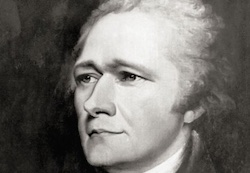
Alexander Hamilton
Alexander Hamilton was a Founding Father of the United States and the first Secretary of the Treasury. He helped establish the national bank and wrote many of the Federalist Papers supporting the U.S. Constitution. |
|
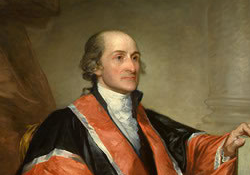 |
John Jay
John Jay was a Founding Father and the first Chief Justice of the United States Supreme Court. He also helped negotiate the Treaty of Paris and co-wrote the Federalist Papers. |
|
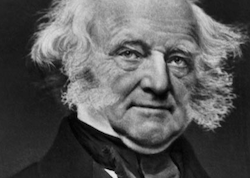 |
Martin Van Buren
Martin Van Buren was the 8th President of the United States and a key organizer of the Democratic Party. He previously served as Vice President and Secretary of State under Andrew Jackson. |
|
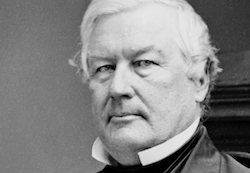 |
Millard Fillmore
Millard Fillmore was the 13th president of the United States, serving from 1850 to 1853 after the death of President Zachary Taylor. He supported the Compromise of 1850, which aimed to ease tensions between free and slave states but ultimately deepened divisions. |
|
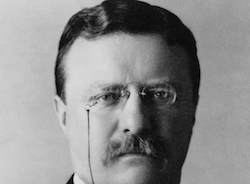 |
Theodore Roosevelt
Theodore Roosevelt was the 26th president of the United States, known for his progressive reforms and conservation efforts. He championed the creation of national parks and strengthened the country’s role as a global power.
|
|
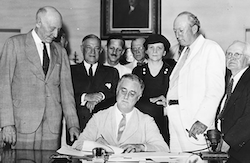 |
Franklin D. Roosevelt
Franklin D. Roosevelt was the 32nd president of the United States and the only one elected to four terms. He led the country through the Great Depression and most of World War II, creating programs like the New Deal to help Americans recover. |
|
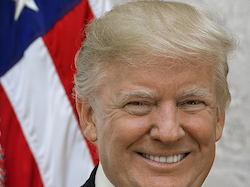 |
Donald J. Trump
Donald Trump is a businessman and television personality who served as the 45th president of the United States from 2017 to 2021. He is currently serving as the 47th president after winning re-election. |
|
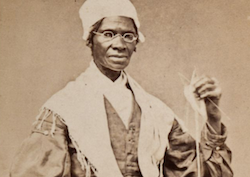 |
Sojourner Truth
Sojourner Truth was an African American abolitionist and women's rights activist who was born into slavery but escaped to freedom in 1826. She became famous for her powerful speeches, including her iconic "Ain’t I a Woman?" address, which challenged racial and gender inequality. |
|
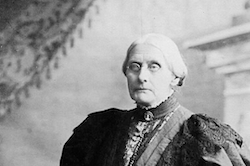 |
Susan B. Anthony
Susan B. Anthony was a leading activist in the women’s suffrage movement who fought tirelessly for equal rights. She played a key role in helping women gain the right to vote, and her efforts helped lead to the passage of the 19th Amendment in 1920. |
|
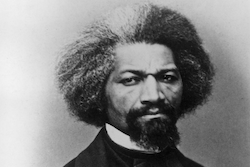 |
Frederick Douglass
Frederick Douglass was a former slave who became one of the most powerful voices for abolition and equality in American history. Through his speeches, writings, and activism, he inspired generations to fight for justice, education, and civil rights. |
|
 |
Harriet Tubman and the Underground Railroad
Harriet Tubman and the Underground Railroad helped expose the cruelty and injustice of slavery by actively resisting it and guiding enslaved people to freedom. Her actions, and those of others like her, increased tensions between the North and South, as Southern slaveholders saw the loss of their "property" as a direct threat—fueling the growing conflict that led to the Civil War. |
|
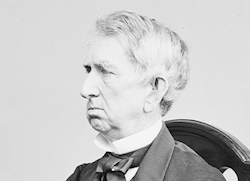 |
William H. Seward
William H. Seward was the U.S. Secretary of State under Presidents Abraham Lincoln and Andrew Johnson, known for his leadership in foreign affairs during the Civil War. He is most famous for negotiating the purchase of Alaska from Russia in 1867, a deal initially mocked as "Seward's Folly" but later recognized as a strategic success. |
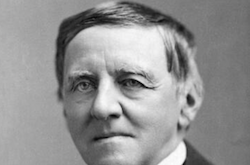 |
Samuel Tilden
Samuel Tilden was a Democratic politician who ran for president in the disputed election of 1876, winning the popular vote but ultimately losing the presidency to Rutherford B. Hayes. He was known for his anti-corruption efforts as Governor of New York, particularly for helping to dismantle the infamous Tweed Ring in New York City. |
|
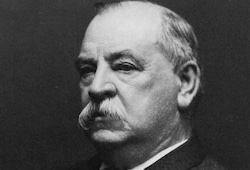 |
Grover Cleveland
Grover Cleveland was the 22nd and 24th President of the United States, making him the only president to serve two non-consecutive terms. Known for his honesty and fight against political corruption, he emphasized limited government and fiscal responsibility. |
|
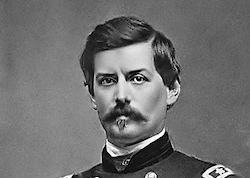 |
George McClellan
George B. McClellan was a Union general during the American Civil War known for organizing and training the Army of the Potomac into a strong fighting force. However, he was criticized for being overly cautious in battle and was eventually removed from command by President Lincoln for failing to aggressively pursue Confederate forces.
|
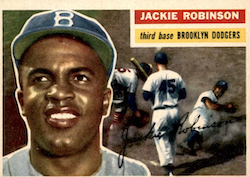 |
Jackie Robinson
Jackie Robinson was the first African American to play in Major League Baseball in the modern era, breaking the color barrier in 1947 when he joined the Brooklyn Dodgers. His courage, talent, and dignity helped pave the way for the civil rights movement and transformed American sports and society. |
|
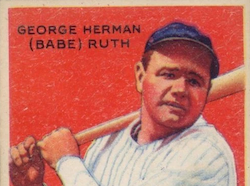 |
Babe Ruth
Babe Ruth was one of the greatest baseball players in history, known for his incredible hitting power and record-setting 714 career home runs. He transformed baseball into America's favorite pastime and became the sport's first true superstar.
Other Babe Ruth Pages: Ruth's Called Shot | Curse of the Bambino |
|
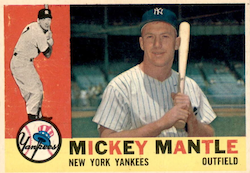 |
Mickey Mantle
Mickey Mantle was a legendary center fielder for the New York Yankees, known for his powerful hitting and ability to bat both left- and right-handed. Over his 18-year career, he hit 536 home runs, won three MVP awards, and remains one of the most celebrated players in baseball history. |
|