 |
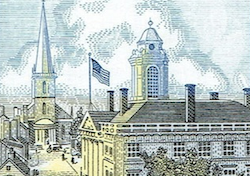
The History of New York
New York was originally settled by the Dutch in 1624 as New Amsterdam and later taken by the British in 1664, becoming an important colonial port. It played a major role in the American Revolution and went on to become a center of immigration, finance, and culture in the United States. |
|
 |
Iroquois Nation
The Iroquois, also known as the Haudenosaunee, are a group of Native American nations originally from the northeastern United States. They are known for forming a powerful confederacy, the Iroquois League, and for their advanced political system based on consensus and unity. |
|
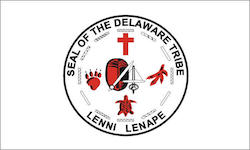 |
Lenni Lenape Nation
The Lenni Lenape, also known as the Delaware people, originally lived in the Northeastern United States, including present-day New Jersey, Pennsylvania, and New York. They were known for their farming, clan-based society, and early treaties with European settlers, including a famous agreement with William Penn. |
|
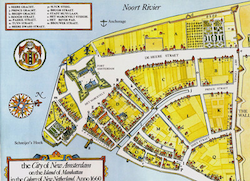 |
New York Colony
The New York Colony was originally settled by the Dutch as New Netherland but was taken over by the English in 1664 and renamed in honor of the Duke of York. It became a thriving trade and cultural center due to its strategic location and diverse population. |
|
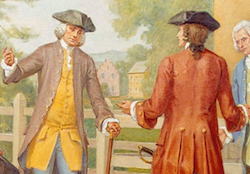 |
The Albany Congress
The Albany Congress was a meeting of representatives from seven American colonies held in 1754 in Albany, New York, to discuss defense against French threats and to strengthen alliances with Native American tribes. It also marked the first formal proposal to unite the colonies under a centralized government with Benjamin Franklin's Albany Plan of Union. |
|
 |
French and Indian War
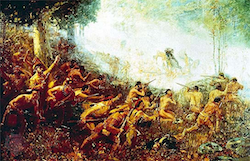
The French and Indian War, also known as the Seven Years War, began in the Spring in 1754. The dispute arose over the presence of British and French settlers in the Ohio River Valley (in and around present day Pittsburgh, Pennsylvania), but resulted in battles that were fought far from there. |
|
 |
Revolutionary War
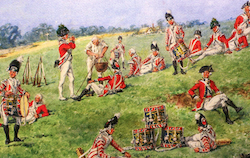
The American Revolutionary War (1775–1783) was a conflict between the thirteen American colonies and Great Britain, resulting in the colonies gaining independence. It began with growing tensions over British taxation and governance and ended with the Treaty of Paris, which recognized the United States as a sovereign nation. |
|
 |
Seizure of Fort Ticonderoga
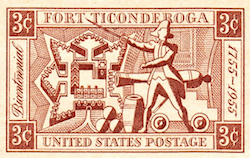
On May 10th, 1775, Allen, Arnold and 83 soldiers raided Fort Ticonderoga. The British soldiers, sleeping inside the fort, offered no resistance. No one was killed in the raid.
|
|
 |
Noble Train of Artillery
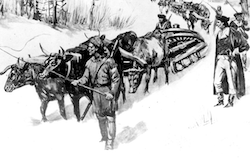
The Noble Train of Artillery was a daring mission led by Colonel Henry Knox in the winter of 1775–1776 to transport cannons from Fort Ticonderoga to Boston. The 300-mile journey through snow and ice helped force the British to evacuate Boston in March 1776. |
|
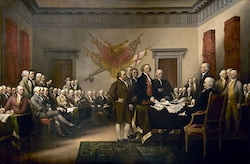 |
The Declaration of Independence
The Declaration of Independence is a historic document written in 1776 that explained why the American colonies chose to break away from British rule. It stated that all people have rights and that governments must have the consent of the governed to be legitimate.
|
|
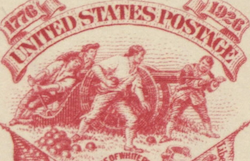 |
The Battles of New York (Harlem and Brooklyn Heights; White Plains)
The Battles of New York City in 1776 marked a major British victory during the Revolutionary War, forcing George Washington’s army into retreat and nearly ending the fight for independence. |
|
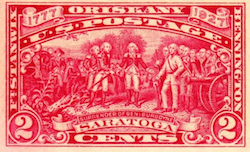 |
The Battle of Saratoga
On October 7, 1777, Patriots forces under Horatio Gates and Benedict Arnold defeated British forces in the most important Patriot victory in the war to date. Saratoga is often seen as the turning point in the Revolutionary War.
|
|
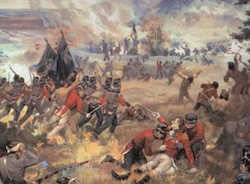 |
The War of 1812
The War of 1812 was fought between the United States and Great Britain from 1812 to 1815 over issues like trade restrictions and British support of Native American attacks. It ended with the Treaty of Ghent, restoring peace but without changing territorial boundaries. |
|
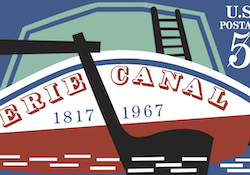 |
The Erie Canal
The Erie Canal, completed in 1825, connected the Great Lakes to the Atlantic Ocean by linking Lake Erie to the Hudson River and New York City. It drastically reduced shipping costs and helped boost trade, population growth, and the economy in New York and the surrounding Great Lakes region.
|
|
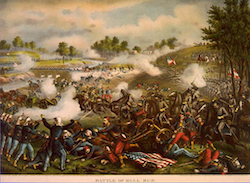 |
Civil War
The American Civil War (1861–1865) was fought between the Northern states (Union) and the Southern states that seceded to form the Confederacy, primarily over the issues of slavery and states’ rights. It resulted in the preservation of the Union and the abolition of slavery, but at the cost of over 600,000 lives. |
|
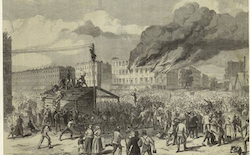 |
New York City Draft Riots
The New York Draft Riots of July 1863 were violent protests against the Civil War draft, sparked by anger over a law allowing wealthy men to pay $300 to avoid military service. The riots, fueled by class and racial tensions, resulted in widespread destruction and the deaths of dozens to possibly hundreds, until federal troops restored order. |
|
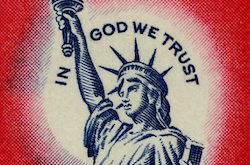 |
The Statue of Liberty
The Statue of Liberty was a gift from France to the United States in 1886, symbolizing freedom and democracy. Standing on Liberty Island in New York Harbor, it welcomes visitors with its iconic torch and crown. |
|