New York History |
 |
Early Native InhabitantsNew York's history begins long before European contact, with the Lenape and Iroquois tribes inhabiting the region for thousands of years. These Native American groups developed advanced societies with complex social, political, and trade systems across what is now New York State. European Exploration and Dutch ColonizationEuropean contact began in 1524 with Italian explorer Giovanni da Verrazzano, who sailed under the French flag and explored the coast of modern-day New York City. In 1609, Englishman Henry Hudson, sailing for the Dutch, explored the river that would bear his name. By 1624, the Dutch founded the colony of New Netherland, establishing it as a key trading post.
Giovanni da Verrazzano English Control and the Naming of New YorkIn 1664, the English took control of New Netherland and renamed it New York to honor the Duke of York. The colony continued to grow as a commercial hub and a key link between Europe and the American interior. Revolutionary War and Nation’s CapitalNew York played a critical role during the American Revolution. It was the location of significant battles, including the Battle of Saratoga in 1777, a turning point in the war. Revolutionary leaders such as Alexander Hamilton and John Jay called New York home. From 1785 to 1790, New York City served as the capital of the United States.
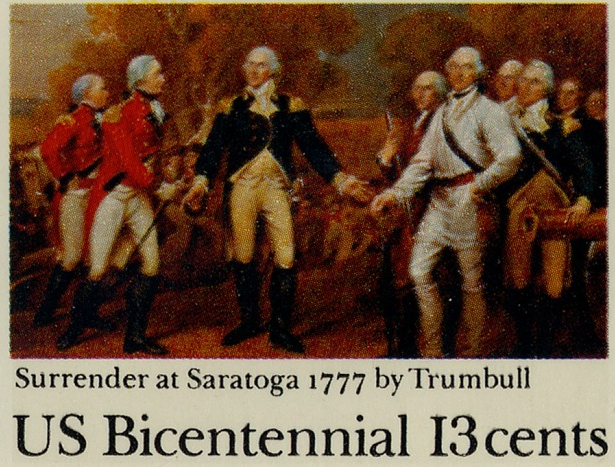
Burgoyne's Surrender at Saratoga commemorative stamp Growth in the 19th CenturyFollowing independence, New York grew rapidly. The completion of the Erie Canal in 1825 revolutionized trade, linking the Atlantic Ocean to the Great Lakes. New York City became a gateway for immigrants and a global financial powerhouse. The 1863 New York Draft Riots, the deadliest in U.S. history, highlighted tensions during the Civil War. In 1876, the Statue of Liberty became a symbol of freedom and welcome in New York Harbor.
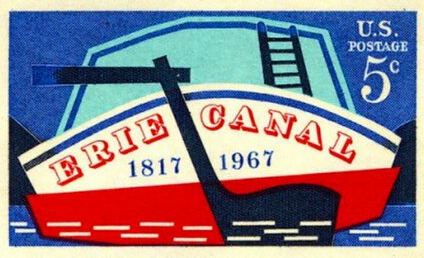
The Erie Canal Commemorative Postage Stamp 20th Century Expansion and InfluenceIn the 20th century, New York flourished as a cultural, financial, and intellectual center. Its economy shifted to services and technology, and it played a major role in World War II. The post-war era brought a population surge and continued immigration. Modern New YorkToday, New York remains a global leader in finance, arts, and innovation. The state is home to world-renowned cultural institutions, major media outlets, and influential financial companies, cementing its place on the world stage. Discussion Questions
Glossary
Timeline of New York State History
New York’s Native and European BeginningsBefore European arrival, New York was home to the Lenape and Iroquois peoples. In 1524, Verrazzano explored the area for France. In 1609, Henry Hudson explored the river now named after him for the Dutch, who soon established the colony of New Netherland in 1624. English Rule and the RevolutionIn 1664, the English took the Dutch colony and renamed it New York. The state later became central to the American Revolution, with major battles and leaders like Alexander Hamilton. New York City served as the nation’s capital from 1785 to 1790. 19th Century Growth and ImmigrationNew York thrived as a trade hub. The Erie Canal, completed in 1825, connected the coast to the Midwest. Immigration transformed New York City into a booming financial center. The 1863 Draft Riots and the 1876 dedication of the Statue of Liberty marked major events. Modern InfluenceIn the 20th century, New York became a world leader in culture, business, and technology. After World War II, its population grew rapidly. Today, New York remains a global powerhouse in finance, media, and the arts. |