Neil Armstrong |
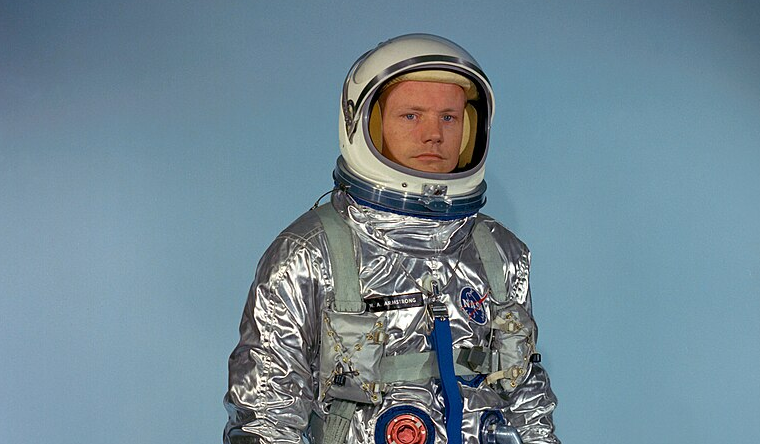
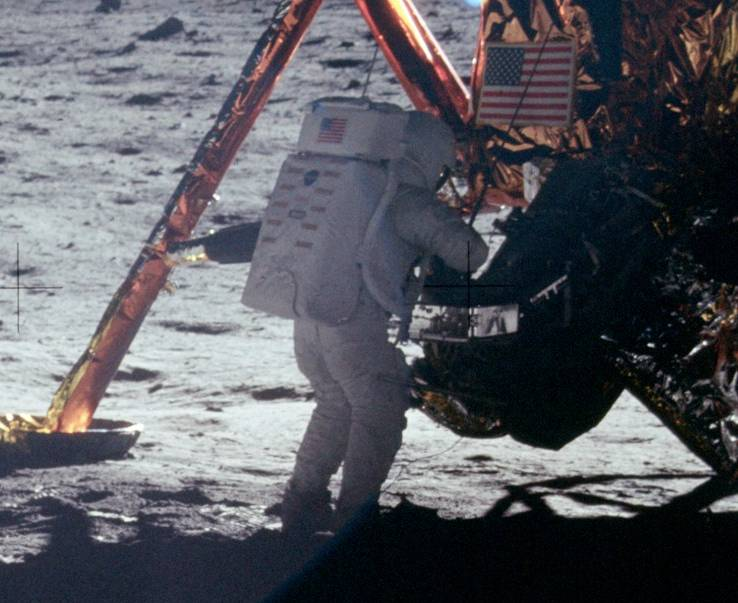
Early LifeNeil Armstrong was born on August 5, 1930, in Wapakoneta, Ohio. From a young age, he was fascinated by airplanes and flight. He took his first airplane ride when he was just six years old and earned his pilot’s license before he even had a driver’s license. Armstrong studied aerospace engineering at Purdue University and later became a naval aviator, flying missions during the Korean War.Becoming an AstronautAfter serving in the Navy and working as a test pilot, Armstrong joined NASA, the U.S. space agency. In 1962, he was selected to be an astronaut. His first spaceflight was on Gemini 8 in 1966, where he performed one of the first space dockings with another vehicle in orbit. Though the mission had technical problems, Armstrong’s quick thinking helped save the crew.First Man on the MoonArmstrong's most famous mission came in 1969 with Apollo 11. On July 20, he became the first human to walk on the Moon. As he stepped onto the lunar surface, he said the famous words, “That’s one small step for man, one giant leap for mankind.” He and fellow astronaut Buzz Aldrin spent over two hours walking on the Moon, collecting rocks, and conducting experiments. This historic event was watched by millions around the world.
Armstrong on the Moon
NPS Video: Moon Landings Later Years and LegacyAfter Apollo 11, Armstrong chose to live a quieter life. He taught engineering at a university and rarely appeared in public. Still, he remained a symbol of exploration and courage. He died on August 25, 2012, but is remembered as a true American hero who showed what humans could achieve with curiosity, bravery, and hard work.
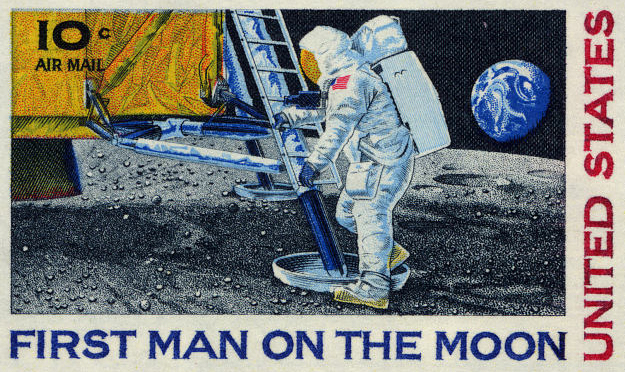
First Man on the Moon Stamp Discussion Questions
Glossary
Interesting Facts
Early LifeNeil Armstrong was born in 1930 in Wapakoneta, Ohio. He became interested in airplanes when he was very young. At just six years old, he rode in an airplane for the first time. He later earned his pilot’s license when he was only 16 years old. Armstrong went to Purdue University to study aerospace engineering and became a Navy pilot during the Korean War. Joining NASAAfter his military service, Armstrong worked as a test pilot, flying experimental aircraft. In 1962, he became part of NASA's astronaut team. His first mission in space was Gemini 8 in 1966. During that mission, a serious problem occurred, but Armstrong stayed calm and helped save the spacecraft and his crew. Apollo 11 and the MoonArmstrong's most famous space mission was Apollo 11 in 1969. He was the commander of the mission and became the first person to walk on the Moon. He stepped onto the lunar surface and said the famous words, “That’s one small step for man, one giant leap for mankind.” Millions of people around the world watched the Moon landing live on television. Life After the MoonAfter his Moon landing, Armstrong chose to live a quiet life. He taught engineering at a university and stayed away from the spotlight. He didn’t give many interviews or attend many public events. Still, he became a symbol of bravery and discovery. LegacyNeil Armstrong died in 2012, but he is still remembered as a great American hero. His achievements helped inspire people around the world to learn, explore, and reach for the stars. |