|
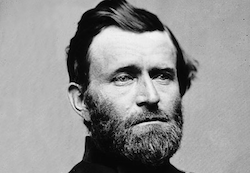 |
Ulysses S. Grant
Ulysses S. Grant was the leading Union general during the Civil War, known for his aggressive strategy and determination to defeat the Confederacy. His leadership in battles like Vicksburg and the Overland Campaign led to the surrender of Robert E. Lee and the Union’s ultimate victory. |
|
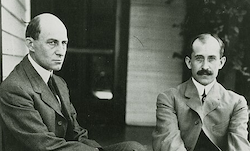 |
The Wright Brothers
The Wright Brothers, Orville and Wilbur, were American inventors who achieved the first powered, controlled flight in 1903 near Kitty Hawk, North Carolina. Their innovations in aviation laid the foundation for modern airplane design and travel. |
|
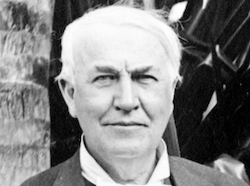 |
Thomas Edison
Thomas Edison was an American inventor best known for developing the electric light bulb, phonograph, and motion picture camera. He held over 1,000 patents and played a major role in shaping modern life through his innovations. |
|
 |
Neil Armstrong
Neil Armstrong was the first person to walk on the Moon during NASA's Apollo 11 mission in 1969. He famously declared, "That's one small step for man, one giant leap for mankind." |
|
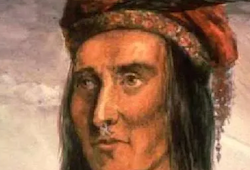 |
Tecumseh
Tecumseh was a powerful Shawnee leader who sought to unite Native American tribes into a confederation to resist U.S. expansion into their lands. He played a key role in early 19th-century Native resistance and was killed in 1813 during the Battle of the Thames in the War of 1812. |
|
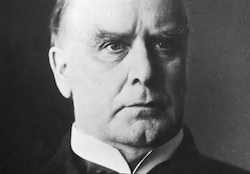 |
William McKinley
William McKinley was the 25th president of the United States, serving from 1897 until his assassination in 1901. He led the nation during the Spanish-American War and helped establish the U.S. as a global power. |
|
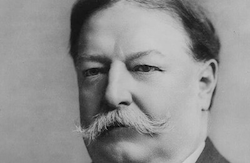 |
William Howard Taft
William Howard Taft was the 27th president of the United States and later became Chief Justice of the Supreme Court, the only person to hold both offices. His presidency focused on trust-busting and expanding civil service reform, but he often clashed with progressive Republicans. |
|
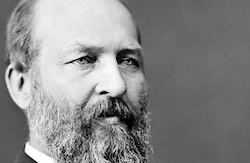 |
James A. Garfield
James A. Garfield was the 20th president of the United States, serving only a few months in 1881 before he was assassinated. He had a strong background in education and the military and worked to reform government corruption during his short time in office. |
|
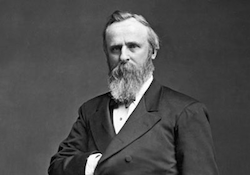 |
Rutherford B. Hayes
Rutherford B. Hayes was the 19th president of the United States, serving from 1877 to 1881. He ended Reconstruction by withdrawing federal troops from the South and promoted civil service reform during his presidency.
|
|
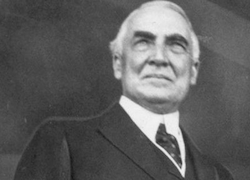 |
Warren G. Harding
Warren G. Harding was the 29th president of the United States, serving from 1921 until his death in 1923. His presidency focused on a “return to normalcy” after World War I, but it was later overshadowed by scandals like the Teapot Dome. |
|
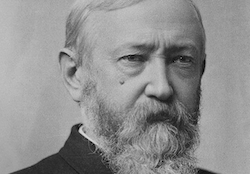 |
Benjamin Harrison
Benjamin Harrison was the 23rd president of the United States, serving from 1889 to 1893. He was known for supporting protective tariffs and for signing the Sherman Antitrust Act to curb monopolies. |
|
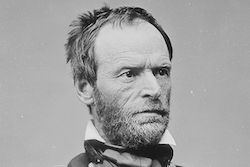 |
William Tecumseh Sherman
William Tecumseh Sherman was a Union general during the American Civil War, best known for his “March to the Sea,” a devastating campaign through Georgia that aimed to break the South’s will to fight. His use of total war tactics, including the destruction of infrastructure and civilian property, made him both feared and celebrated. |
|
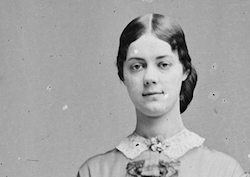 |
Kate Chase - An Original Influencer
Kate Chase was a powerful political socialite during the Civil War era, known for her beauty, intelligence, and strategic efforts to support her father’s presidential ambitions. Once the most dazzling woman in Washington, her fame eventually faded, and she spent her later years in poverty. |
|
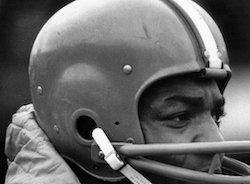 |
Jim Brown
Jim Brown was a legendary American football player known for his powerful running style and record-breaking career with the Cleveland Browns. Off the field, he was also a prominent civil rights activist and actor. |
|
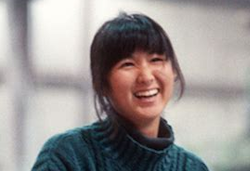 |
Maya Lin
Maya Lin is an American designer and sculptor best known for creating the Vietnam Veterans Memorial in Washington, D.C. She blends architecture and landscape in her work, often exploring themes of memory, history, and the natural environment. |
|