Warren G. Harding |
||
|
||
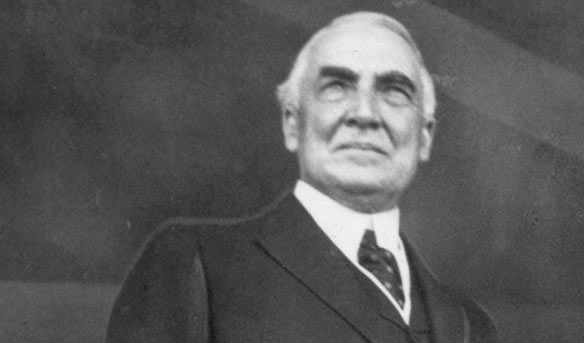
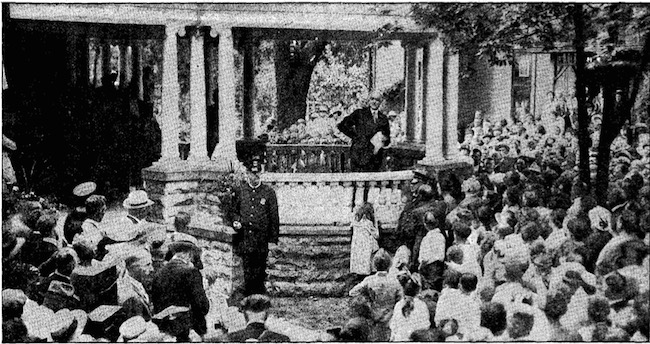
Early LifeWarren G. Harding was born on November 2, 1865, in Blooming Grove, Ohio. Harding was the first of eight children born to George (a schoolteacher) and Phoebe (a midwife). At the age of fourteen, Harding enrolled at Ohio Central University where he excelled in his studies. Following his graduation, he moved with his family to Marion, Ohio, where he and a friend purchased a struggling newspaper known as the Marion Star, which became the most successful newspaper in town. As editor of the paper, Harding learned much about the publishing industry and also became involved in local politics. The Marion Star and Nervous BreakdownsOn July 8, 1891, Harding married Florence Kling, who was five years his elder. Harding affectionately called her "the dutchess." The pair would have no children of their own, but Florence had a son from a previous relationship. Florence would become deeply involved in the Marion Star was officially designated its business manager. Before long, Florence would become the driving factor in the newspaper's increased success. At the same time, Warren suffered several nervous breakdowns, which landed him in the county sanitarium five times. Powerful SenatorIn 1899, Harding was elected as state senator. He quickly became a popular and well-known politician and was eventually elected as lieutenant governor of Ohio, but was defeated in his bid to become the state's governor. In 1914, however, Harding easily defeated Timothy Hogan and became a United States senator under the Woodrow Wilson administration. Harding became a powerful voice in the Republican Party where he supported Prohibition and America's involvement in World War I. As senator, Harding never introduced his own legislation and was careful not to take any political positions that could possibly alienate future political allies. 29th President and his "Ohio Gang"On December 17, 1919, Harding announced his intentions to run for president in the election of 1920. Harding's prospects for the office improved upon the sudden death of front-runner Theodore Roosevelt earlier in the year. Harding was nominated at the Republican National Convention in 1920 as a compromise candidate. Historians liken the nomination of Harding to a "smoke-filled room," where various powerful members of the Republican Party came and went debating the various candidates that could possibly win the election. Eventually, after much controversy, they settled on Harding and chose Calvin Coolidge as his running mate. On November 2, 1920, Harding was elected the 29th president by a wide margin. He quickly appointed high-profile politicians to his cabinet and named Andrew Mellon secretary of the treasury, Herbert Hoover secretary of commerce, and Charles Evans Hughes as secretary of state. He also surrounded himself with political allies from his home state known as "the Ohio Gang," some of which would ultimately bring great discredit to his legacy.
The Teapot Dome ScandalHarding’s presidency is often considered one of the most corrupt in history, although much of the corruption was uncovered after Harding died in office. The most infamous scandal to occur during his presidency was the Teapot Dome Scandal. In the scandal, Secretary of the Interior Albert Bacon Fall was bribed by a major oil company to lease federal petroleum reserves in Wyoming and California at low prices rather than to the highest bidder. Fall would become the first cabinet member of a United States president to be sent to prison. Another member of Harding’s cabinet, Attorney General Harry Daugherty, was implicated in several corruption schemes, as were various others who were considered part of Harding’s inner circle. After his death, it was discovered that Harding had engaged in at least one long-term extramarital affair, one of which conclusively resulted in the birth of a child. Harding, however, can be credited with guiding the nation out of its wartime emergency, increasing federal spending, and with the creation of the Bureau of the Budget. He also championed civil rights. Sudden DeathHarding’s presidency, however, was cut short upon his sudden death on August 2, 1923, of a cerebral hemorrhage. He would become the sixth president to die in office. His death sent shockwaves through the nation. At the time, he was admired and well liked. Today, both he and his wife are buried in the Harding Tomb in Marion, Ohio. Discussion Questions
Glossary
Four Interesting Facts
Early Life and Newspaper CareerWarren G. Harding was born in 1865 in Blooming Grove, Ohio. After college, he moved to Marion and bought a struggling newspaper, the Marion Star. With help from his wife Florence, who managed the business, the paper became very successful. Harding also had several nervous breakdowns during this time. Political RiseHarding was elected to the Ohio state senate in 1899 and later became a U.S. senator. He supported Prohibition and World War I efforts but avoided taking bold positions. In 1920, he won the Republican nomination for president and defeated his opponent by a large margin. He appointed well-known figures to his cabinet, along with personal allies known as the "Ohio Gang." Presidency and ScandalsHarding's presidency was later known for corruption, especially the Teapot Dome Scandal. A cabinet member leased oil land in exchange for bribes and went to prison. Others close to Harding were also involved in scandals. It was later revealed that Harding had at least one affair that resulted in a child. Death and LegacyHarding died suddenly in 1923 from a brain hemorrhage. At the time, he was popular and respected. He is buried with his wife in Marion, Ohio. Despite the scandals, he helped guide the U.S. out of postwar problems and supported civil rights. |