Abraham Lincoln - the Presidential Years Part 1 |
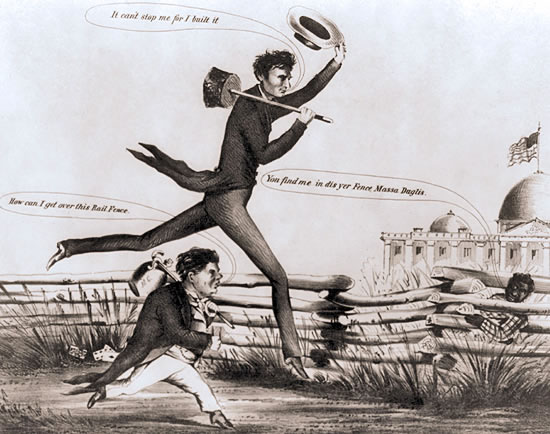
Abe Lincoln EmergesThough Abe had a national reputation, the Republican nomination for president in the Election of 1860 seemed elusive. Powerful Republicans William Seward from New York, Salmon P. Chase from Ohio and Edward Bates from Missouri seemed to be the frontrunners. On February 27, 1860, however, Abe was invited to speak before a crowd of powerful republicans at Cooper Union (a university) in New York City. Abe’s anti-slavery speech, in which he claimed the Founding Fathers and authors of the Declaration of independence would have prohibited the extension of slavery into new territories, left a lasting impression on the members of the audience and propelled him to legitimacy among the Republican candidates running for presidency. The powerful publisher Horace Greeley called it "one of the most happiest and most convincing political arguments ever made in this City ... No man ever made such an impression on his first appeal to a New-York audience" . After the speech, Abe decided that he would at least make an attempt for the Republican nomination to the presidency. He assembled a team of devoted campaigners who called Lincoln "The Rail Candidate". Learn more about the Cooper Union Speech The Republican National ConventionOn May 9-10 Abe and his team traveled to the Republican National Convention in Decatur, Illinois, where his savvy team of supporters worked the convention for endorsements. Seward and Chase, though powerful and well-known politicians, had created enough enemies over the years to prove vulnerable and had alienated parts of the Republican Party. Though Abe believed slavery was evil, his moderate (rather than radical) stance appealed to many, as did his support for the nation's internal improvements and protective tariff. Furthermore, Abe was extremely popular in the western states, and because the convention was in his home state, thousands of his supporters descended upon Decatur. While Seward led on the first and second ballots (though he didn’t get enough votes to win), Lincoln won the nomination on the third ballot when the chairman of the Ohio Republican Delegation was convinced to shift his votes to Lincoln. Seward, who thought his nomination was assured was crushed, and Chase couldn’t even manage to draw full support from his home state of Ohio. Now that Abe had secured the Republican nomination for President, he had a chance to win the Presidential election. Learn more about the Republican National Convention of 1860 Abe is elected the 16th PresidentIn 1860, the future of the United States was much in doubt. The issue of slavery, which had bitterly divided the nation, had also begun to divide political parties, making the presidential election very complicated. The Democratic Party had been divided into the Northern Democratic Party and Southern Democratic Party. The Northern Democratic Party nominated Stephen Douglas for the presidency, while the Southern Democratic Party nominated John C. Breckenridge. The Constitutional Union Party nominated the former Tennessee Governor John Bell. On November 6, 1860, Abraham Lincoln was elected president in 33 states. Of the eleven southern states that would eventually secede, only Virginia allowed Abe's named to be on their ballots. In Virginia, Abe receive slightly over one percent of the popular vote. In the four slave states that would become Border States, Abe finished third or fourth. In New England, however, Abe won the popular vote in every county. The 81.8 percent voter turnout for the Election of 1860 is the second highest turnout in presidential election history. Now that Abe had been elected President, he had to appoint the members of his cabinet. Choosing AdvisorsIn thinking about his advisors, Abe wanted the brightest and most influential politicians available. For the two most important posts in his cabinet, he chose the two candidates that ran against him for the Republican nomination for president. He appointed William Seward as his Secretary of State and Salmon P. Chase as his Secretary of Treasury. Both men would prove indispensable to the President in his dealings with the Civil War. Discussion Questions
Abe Lincoln EmergesEven though Abe Lincoln was well known, many people thought he wouldn't win the Republican nomination for President in 1860. Strong candidates like William Seward, Salmon P. Chase, and Edward Bates were more popular. But on February 27, 1860, Lincoln gave a powerful anti-slavery speech at Cooper Union in New York City. He argued that the Founding Fathers would not have allowed slavery to expand into new areas. The speech impressed many Republicans and gave Lincoln a real chance at the nomination. After the speech, he built a strong campaign team who nicknamed him "The Rail Candidate." The Republican National ConventionOn May 9-10, 1860, Lincoln and his team went to the Republican National Convention in Decatur, Illinois. His supporters worked hard to win support. Other candidates like Seward and Chase had made enemies over the years, which hurt their chances. Lincoln's moderate views on slavery and support for improvements and tariffs made him a favorite in western states. Because the convention was in Illinois, thousands of Lincoln’s supporters showed up. On the third vote, Lincoln got the nomination for President when Ohio changed its votes to support him. Abe is Elected the 16th PresidentIn 1860, the United States was divided over slavery, which also split political parties. The Democrats split into Northern and Southern groups, nominating different candidates. Lincoln ran as the Republican candidate and won the election on November 6, 1860, in 33 states. Most Southern states did not even include his name on the ballot. In New England, however, he won every county. Voter turnout was high at 81.8%, the second-highest ever. With his victory, Lincoln now had to choose his cabinet members. Choosing AdvisorsLincoln wanted smart and experienced people in his cabinet. For two of the top jobs, he chose his former opponents: William Seward as Secretary of State and Salmon P. Chase as Secretary of the Treasury. Both men played important roles during the Civil War and helped Lincoln lead the country. Go on to next page: Presidential Years Part 2 |
| Lincoln Activities |
|
| Lincoln Pages |