Abraham Lincoln - the Presidential Years Part 2 |
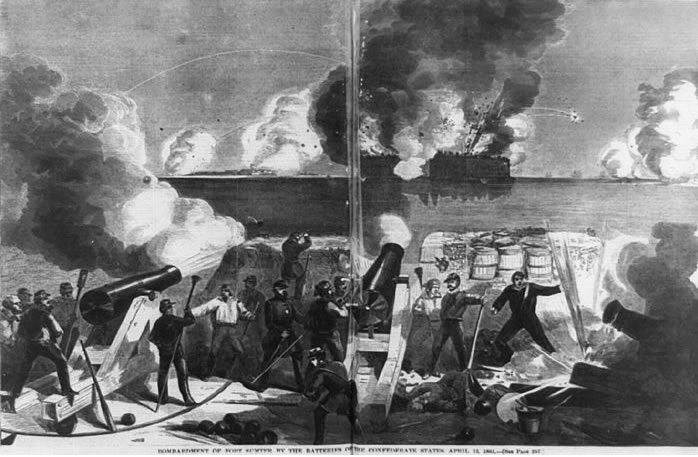
SecessionFollowing Abe's election, the state of South Carolina seceded from the Union on December 20, 1860. Florida, Mississippi, Louisiana, Alabama, Texas, and Georgia would secede in the following weeks. These states formed the Confederate States of America (CSA) and declared themselves an independent nation. Upon entering office, Abe was faced with the most pressing crisis in the history of the young nation. Learn more about the Secession of the Southern States Mortal ThreatsAbe's road to the White House was not easy either. According to some accounts, he had to ride through Baltimore on a secret train in disguise to evade would-be assassins on his way to inauguration in Washington. After Abe’s inauguration, the Confederacy continued to mobilize. It elected Jefferson Davis as president and set up its capital headquarters in Montgomery, Alabama. War was imminent.War BeginsAs war approached, President Lincoln sent provisions to American forts that were now in Confederate territory, including Fort Sumter, near Charleston Harbor, South Carolina. Secessionists in South Carolina considered this an act of war and began bombarding the fort on April 12, 1861. Union forces at Fort Sumter surrendered and thus, the American Civil War began. On April 15, Abe requested the mobilization of 75,000 troops from the states for the purposes of "preserving the Union." In the following days, North Carolina, Tennessee, Arkansas, and Virginia seceded from the Union, refusing to mobilize against their southern neighbors. The secession of Virginia, one of the most populous states in the country, was a major prize for the Confederacy. To reward it, the Confederate capital was moved from Montgomery, Alabama to Richmond, Virginia. Suspension of the Writ of Habeas Corpus and Hard Times for LincolnAs Union troops descended from Massachusetts to the nation's capital, pro-secession residents of Baltimore, Maryland attacked Union soldiers and destroyed railroads linking Washington to the north. In response, President Lincoln suspended the Writ of Habeas Corpus in Maryland, allowing the Government to arrest suspected perpetrators and keep them in jail indefinitely without a trial or conviction. He also authorized the blockades of southern ports. During this difficult time, Abe was also suffering depression likely caused by the stresses of the war, the death of his son Willie, and the increasingly erratic behavior of his mourning wife. Trent AffairLater in 1861, Abe endured an embarrassing and potentially dangerous episode, when the British ship Trent was intercepted by the Union Navy in the Atlantic Ocean. Two Confederate agents on their way to England and France were seized and brought back to America as prisoners. Although the American public was in full support of the illegal seizure, England considered it an act of war. Eventually, Lincoln was compelled to release the Confederate agents to avert the British threat. Despite the demands of England, however, Abe never issued a formal apology and hostilities between England and America died. Strategic Move After the Disaster at Bull RunAbe had other things to worry about as well. Union forces had been routed in the war's first major battle at Manassas, just thirty miles west of Washington. This was a major blow to the morale of the North, which underestimated the resolve and fight of the Confederacy. After the devastation at Manassas, Abe realized the war would not end any time soon. Throughout 1861 and much of 1862, Abe became dissatisfied with the progress of the war and turned his attention to leadership in the major branch of the Union Army, the Army of the Potomac. Early in 1862, Lincoln replaced War Secretary Simon Cameron with Edwin M. Stanton. Stanton would prove an excellent choice. His tireless work effort and superb managerial skills helped organize the massive military efforts of the Union. Learn more about the First Battle of Bull Run Discussion QuestionsSecessionAfter Abraham Lincoln was elected president, South Carolina left the Union on December 20, 1860. Soon after, six more states—Florida, Mississippi, Louisiana, Alabama, Texas, and Georgia—also seceded. These states formed their own country called the Confederate States of America. When Lincoln took office, he faced the greatest crisis the nation had ever seen. Mortal ThreatsLincoln's journey to the White House was dangerous. Some reports say he had to sneak through Baltimore in disguise to avoid being killed before his inauguration. After he took office, the Confederacy chose Jefferson Davis as their president and made Montgomery, Alabama their capital. The country was on the verge of war. War BeginsLincoln sent supplies to Union forts in Confederate territory, including Fort Sumter in South Carolina. Confederate forces saw this as an act of war and attacked the fort on April 12, 1861. The Union surrendered, marking the start of the Civil War. Lincoln responded by calling for 75,000 troops to protect the Union. In response, more states—North Carolina, Tennessee, Arkansas, and Virginia—left the Union. Virginia’s secession was especially important to the South, which moved its capital to Richmond, Virginia. Suspending the Writ of Habeas CorpusIn Maryland, people who supported the Confederacy attacked Union soldiers and damaged railroad tracks. Lincoln reacted by suspending the Writ of Habeas Corpus, allowing the government to jail people without a trial. He also ordered the blockade of Southern ports. During this stressful time, Lincoln also faced personal struggles, including the death of his son Willie and his wife’s emotional breakdown. The Trent AffairLater in 1861, a U.S. Navy ship stopped a British ship called the Trent and captured two Confederate agents headed to Europe. Americans were happy, but England was furious and called it an act of war. Lincoln chose to release the agents to avoid war with Britain, though he never apologized. The situation eventually calmed down. The Battle of Bull Run and a New StrategyUnion forces lost their first major battle at Bull Run, close to Washington, D.C. This defeat shocked the North and proved the war would be long and hard. Lincoln became unhappy with how the war was going and focused on improving military leadership. In early 1862, he replaced War Secretary Simon Cameron with Edwin M. Stanton, who became an essential leader for organizing the Union Army. Go on to next page: Presidential Years Part 3 |
| Lincoln Activities |
|
| Lincoln Pages |