Abraham Lincoln - the Presidential Years Part 3 |
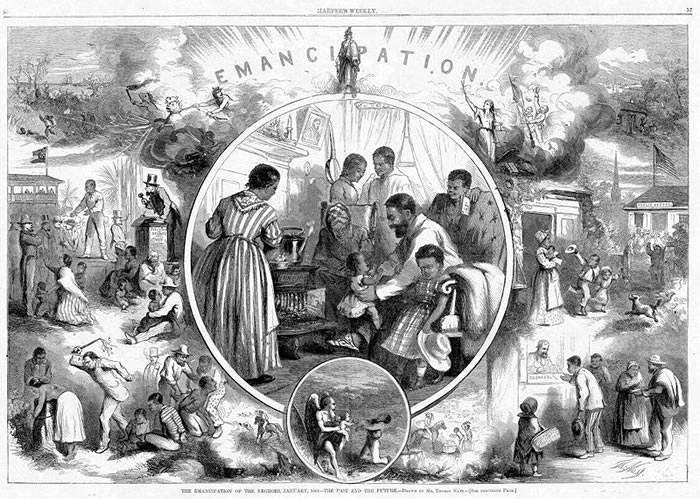
Questionable Leadership in the Union ArmyAfter the First Battle of Bull Run, Lincoln had appointed West Point graduate General George McClellan as Commander of the Army of the Potomac. McClellan set his sights upon the capture of the Confederate capital of Richmond. In what he called the Peninsula Campaign, McClellan planned to move the huge army by boat to the Eastern Shore (Peninsula) of Virginia and then over land to Richmond itself. McClellan, however, took an inordinate amount of time planning and mobilizing the movements, and challenged the president's authority several times in the process. Furthermore, McClellan was slow to strike when he had the opportunities and always exaggerated the number of enemy troops waiting to engage his army. Replacing McClellanOn September 16, 1862, the Union Army scored a major victory at Sharpsburg, Maryland in what came to be known as The Battle of Antietam. Antietam would prove to be the bloodiest one-day battle of the war. The battle forced the battered Confederate Army under General Robert E. Lee to cross the Potomac River back into Virginia and foiled Lee's attempt to carve a path of military victories in Union territory. Despite the urgings of the President and Congress, McClellan failed to order his army to pursue the fleeing Confederates, enabling them to regroup in their own territory. Lincoln, having had enough of McClellan's indecision and insubordination, replaced him as commander of the Army of the Potomac. Finding a suitable replacement, however, would prove no easy task. In fact, Lincoln went through several more commanders before settling on General Ulysses S. Grant. Is the War for the End of Slavery?From the time the war had started, Lincoln had wrestled with himself and members of his cabinet concerning the proper timing of emancipating slaves in the South. With the momentum of the war swinging back to the Union, and on the heels of the major victory at Antietam, Lincoln issued his famous Emancipation Proclamation on September 22, 1862 to be effective on January 1, 1863. The decree freed all slaves in "enemy territory." The proclamation, however, failed to address slavery in the border states. Lincoln believed forcing the border states of Kentucky, Maryland, Delaware, and Missouri to free their slaves would push them to join the Confederacy. Despite his failure to free slaves in the border states, Lincoln believed that slavery would die as long as it did not extend into new territories. Despite the Emancipation Proclamation, Lincoln maintained his primary goal was not the liberation of slaves, but rather, the preservation of the Union. In fact, Lincoln believed the best plan of action for the newly freed slaves was to set up a colony for them in Africa. Lincoln enjoyed little if any support for the plan, and by 1863 abandoned the idea. By the end of 1863, Lincoln had formulated a plan to recruit Black soldiers to the Union Army in the belief that "the bare sight of 50,000 armed and drilled black soldiers on the banks of the Mississippi would end the rebellion at once." Good News for the Union - the Turning PointJuly of 1863 would prove a major turning point in the war. On July 3, the Army of Northern Virginia led by Robert E. Lee was repulsed at Gettysburg, Pennsylvania in arguably the most storied battle in American history. The following day, on July 4, 1863, General Ulysses S. Grant and Union forces took Vicksburg, Mississippi after a long siege, gaining control of the Mississippi River for the Union Army and splitting the Confederacy into two separate parts. For Lincoln, control of the Mississippi River, its ports, and its navigation, were one of the main objectives in eventual military victory. Learn more about: Gettysburg | Vicksburg Discussion QuestionsQuestionable Leadership in the Union ArmyAfter the Union loss at the First Battle of Bull Run, President Lincoln appointed General George McClellan to lead the Army of the Potomac. McClellan planned a major campaign to capture Richmond, Virginia, called the Peninsula Campaign. However, he took far too long to organize the army and often challenged Lincoln's decisions. He was also hesitant to attack and repeatedly overestimated the number of Confederate soldiers. Replacing McClellanOn September 16, 1862, the Union Army won a major victory at the Battle of Antietam in Maryland. This became the bloodiest one-day battle of the Civil War. After the battle, Confederate forces were forced to retreat back to Virginia. Still, McClellan refused to chase them, which frustrated Lincoln and Congress. As a result, Lincoln removed McClellan from command. It took several more commanders before Lincoln finally found the right one in General Ulysses S. Grant. Is the War for the End of Slavery?From the start of the war, Lincoln struggled with the issue of when to free the slaves. After the victory at Antietam, Lincoln issued the Emancipation Proclamation on September 22, 1862. It would take effect on January 1, 1863, and would free slaves only in areas controlled by the Confederacy. Lincoln did not free slaves in the border states because he feared they might join the Confederacy. He believed slavery would eventually die out as long as it didn’t spread. Although he issued the Emancipation Proclamation, Lincoln’s top priority remained saving the Union. At one point, he even considered creating a colony for freed slaves in Africa, but this idea received little support and he gave it up by 1863. Later that year, Lincoln began recruiting Black soldiers to fight for the Union, believing their presence would help end the war faster. Good News for the Union - the Turning PointJuly 1863 marked a major turning point in the Civil War. On July 3, Confederate forces led by General Robert E. Lee were defeated at Gettysburg, Pennsylvania. The next day, July 4, Union General Ulysses S. Grant captured Vicksburg, Mississippi. This gave the Union control of the Mississippi River and split the Confederacy in two—both key goals for Lincoln and the Union Army. Go on to next page: Presidential Years Part 4 |
| Lincoln Activities |
|
| Lincoln Pages |