Abraham Lincoln - the Presidential Years Part 4 |
|
|
Gettysburg AddressAfter the historic victories at Gettysburg and Vicksburg, the situation had vastly improved for the Union, but the war was far from over. On November 22, 1863, President Lincoln delivered the Gettysburg Address at the dedication of the Soldiers National Cemetery at Gettysburg. The 272 word speech, which followed a two hour address by Harvard professor Edward Everett, would become one of the greatest speeches in American history. Lincoln Appoints GrantIn March of 1864, President Lincoln appointed General Ulysses S. Grant Commander of the Army of Potomac, the main branch of the Union Army. Finally, after nearly three years of war, the President had found a general who would pursue fleeing Confederates. Grant, known as "Unconditional Surrender Grant" after his exploits at Fort Donelson, Tennessee, in 1862, was by this time a Union hero after leading the Army of theTennessee to numerous victories in the West, including those at Shiloh and Vicksburg. Grant would spend 1864 waging his bloody Overland Campaign through much of the state of Virginia, suffering massive casualties while gradually diminishing the numbers and spirit of Lee's Army of Northern Virginia. Eventually, Grant would corner Lee's Army at Petersburg, Virginia, where he staged a ten-month siege. During the siege, Lincoln would visit Grant's headquarters at City Point, outside of Petersburg, where his presence excited and inspired the Union soldiers. Learn more about: Grant's Overland Campaign | Siege of Petersburg Georgia Falls - the End is Near for the ConfederacyMeanwhile, Union General William T. Sherman struck another blow to the spirit of the Confederacy with his destructive march through the state of Georgia, which would become known as Sherman's March to the Sea. Sherman's Army destroyed farms, railroad lines, and virtually anything in its path. After Sherman's capture of Atlanta, Georgia, President Lincoln easily won re-election to a second term. In contrast to his campaign platform in 1860, Lincoln made the emancipation of slaves a primary emphasis. Over 78 percent of Union soldiers would support his bid for a second term as President. Surrender!
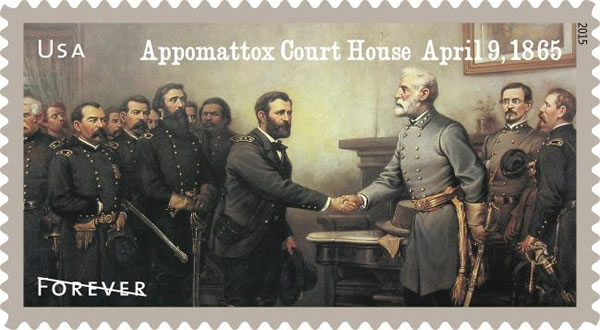
On April 9, 1865, the Confederate States of America surrendered at Appomattox Courthouse, Virginia. The Civil War was over and the Union would be preserved. At this point, President Lincoln had to consider the complicated task of reconstructing the Union and how to re-integrate the Confederate states back into the United States. Learn more about: Sherman's March to the Sea | Surrender at Appomattox Courthouse The UnthinkableLincoln believed in a policy of forgiveness and took a moderate approach to reconstruction, hoping to reconstruct the Union as quickly as possible rather than indefinitely punish the rebel states. Unfortunately, the President did not have much of a chance to preside over Reconstruction. Just five days after the end of the war, Southern sympathizer and actor John Wilkes Booth assassinated the President while he was watching a play at Ford's Theater in Washington, D.C. Lincoln's bodyguard had apparently fallen asleep, allowing Booth access to the Presidential box. Lincoln died at 7:22 the next morning at the Peterson House across the street from the theater. Upon his death, Secretary of War Edwin M. Stanton uttered the timeless words "Now, he belongs to the ages." Discussion Questions
Gettysburg AddressAfter the major Union victories at Gettysburg and Vicksburg, the war began to turn in favor of the North. On November 22, 1863, President Lincoln delivered the Gettysburg Address during the dedication of a cemetery at Gettysburg. His short 272-word speech, which followed a much longer one by Harvard professor Edward Everett, became one of the most famous speeches in American history. Lincoln Appoints GrantIn March 1864, Lincoln appointed General Ulysses S. Grant as the new commander of the Army of the Potomac. Grant had already become a hero for winning key battles in the West, like Shiloh and Vicksburg. Known for never giving up, Grant began a brutal campaign through Virginia called the Overland Campaign, where many lives were lost. However, he successfully wore down General Lee’s Confederate forces and trapped them in Petersburg, Virginia. Lincoln visited Grant's headquarters at City Point during the siege, which lifted the spirits of the Union troops. Georgia Falls - the End is Near for the ConfederacyUnion General William T. Sherman delivered another powerful blow to the South with his march across Georgia, destroying farms, railroads, and supplies in his path. This destructive campaign, known as Sherman's March to the Sea, weakened the Confederacy’s ability to fight. After capturing Atlanta, Lincoln won re-election in 1864 with strong support from Union soldiers. Unlike his first campaign, he focused heavily on freeing the slaves. Surrender!
On April 9, 1865, the Confederacy surrendered at Appomattox Courthouse, Virginia. The long and bloody Civil War was finally over, and the Union was preserved. Lincoln now faced the huge task of bringing the Southern states back into the country and rebuilding the nation. The UnthinkableLincoln wanted to forgive the South and rebuild quickly, rather than punish them. Sadly, just five days after the war ended, he was assassinated by actor and Confederate supporter John Wilkes Booth while watching a play at Ford’s Theater. Lincoln died the next morning across the street at the Peterson House. Secretary of War Edwin M. Stanton, who was at his side, said, "Now, he belongs to the ages." |
| Lincoln Activities |
|
| Lincoln Pages |