Navajo Wars and the Long Walk |
||
|
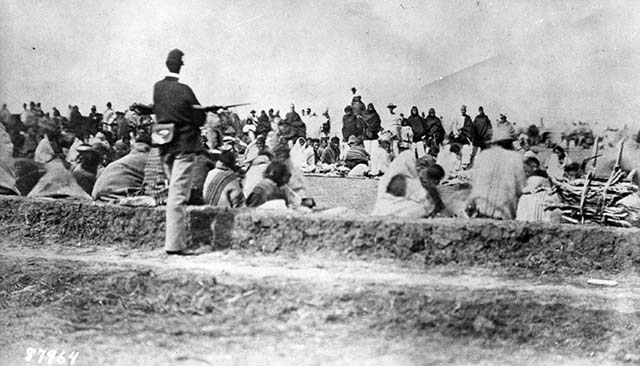
The Navajo Wars were a long series of battles and skirmishes between American ranchers and Navajo warriors during the 1800's. The wars were a result of White settlers invading Navajo lands and raiding their villages. In 1849, Military Governor Colonel John Washington negotiated a treaty with Navajo forces at Canyon de Chelley that authorized the U.S. Government to build forts and trading posts in Navajo land in exchange for various gifts and annual payments. In 1851, the Government built Fort Defiance at the center of Navajo lands, which became the central command center for U.S. forces in the southwest. Fort Wingate, near modern-day Gallup, New Mexico, was also built on Navajo lands. Increased settlement and military presence in the region further reduced Navajo territory. In 1860, Navajo warriors attacked Fort Defiance because livestock was destroying their grazing lands. Although the attack was unsuccessful, American military forces abandoned Fort Defiance in 1860, at the outbreak of the Civil War. Increased Navajo raids on the settlers in the region soon prompted a military response, however. By 1862, the U.S. Military returned to the region after expelling Confederate forces from Texas during the Civil War. Kit Carson and his band of militiamen began burning Navajo villages, crops, property and hogans. The Navajo quickly ran out of food during the cold winter and were forced to surrender. The Navajos were then forced to travel by foot to a reservation in New Mexico, in what came to be known as "The Long Walk." The 300-mile walk took at least 18 days. Hundreds of Navajo died during the horrendous trek.
Causes of the ConflictThe Navajo Wars were a long series of fights between American settlers and Navajo warriors during the 1800s. These conflicts happened because settlers moved into Navajo land and raided their villages. Treaty and U.S. FortsIn 1849, U.S. Colonel John Washington made a treaty with the Navajo at Canyon de Chelley. The treaty allowed the U.S. to build forts and trading posts in Navajo territory in exchange for gifts and yearly payments. Fort Defiance and Fort Wingate were built soon after, bringing more settlers and soldiers, and reducing Navajo land. Fighting and RaidsIn 1860, Navajo warriors attacked Fort Defiance because livestock from settlers were damaging their grazing lands. Although the attack failed, the U.S. abandoned the fort during the Civil War. As Navajo raids increased, the U.S. returned in 1862 and sent Kit Carson to fight them. Carson destroyed villages, crops, and homes, causing the Navajo to run out of food. The Long WalkWith no supplies left, the Navajo surrendered. They were forced to walk 300 miles to a reservation in New Mexico, a journey known as "The Long Walk." The walk took at least 18 days, and hundreds of Navajo died from hunger, cold, and exhaustion. |
||