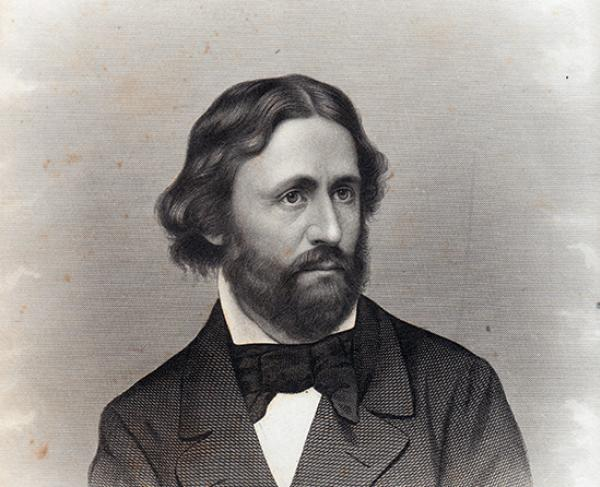
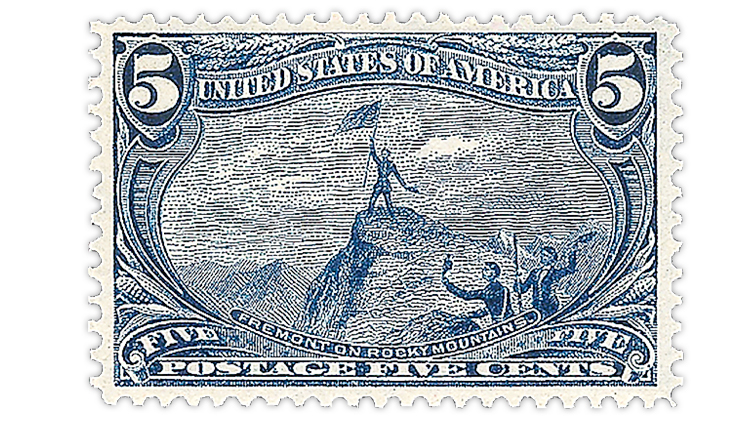
John C. Frémont |
Early Life and EducationJohn Charles Frémont was born on January 21, 1813, in Savannah, Georgia. After his father's death, Frémont's family struggled financially. He eventually studied at the College of Charleston but did not graduate. Despite this, he developed strong skills in mathematics and science, which led to work as a surveyor and mapmaker. Pathfinder of the WestFrémont gained national fame in the 1840s as an explorer of the American West. He led several expeditions that mapped vast areas of the Oregon Trail, the Rocky Mountains, and parts of California and Utah. These explorations earned him the nickname “The Pathfinder.” His detailed reports and maps encouraged westward expansion and inspired many settlers to move west. Role in the Mexican-American WarDuring the Mexican-American War, Frémont played a key role in California. In 1846, he helped lead the Bear Flag Revolt, which aimed to free California from Mexican rule. When U.S. forces arrived, Frémont cooperated with them and helped establish American control. For a brief time, he served as military governor of California, though this led to conflict with military leaders and cost him his post. Political CareerFrémont entered politics after his military service. In 1850, he became one of California's first U.S. Senators. In 1856, he became the first presidential candidate for the new Republican Party, running on a platform against the spread of slavery. Although he lost the election to James Buchanan, his campaign helped solidify the Republican Party as a major political force.
Later Years and LegacyFrémont served briefly again during the Civil War but had disagreements with President Lincoln and other Union leaders. He spent his later years involved in railroad ventures and lived in relative obscurity. He died on July 13, 1890, in New York. Despite controversies, John C. Frémont is remembered as a bold explorer, a political pioneer, and a key figure in America's westward expansion. Early LifeSam Houston was born in Virginia in 1793. As a young man, he ran away and lived with a Cherokee tribe, learning their way of life. This experience shaped his views later in life. Military and Political StartHouston fought in the War of 1812 and became close to General Andrew Jackson. He later served in Congress and became governor of Tennessee. After a divorce, he left politics and went to live with the Cherokee again. Moving to TexasIn 1832, Houston moved to Texas when tensions were rising with Mexico. He became the leader of the Texan army. After the loss at the Alamo, he ordered his troops to retreat so they could regroup and train. Victory for TexasIn 1836, Houston and his army surprised and defeated Mexican General Santa Anna at the Battle of San Jacinto in only 18 minutes. This win helped Texas gain independence from Mexico. President of TexasHouston was elected president of Texas twice. He tried to keep peace with Mexico and Native tribes. After Texas joined the U.S., he became a senator and worked to keep the country together as slavery caused division. Later Years and LegacyHouston was removed from office for not supporting Texas leaving the Union. He retired and died in 1863. He is the only person to be governor of both Tennessee and Texas, and the city of Houston is named after him. |