Seven Cities of Cibola |
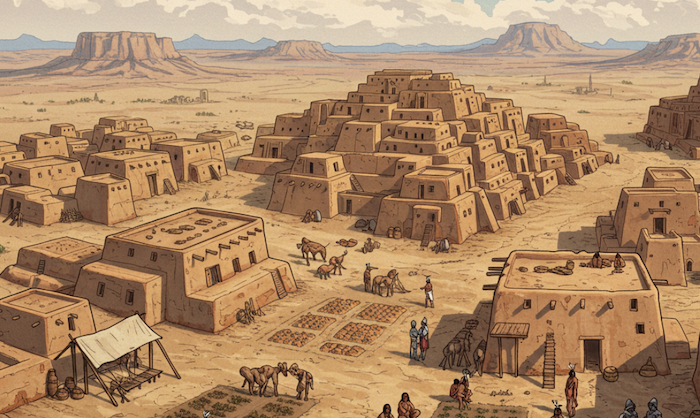
IntroductionThe Seven Cities of Cibola are one of the most enduring legends in the history of exploration in the Americas. Promising wealth, grandeur, and untold treasures, these mythical cities became the subject of fervent searches by explorers, particularly during the 16th century, and played a significant role in the European exploration of the American Southwest. The legend, which is tied to the wider search for gold and riches in the New World, evolved over time and continues to intrigue historians and adventurers to this day. The Origins of the LegendThe origins of the Seven Cities of Cibola are rooted in a combination of Native American myths and the ambitious desires of Spanish explorers. The tale likely began to take shape during the early 16th century when Spanish missionaries and settlers first encountered indigenous peoples in the southwestern regions of North America, including present-day Mexico and the southwestern United States. According to some accounts, the legend began with the Zuni people, who lived in the region now known as New Mexico. In 1536, a Spanish explorer named Alvar Núñez Cabeza de Vaca was shipwrecked on the Texas coast and embarked on a journey through the southwestern part of North America. During his travels, he heard stories from Native Americans about cities filled with gold and riches. These tales were passed on to other explorers and were eventually intertwined with Spanish myths about a land of immense wealth. The legend became more elaborate when Fray Marcos de Niza, a Spanish priest, claimed to have seen the Seven Cities of Cibola in 1539. De Niza reported that he had glimpsed one of the cities from a distance but was unable to enter it, and he described it as a city rich in gold. His report created a wave of excitement and led to a flurry of expeditions to find the fabled cities. The Expedition of Francisco Vásquez de CoronadoThe most famous and ultimately disastrous search for the Seven Cities of Cibola was led by Francisco Vásquez de Coronado, a Spanish explorer and conquistador. In 1540, motivated by Fray Marcos de Niza's reports, Coronado gathered a large expedition to find the cities and claim their treasures for Spain. Coronado's expedition consisted of more than 300 Spanish soldiers, along with thousands of indigenous allies and other support staff. The group set out from the Mexican interior, traveling through what is now Arizona, New Mexico, and Texas. They encountered various Native American groups along the way, but there was no sign of the fabled cities. The journey was grueling, marked by extreme weather conditions, conflicts with indigenous tribes, and the constant search for food and supplies. After months of arduous travel, Coronado and his men finally reached the Zuni pueblos in what is now western New Mexico in 1540. The Zuni people lived in large stone dwellings, which were impressive but far from the golden cities that the explorers had imagined. Coronado, disappointed by the lack of treasure, pressed on, hoping to find more wealth further north. The expedition continued into the plains of Kansas, where Coronado encountered other Native American tribes but found no evidence of the legendary cities. After spending over a year on the trail, Coronado reluctantly turned back, having found no gold, no cities of riches, and no evidence of the Seven Cities of Cibola. The expedition was a costly failure, with many men lost to illness, starvation, and the harsh conditions of the landscape. The Fate of the Seven CitiesDespite the failure of Coronado's expedition, the legend of the Seven Cities of Cibola persisted. Over time, the cities began to take on a life of their own in Spanish folklore and among European explorers. The idea of a city of gold, or "El Dorado," became a powerful and enduring image that inspired future expeditions into the American West. The Seven Cities of Cibola were never found, and their true nature remains a mystery. It is possible that the cities of Cibola were simply a misunderstanding or misinterpretation of Native American settlements, or they could have been entirely mythical. Some historians suggest that the legend was inspired by the rich civilizations encountered by the Spanish in the Aztec and Inca empires, leading to exaggerated tales of wealth and splendor in the north. It is also possible that the Seven Cities of Cibola were based on a mix of real and imagined places. For example, the Zuni pueblos, which Coronado visited, were often described as wealthy and well-constructed communities, though they were not the golden cities that the explorers had dreamed of. The search for the Seven Cities of Cibola ultimately helped to open up the southwestern United States to further exploration, even though it did not yield the treasure that many had hoped for. Discussion QuestionsIntroductionThe Seven Cities of Cibola were believed to be filled with gold and riches. This legend inspired many explorers in the 1500s to search the American Southwest, hoping to find incredible wealth. The Origins of the LegendThe legend likely started with a mix of Native American stories and Spanish dreams of gold. In 1536, explorer Cabeza de Vaca heard tales of rich cities during his journey through the Southwest. A few years later, Fray Marcos de Niza claimed he saw one of the golden cities, which caused excitement and led to major expeditions. The Expedition of Francisco CoronadoIn 1540, Francisco Vásquez de Coronado led a large group to find the Seven Cities of Cibola. They traveled through Arizona, New Mexico, and Texas, meeting Native American groups along the way. When they reached the Zuni pueblos, they found stone villages, not cities made of gold. Coronado continued his search into Kansas but found no treasure and returned in failure after a hard journey. The Fate of the Seven CitiesEven though Coronado failed, the legend of the Seven Cities lived on. Some believe the story was based on real villages like the Zuni pueblos, while others think it was entirely made up. Though the cities were never found, the searches helped open the American Southwest to further exploration.
|
| Activities |
|