Chinook Nation |
|
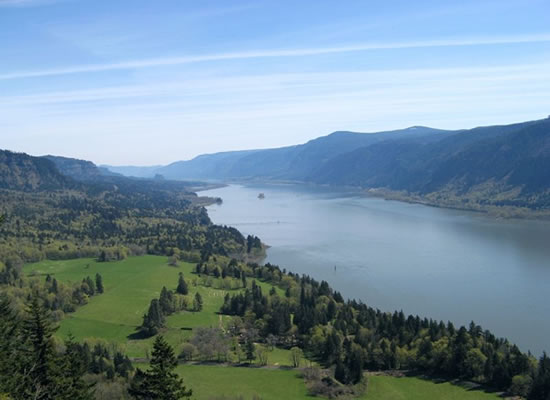
The word "Chinook" was originally applied to the misty sea breezes that blew in from the coasts of Oregon and Washington. Because the "Chinook Winds" seemed to come from the direction of the Indian village of Tchinouk, both the winds and the tribe were called "Chinook" The Chinook inhabited lands at the mouth of the Columbia River, on the Washington-Oregon border.
Homes
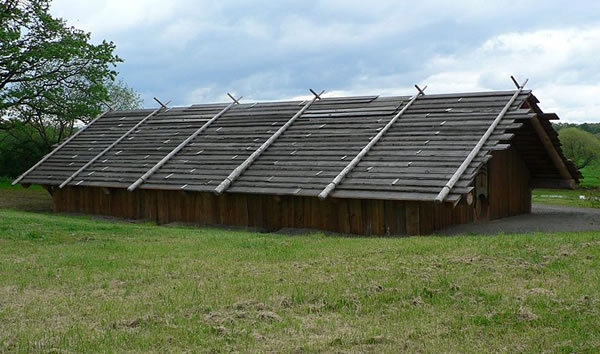
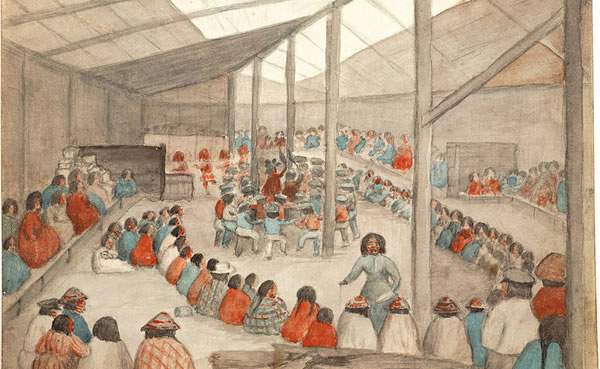
Chinook Plankhouse The Chinook pople built large plankhouses out of cedar wood. The size of the structure depended on the wealth of the family that built it, or, the number of families that inhabited it. Some could be as large as 40 feet wide and 100 feet long. Each family that lived in a plankhouse occupied a specific part. Mats hung from the rafters acted as makeshift walls and separated the house into different living spaces. At the center of the plankhouse was a fireplace, where all of the inhabitants gathered to eat and socialize. Sleeping platforms were erected along the walls and food was hung from the rafters to dry. Culture
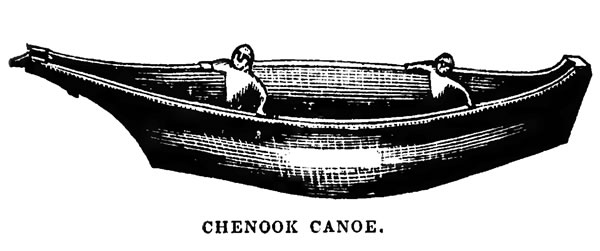
The Chinook inhabited the area at the mouth of the Columbia River, on the present-day border of Washington and Oregon. The river was essential in all aspects of life, especially in hunting and trading. Like other Northwest Coast tribes, the Chinook carved remarkable canoes from the abundant sources of timber, but did not carve totem poles like their neighbors to the north. Instead, the Chinook were famous from their horn carvings, which were fashioned from the horns of mountain goats and bighorn sheep. TradingThe Chinook were prolific traders, and often traveled the network of rivers in the Pacific Northwest trading with other villages and White frontiersmen. They bartered fish products, furs, cedar, carvings, and slaves. They even evolved a special trading language known as Chinook Jargon. Used throughout the Pacific Northwest, Chinook Jargon was a combination of English, French and various indigenous languages that was useful in trading with different peoples. The Chinook used shells as a form of currency. Beliefs and PracticesThe Chinook practiced many interesting spiritual beliefs and ceremonies. One of the most important ceremonies was the First Salmon Rite, in which each family group welcomed the annual migration of the salmon from the Pacific Ocean through Chinook Territory. The Chinook also believed in the vision quest, a ceremony in which adolescent boys and girls ventured into the wilderness to find guardian spirits that would help give them powers in hunting or curing or bestow upon them good luck and new songs and dances. Chinook parents also engaged in the practice of flattening the foreheads of their babies by restraining the forehead in tight bandages on the cradleboard while the bones were still soft. The Potlatch
Like most northwest coast tribes, the Chinook practiced the potlatch, a ceremony in which one family redistributed its wealth. In a potlatch, the host would demonstrate wealth and social status by giving away possessions, in some cases, all of the possessions owned by the host. The host of the potlatch could normally get many of their possessions back in future potlatches held by other families. Potlatches were performed for many occasions including births, weddings, funerals, rites of passage, the building of a new clan house, and the honoring of the deceased. Potlatches usually involved great celebrations including extravagant feasts, music, dancing, and the honoring of spirits. Slaves, blankets, tools, carvings, weapons, and furs were among things normally given away at a potlatch. Families who gave away their possessions would gain social status. Most potlatches lasted between one and three days. Potlatches could become competitive, especially among rival groups. Discussion Questions
Who Were the Chinook?The word "Chinook" was first used to describe the ocean winds near Oregon and Washington. The winds were named after a nearby Native village, and the people became known as the Chinook. They lived where the Columbia River meets the Pacific Ocean, along today’s Washington-Oregon border. HomesThe Chinook built large houses called plankhouses out of cedar wood. Some were very big, depending on the family’s wealth or how many families lived inside. Each family had their own area, divided by mats. A fireplace in the center was used for cooking and gathering, while food was dried by hanging it from the rafters. CultureThe Columbia River was important to Chinook life for fishing and trading. They made strong canoes from wood but did not make totem poles like other tribes. Instead, they carved designs from animal horns. The Chinook traded fish, furs, carvings, and even slaves. They created a trading language called Chinook Jargon, made up of English, French, and Native words. Shells were used as money. Beliefs and TraditionsThe Chinook held special ceremonies, like the First Salmon Rite, to welcome the yearly salmon run. Young people went on vision quests to find spirit helpers. Parents sometimes flattened their babies’ foreheads using soft bandages to shape their skulls, which was a common tradition. The PotlatchThe Chinook celebrated potlatches, which were big gatherings where families gave away their belongings to show wealth and gain respect. Potlatches were held for events like births, weddings, or honoring the dead. These events included dancing, feasts, music, and gifts like tools, furs, and carvings. They could last several days and sometimes became competitive. |
| Chinook Activities |