Famous Native Americans |
|
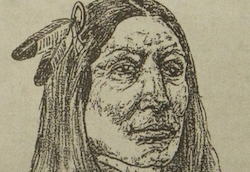 |
Crazy Horse was a legendary Lakota war leader known for his bravery and determination to protect his people and their way of life. He played a key role in the defeat of General Custer at the Battle of Little Big Horn in 1876 and is honored today with a massive memorial in South Dakota. |
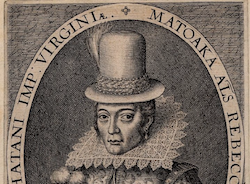 |
Pocahontas was a Native American woman from the Powhatan Nation, known for her connection to the English colony at Jamestown and her role in easing tensions between the Powhatan people and English settlers. She later married English settler John Rolfe and traveled to England, where she became a symbol of peace between the two cultures. |
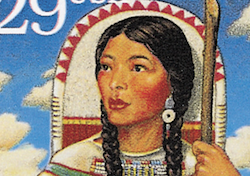 |
Sacagawea was a Shoshone woman who served as a guide and interpreter for the Lewis and Clark expedition across the western United States. She helped the explorers navigate unfamiliar land and communicate with Native tribes, all while carrying and caring for her infant son. |
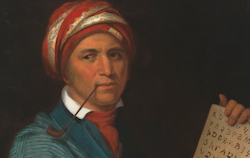 |
Sequoyah was a Cherokee silversmith who invented the Cherokee syllabary, a writing system that allowed the Cherokee people to read and write in their own language. His alphabet, completed in 1821, had 86 characters and became the official written language of the Cherokee Nation. |
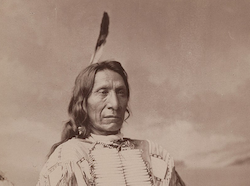 |
Red Cloud was a Lakota chief who successfully led his people in resisting U.S. expansion into their lands during the 1860s. He is best known for winning Red Cloud’s War, which forced the U.S. government to sign a treaty recognizing Lakota control of the Powder River region. |
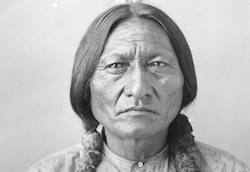 |
Sitting Bull was a Lakota Sioux leader and medicine man known for his fierce resistance against U.S. government policies and westward expansion. He is most famous for leading Native American forces to victory at the Battle of Little Bighorn in 1876, and for his enduring legacy as a symbol of Native resistance and pride. |
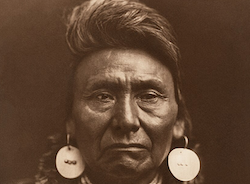 |
Chief Joseph was the leader of the Nez Perce who fought to protect his people’s homeland in the Wallowa Valley of Oregon. He is remembered for his long retreat during the Nez Perce War of 1877 and his famous words, “I will fight no more forever.” |
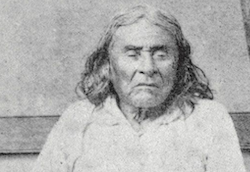 |
Chief Seattle was a respected leader of the Suquamish and Duwamish tribes known for his wisdom and powerful speeches about protecting the environment. He worked to maintain peace with white settlers while preserving his people’s traditions and connection to the land. |
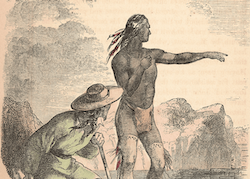 |
Squanto was a member of the Patuxet tribe who was kidnapped, taken to England, and later returned to North America, where he helped the Pilgrims survive by teaching them how to farm and fish. He played an important role as a translator and peacemaker between the Wampanoag people and the English settlers. |
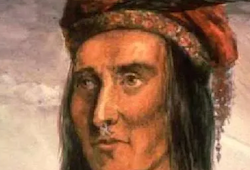 |
Tecumseh was a powerful Shawnee leader who sought to unite Native American tribes into a confederation to resist U.S. expansion into their lands. He played a key role in early 19th-century Native resistance and was killed in 1813 during the Battle of the Thames in the War of 1812. |
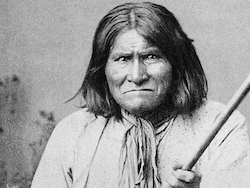 |
Geronimo was a leader of the Apache who resisted U.S. and Mexican forces to protect his people and their land. He became a symbol of Native American resistance before surrendering in 1886. |
 |
Elizabeth Peratrovich was a Tlingit civil rights leader from Alaska who fought against discrimination toward Native people. Her powerful 1945 speech helped pass the Alaska Anti-Discrimination Act, making her a symbol of courage and equality. |
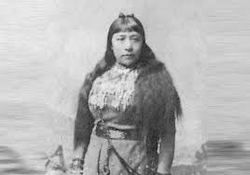 |
Sarah Winnemucca was a Northern Paiute author, educator, and activist who fought for the rights of her people in the 1800s. She wrote Life Among the Piutes, one of the first books by a Native American woman, sharing her people’s struggles and culture. |
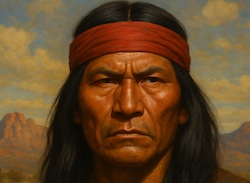 |
Cochise was a respected Apache leader who resisted U.S. military forces in the 1860s to defend his people’s land. He eventually agreed to peace in 1872, helping establish a reservation for the Chiricahua Apache in Arizona. |
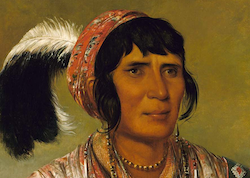 |
Osceola was a leader of the Seminole people who played a major role in resisting U.S. efforts to remove his tribe from Florida during the Second Seminole War. Known for his courage and leadership, he became a symbol of Native American resistance before his capture in 1837. |