Puebloan People |
|
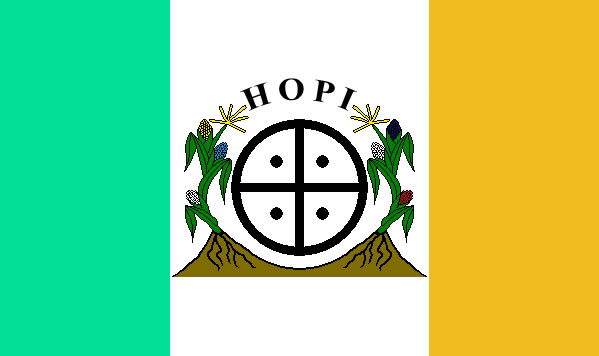
Hopi Nation Flag (One of the Puebloan Peoples) |
|
The name Pueblo means house or home in Spanish and was originally used to describe the cliff-dwellings and large apartment complexes built by the southwestern peoples. It eventually came to represent the people themselves. The name "Pueblo" collectively refers to a large number of different groups that lived in the southwest including theAcoma, Cochiti, Hopi , Isleta, Jemez, Laguna, Nambe, Picuris, Pojoaque, Sandia, San Felipe, San Ildefonso, San Juan, Santa Ana, Santa Clara, Santo Dimingo, Taos, Tesuque, Zia, Zuni. The Pueblo people lived in modern-day Arizona, New Mexico, Utah, and Colorado. Unlike many Native American groups, large populations of Pueblo people still live in their ancestral homeland near the "four corners" region in the American southwest. Diet:The Pueblos were prolific farmers and grew "the three sisters:" Corn, beans, and squash. The men also hunted deer, antelope, and rabbits, while the women gathered nuts and fruits. During periods of drought in the desert, Pueblo people would build dams on the rivers that formed reservoirs enabling them to drink and water their crops.
$1 United States Coin Honoring the "Three Sisters" Homes:The Pueblo people are well-known for building cliff-dwellings, apartment-like complexes built from stone, adobe, or mud, into or near cliffs or canyon walls that overlooked open spaces or plazas. These multi-storied complexes could house hundreds of families, which accessed their own apartments, at different heights in the cliff or mud wall, by using ladders. Some apartment complexes were so massive, such as those at Chaco Canyon, New Mexico, that they served as the largest building structures in North American until the 19th century. Some complexes were so large that they included over 700 rooms, although the average complex included about 200 rooms. In addition, Pueblo people built ceremonial rooms called kivas that were circular or (or less often rectangular) rooms used for spiritual purposes. Kivas were originally built underground by ancient Puebloan people, but as they evolved they were more often found above ground. Kivas normally included a fire pit, benches, stone columns known as pilasters, ventilation tunnels and a small hole called a sipapu which was built as a spiritual "doorway" that symbolized the pathway by which the Pueblo ancestors entered the world.
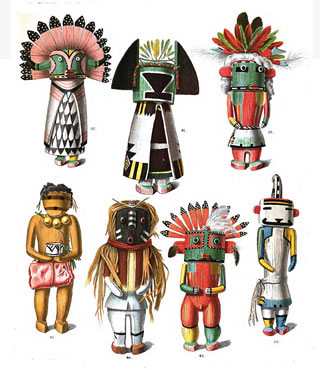
Mesa Verde National Park - See Pueblos, Kivas, and Cliff Dwellings Kachinas:Puebloan people are known for Kachinas. A kachina was a strong spirit that could control nature. Puebloan people prayed to over 400 different Kachinas. Kachinas can represent anything found in the natural world including animals, plants, weather events (such as a thunderstorm) or cosmic objects like the stars, sun, or planets. Kachinas also may have similar relationships as humans and may have cousins, sisters, brothers, parents, and even children. A Kachina has three aspects: the supernatural being, kachina dancers, and kachina dolls. Kachina dancers represented the supernatural beings in religious ceremonies and the dolls were representations of the different kachinas given to children.
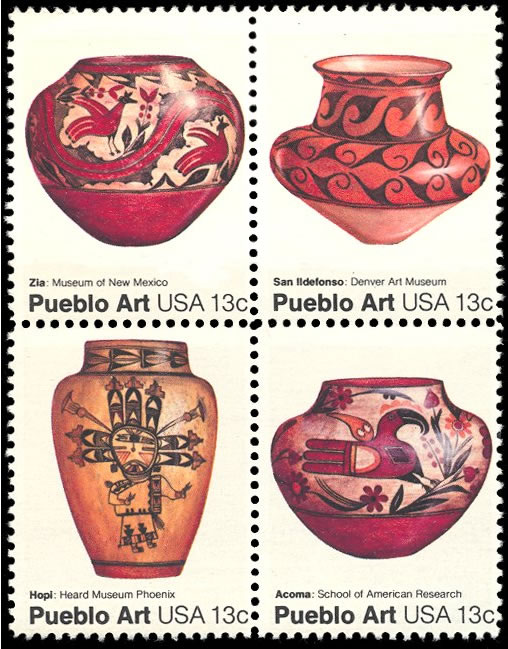
Video on the symbolism of different Kachinas PotteryPueblo people are perhaps best known for the colorful and intricate pottery they built. The golden age of Pueblo pottery is considered to be between 1600-1880, after the arrival of Spanish explorers, though people of the southwest are thought to have made pottery for more than 2,000 years. Pueblo pottery was made from sources of clay abundant in the hostile desert environment. "Paint" was made naturally from residue left from boiling plant roots, or, from crushed rocks and brushes were fashioned from chewed twigs. Pots were hardened in outdoor pit fires. With the construction of railroads, Pueblo women were able to sell and trade their pottery, which soon gained a national reputation for its beauty and symbolism.
Discussion Questions
Name and LocationThe word "Pueblo" means house or home in Spanish. It was first used to describe the stone and mud homes built by Native peoples in the Southwest, and later came to describe the people themselves. Pueblo refers to many different groups, including the Hopi, Zuni, Taos, Acoma, and others who lived in present-day Arizona, New Mexico, Utah, and Colorado. Many Pueblo people still live in this region today. DietThe Pueblo people were skilled farmers who grew corn, beans, and squash, known as the "Three Sisters." Men hunted deer, rabbits, and antelope, while women gathered nuts and fruits. During dry times, they built dams to collect water for drinking and farming. HomesPueblo homes were built into cliffs or near canyons and were made from stone, adobe, or mud. These multi-story buildings had many rooms and could house hundreds of families. People used ladders to move between floors. Pueblo people also built kivas—special circular or rectangular rooms used for ceremonies. Kivas had fire pits, benches, and a sacred hole called a sipapu, which symbolized the path their ancestors took to enter the world. KachinasKachinas are important spirit beings in Pueblo religion. Each Kachina can represent things from nature like animals, rain, or the sun, and they may have family relationships like people. Kachinas appear in three ways: as spirits, as dancers in ceremonies, and as dolls given to children to teach them about the spirits. PotteryPueblo people are well known for their beautiful pottery. They made pots from desert clay and painted them using natural dyes from plants and rocks. The pottery was baked in outdoor fires and often had colorful designs. After the railroad was built, Pueblo women began selling their pottery across the country. |