New York Colony |
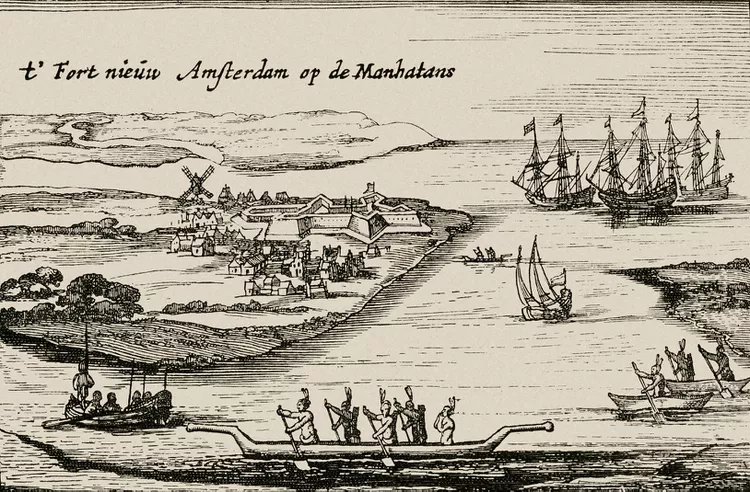
Early Exploration and Native OriginsThe area that first became New Amsterdam, and eventually New York City, was originally called Man-A-Hat-Ta by the local Indians. The name meant "Heavenly land". It was first visited by the French explorer Giovanni da Verrazzano in 1524. Verrazzano explored much of America's northeast coast, including the waters around New York City and Long Island. Today, the Verrazzano Narrows Bridge in New York City is named in his honor. Dutch Settlement and Hudson's ExplorationThe first settlers in the area were the Dutch. Henry Hudson explored the region and named the world's largest tidal river—the Hudson River—after himself. His journey from Albany to New York City encouraged the Dutch to colonize the region. They quickly built a settlement and roads, some of which, like Broadway and Pearl Street, are still in use today. Peter Minuet and the Founding of New AmsterdamIn 1626, Peter Minuet arrived and bought Man-A-Hat-Ta from the local Indians for about 24 dollars worth of beads and trinkets. Although the area wasn't originally inhabited by Native Americans, it became the site of the Dutch settlement called New Amsterdam. Minuet became the colony’s first governor. Because of its location, New Amsterdam attracted people of many cultures and religions. The first Jewish synagogue in the New World was built there in 1640. Dutch settlers expanded into Long Island and parts of present-day upstate New York. Growth and Leadership of Peter StuyvesantAs New Amsterdam grew rapidly, disorder became common. In 1647, Peter Stuyvesant was elected governor. He ruled firmly for 17 years, restoring order and helping the colony thrive. Arrival of the Puritans and British TakeoverEnglish Puritans later moved from New England to New Amsterdam. They gained power and enforced strict rules, such as fines for singing and public whippings for more serious offenses. In 1663, a series of strange events—including a meteor, an earthquake, and a warm winter—led to unease. Soon after, Charles II of England declared that the land between the Delaware and Connecticut Rivers belonged to his brother, the Duke of York. When the English fleet arrived, the unprepared Dutch surrendered without a fight. New Amsterdam became New York under British control. Discussion Questions
Glossary
Originally Settled by the DutchIn 1524, Giovanni de Verrazano explored the area that would become New York. Later, Henry Hudson and Samuel de Champlain explored the region, and in 1613 the Dutch built trading posts along the Hudson River. They called their colony New Netherland and started small settlements, including Albany. The Birth of New AmsterdamIn 1625, Dutch leader Peter Minuit founded New Amsterdam at the mouth of the Hudson River. According to legend, he bought the land from local Native Americans for about $24 worth of goods. That land would later become New York City. The English Take ControlIn the 1630s and 1640s, Puritans began moving into New Amsterdam and became influential. The British believed the land was theirs based on John Cabot’s explorations. In 1664, they sent a fleet to New Amsterdam and took control without a fight. New Netherland was renamed New York in honor of the Duke of York. |
| New York Colony Activities |
|