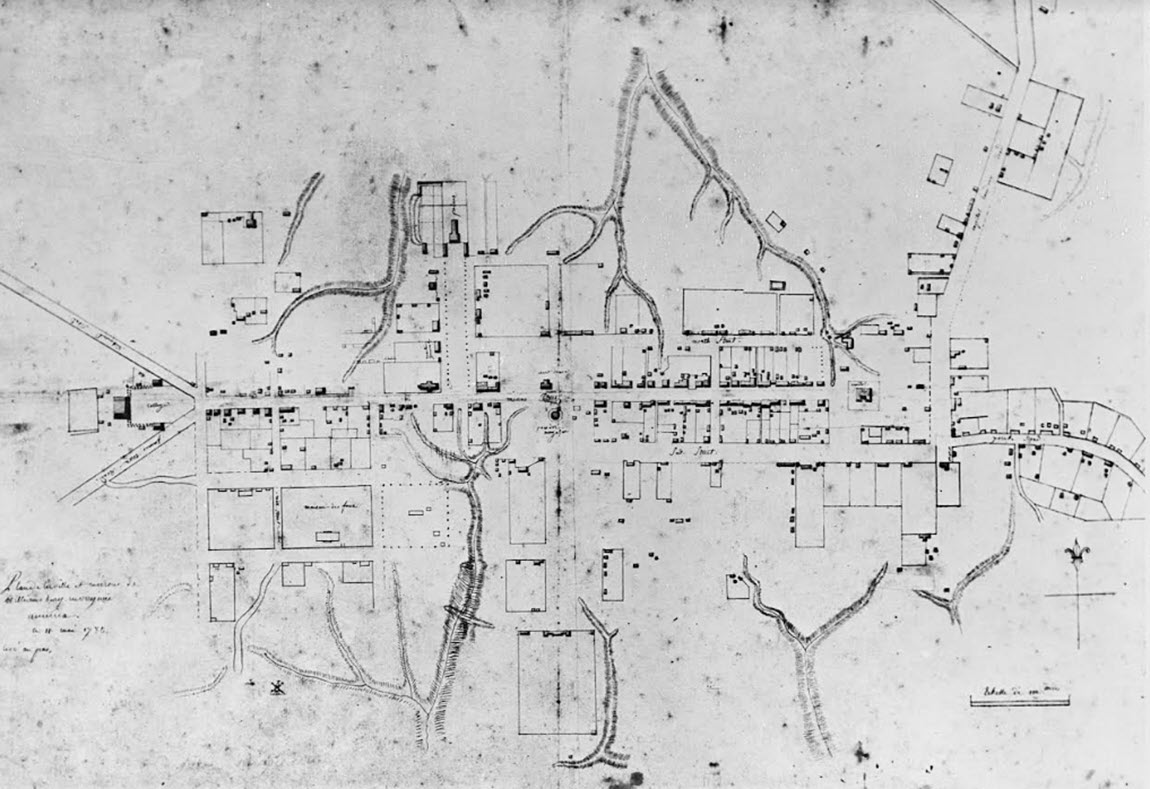
From Jamestown to Williamsburg |
The relocation of Virginia's capital from Jamestown to Williamsburg in 1699 represents a significant juncture in the history of the Commonwealth, marking the transition from its colonial beginnings to a new era of political, cultural, and economic development. |
JamestownJamestown, founded in 1607, holds the distinction of being the first permanent English settlement in North America. Nestled along the banks of the James River, Jamestown served as the political, economic, and social center of the Virginia Colony for over 90 years. Its strategic location provided access to navigable waterways and fertile lands, making it a hub for trade, agriculture, and colonial expansion. Problems with JamestownHowever, as Virginia grew and prospered, the limitations of Jamestown became increasingly apparent. Situated on a narrow peninsula susceptible to flooding, disease, and hordes of mosquitoes, Jamestown faced persistent challenges related to sanitation, infrastructure, and security. Moreover, its location along the coast left it vulnerable to attacks from foreign powers, as demonstrated during the Anglo-Dutch War in the 1660s. Choosing a New LocationAfter a fire burned the Jamestown State House to the ground in 1698, the Virginia General Assembly made the decision to relocate the capital to a more secure and strategically advantageous location. In 1699, Williamsburg was chosen as the site for the new capital. Situated further inland on the Virginia Peninsula, Williamsburg offered several advantages that made it an attractive choice for the seat of government. One of the primary reasons for selecting Williamsburg was its more favorable geographic position. Located on higher ground and surrounded by inland waterways, Williamsburg was less susceptible to flooding and coastal erosion than Jamestown. This provided greater stability and security for government institutions, ensuring continuity of governance even during times of crisis. Furthermore, Williamsburg's central location within the colony made it more accessible to settlers from across Virginia. Its proximity to major trade routes and transportation networks facilitated commerce, communication, and travel, fostering economic growth and integration within the Commonwealth. The relocation of the capital to Williamsburg also had profound cultural and symbolic implications. As the seat of government, Williamsburg became a center of political discourse, intellectual inquiry, and cultural exchange. It was home to the College of William & Mary, founded in 1693, which played a pivotal role in shaping the educational, social, and political landscape of colonial Virginia. Discussion Questions
Glossary
JamestownJamestown was founded in 1607 and was the first permanent English settlement in North America. It became the center of government, trade, and life in the Virginia Colony for over 90 years because of its access to rivers and good farming land. Problems with JamestownJamestown had many problems. It was built on low land that flooded often and had lots of mosquitoes that spread disease. The area had poor sanitation and was hard to defend from foreign attacks like during the Anglo-Dutch War. Choosing a New LocationIn 1698, a fire destroyed the State House in Jamestown. Leaders decided to move the capital. In 1699, they chose Williamsburg, which was on higher land, safer from flooding, and easier to protect. Why Williamsburg?Williamsburg was a better location. It was easier to reach from other parts of Virginia and was near trade routes. It also helped connect people and made government work better. The Rise of WilliamsburgWilliamsburg became the new capital and a place for learning, politics, and culture. The College of William & Mary, founded in 1693, made Williamsburg a center for education and helped shape Virginia's future. |