Salem Witch Trials |
||
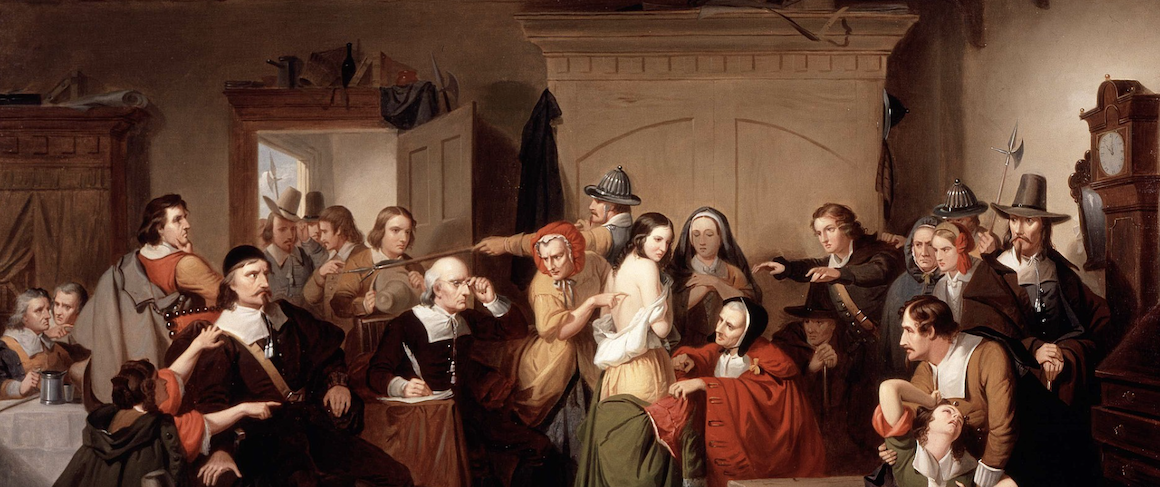
Examination of a Witch (1857) T.H. Matteson |
||
The BeginningIt all began in late January of 1692 at the home of Samuel Parris. His daughter Betsy, and niece, Abigail, began exhibiting strange and destructive behavior. They shrieked, had convulsions and seizures, entered trance-like states and suffered from high fevers. Parris tried desperately to keep their condition a secret, but finally agreed to contact his physician. Upon examining the girls, Doctor William Griggs could find nothing physically wrong with them. He suggested their condition might be the result of witchcraft. The diagnosis of witchcraft, while certainly devastating, was not uncommon at the time. Throughout February, Parris prayed for the evil forces to release the girls. The So-Called WitchesThe Puritan townspeople began pressuring the girls to identify the reasons for their suffering. The girls named three women as witches. One was a slave named Tituba who had often told them magical stories from her native Barbados, another was a peasant mother named Sarah Good, and the last was an elderly woman named Sarah Osborne who regularly failed to attend church. The women were arrested and examined in the village meetinghouse. During the examinations the girls described how they had been attacked by “spectors” of these three women. While the two Sarah’s denied engaging in witchcraft, for some reason, Tituba confessed! Tituba then claimed the two Sarah’s were also ghosts and had conspired with her to torment the girls.
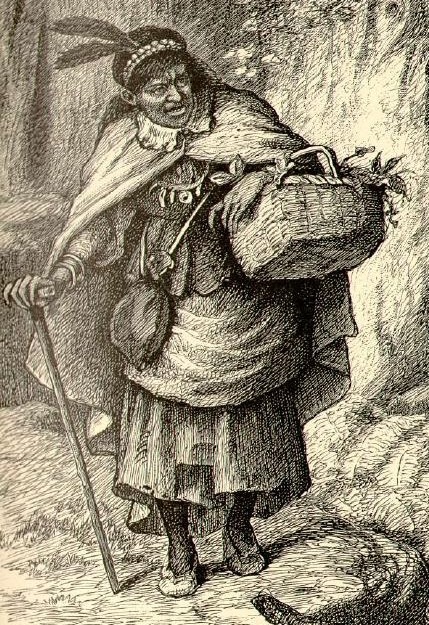
Artist rendering of Tituba She was one of usSoon, more young girls began acting strangely. One of the girls, Ann Putnam, was the daughter of one of the most influential families in Salem. Her family’s support of her accusations helped to legitimize the guilt of the “witches”. Other townspeople soon would be accused of engaging in witchcraft. The people within the town of Salem became hysterical. Even Rebecca Nurse, a mother of eight, would be tried and convicted of witchcraft. Several girls claimed that Nurse’s apparition (ghost) tortured them and other witnesses linked her to the unusual deaths of several Salem residents. During her trial, 39 of her neighbors signed a petition stating she was a woman of propriety (virtue or goodness). When the jury declared her not-guilty, an uprising nearly occurred. The audience was horrified that she was acquitted, and several of the judges were left unsatisfied or left the bench. The jury was forced to reconvene and the court brought a confessed witch by the name of Deliverance Hobbs to the courtroom. When asked about Hobbs, the nearly deaf Nurse replied ‘she was one of us’. After hearing the words of Nurse, the jury returned a guilty verdict. The Dreadful EndNurse later explained that she had never really heard the question, and that when saying ‘she was one of us’ she meant a co-defendant. Nurse was nevertheless hanged on July 19, 1692. Other accused witches were tortured until they confessed. In all, 26 “witches” were executed in Salem in 1692. Discussion Questions
Glossary
The BeginningIn January 1692, strange things began happening at the home of Samuel Parris. His daughter Betsy and niece Abigail started screaming, having seizures, and acting in odd ways. A doctor named William Griggs said they might be bewitched. At that time, people believed witchcraft was real and dangerous. The So-Called WitchesThe townspeople wanted to know who was causing the girls’ problems. The girls accused three women of being witches: Tituba, a slave who told stories; Sarah Good, a poor mother; and Sarah Osborne, an older woman who didn’t go to church. During questioning, Tituba surprised everyone by confessing and said the two Sarahs helped her. The other two women said they were innocent. She Was One of UsOther girls started acting strange too. One of them was Ann Putnam, whose wealthy family supported the accusations. Many more people were accused. Even Rebecca Nurse, a kind woman and mother of eight, was accused. The girls said her ghost hurt them. Her neighbors defended her, and at first the jury said she was not guilty. But when she said something confusing in court, the jury changed its mind and found her guilty. The Dreadful EndRebecca Nurse explained that she didn’t hear the question clearly and meant no harm. Still, she was hanged on July 19, 1692. Others were tortured until they confessed. In total, 26 people were executed in Salem that year because of the witch trials.
|
||
|
||
| Salem Witch Trials Activities | ||
|