The Creation of the Mason-Dixon Line |
|
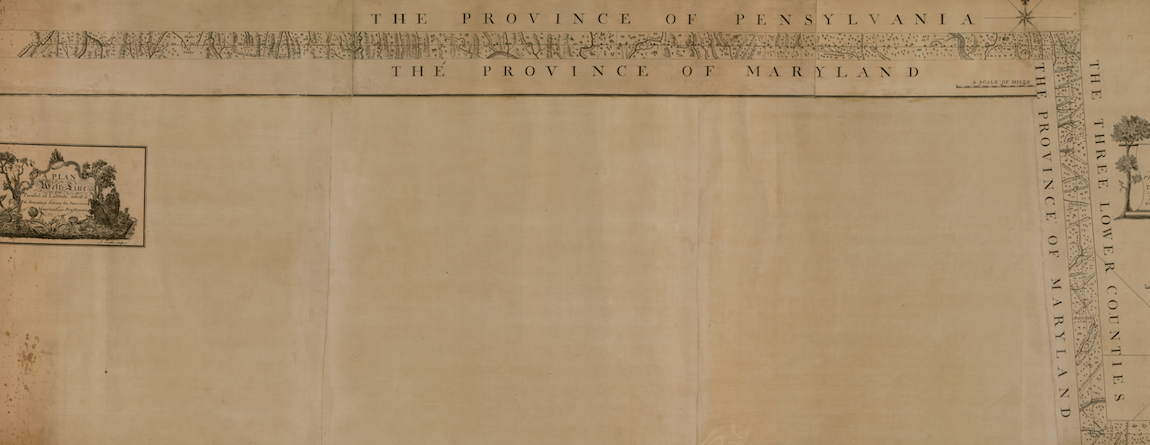
IntroductionThe history of Delaware is often linked with the boundary dispute between Pennsylvania and Maryland, a conflict that spanned decades and had profound implications for the governance and identity of the region. The struggle for control over Delaware not only reflected the territorial ambitions of the two colonies but also highlighted broader issues of colonial rivalry, legal interpretation, and political power in early America. The Origins of the DisputeThe origins of the boundary dispute can be traced back to the colonial charters granted by the English crown. Both Pennsylvania and Maryland were founded under charters that included vague and ambiguous descriptions of their boundaries, leading to overlapping territorial claims. The Role of William Penn and Lord BaltimoreWilliam Penn, the founder of Pennsylvania, and the Calvert family, who controlled Maryland, were central figures in the boundary dispute. Penn and the Calverts both sought to expand their territories and maximize their land holdings, leading to frequent clashes over the boundaries between their respective colonies. Despite attempts at negotiation and compromise, the dispute remained unresolved for decades. Penn wanted an outlet to the sea for his colony and believed he has been granted a lease for the land leading to this outlet referred to as the 12-mile Circle. Lord Baltimore, however, disagreed, and the issue remained unsettled. Legal Battles and Political ManeuveringThe boundary dispute between Pennsylvania and Maryland played out in a series of legal battles, political maneuvers, and even occasional outbreaks of violence. Both colonies enlisted the support of influential allies in England, lobbied the crown for favorable rulings, and sought to undermine each other's claims through legal challenges and legislative tactics. However, the lack of clear delineation in the colonial charters made it difficult to reach a definitive resolution. The Establishment of the Mason-Dixon Linehe turning point in the boundary dispute came with the involvement of two English surveyors, Charles Mason and Jeremiah Dixon, who were commissioned to survey and mark the boundary between Pennsylvania and Maryland. Their efforts resulted in the creation of the famous Mason-Dixon Line, a survey line that would come to symbolize the division between the North and South in American history. While the Mason-Dixon Line resolved many of the boundary issues between Pennsylvania and Maryland, it also perpetuated the institution of slavery by establishing a clear dividing line between free and slave states. Discussion Questions
Glossary
IntroductionThe history of Delaware is closely tied to a long argument between Pennsylvania and Maryland. Both colonies wanted control over the same land, and this led to years of fighting over borders, laws, and power. Where the Problem BeganThe trouble started because the English king gave both colonies vague maps in their founding documents. These unclear maps caused both colonies to claim the same land, including Delaware. William Penn and Lord BaltimoreWilliam Penn (who founded Pennsylvania) and Lord Baltimore (who led Maryland) both wanted more land. Penn believed he had rights to a coastal area called the 12-mile Circle, but Lord Baltimore disagreed. They argued for years without a solution. Legal Fights and Political TricksThe two colonies fought in court, used politics to gain support in England, and even had some violent incidents. Because the maps and charters were unclear, no one could settle the fight easily. The Mason-Dixon LineIn the 1760s, two Englishmen named Charles Mason and Jeremiah Dixon were hired to solve the border problem. They marked the Mason-Dixon Line, which later became a famous divider between the North and South. While it helped solve the land dispute, it also became a line separating free states from slave states. |