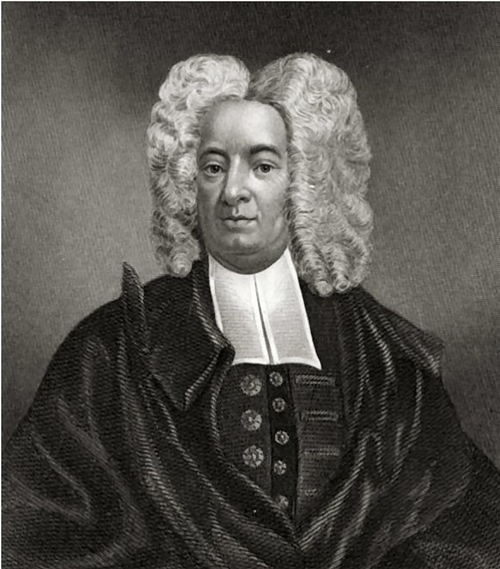
Cotton Mather |
|
Early Life and EducationCotton Mather was a Puritan minister who was well-known for his indirect role in the Salem Witch Trials. He was born on February 12, 1663, to a family of New England Puritan ministers. He attended Harvard University at the young age of 12, but when he received his Master of Arts degree at age 18, he realized he wanted to follow in his family's footsteps and join the clergy. He preached his first sermon in 1680, and was ordained as a minister in 1685. From then on, Mather served in Boston’s North Church for 40 years.Advocate of InoculationsMather was known for his progressive views on medicine, which was a heavily contested subject at the time. Mather supported vaccinations for smallpox - a topic which was very controversial - and vaccinated his son, who almost died from the procedure. At the time, vaccinations were very uncommon and feared by many, so Mather's decision to vocally support it was striking for his time period. Mather also published over 400 works throughout his lifetime, on subjects ranging from smallpox inoculation to witchcraft. His work titled "Curiosa Americana" demonstrated his abilities as a scientist, and helped him get elected to the Royal Society of London. Influence on the Salem Witch TrialsWhile Mather’s medical views were ahead of his time, his actions regarding witchcraft were less progressive. In 1684, Mather published a book titled "Remarkable Provinces," a book recounting his experience with possessed children in Boston's Goodwin family. In the book, Mather outlined symptoms of clinical hysteria and related the children's possession to witchcraft. He published another book titled "Memorable Providences Relating to Witchcraft and Possession" in 1689 that increased public interest in witchcraft and later led to witch trials during the colonial era. Mather's books played a role in instigating the first accusations of witchcraft in Salem, Massachusetts - accusations that later led to the Salem Witch Trials, the accusations of over 200 people, and the deaths of 19. Mather also wrote to the courts trying witches in Salem and petitioned to allow spectral evidence - evidence from spirits within the possessed witches attesting to their use of witchcraft. The trials themselves were based on false evidence - no one in Salem was actually a witch - but the fear stirred up by writers like Mather made the citizens afraid, and more likely to turn against their friends and neighbors. The Salem Witch Trials constituted the deadliest witch hunt in colonial America, and Mather's writings played a role in making them happen. Cotton Mather died on February 13, 1728, leaving behind one of his three wives and two of his fifteen children. His mark on history, while significant, is certainly a controversial one. Discussion Questions
Early Life and EducationCotton Mather was a Puritan minister who became known for his role in the Salem Witch Trials. He was born on February 12, 1663, into a family of ministers. He entered Harvard University at age 12 and earned his degree at 18. He began preaching in 1680 and became a full minister in 1685. Mather served as a minister in Boston’s North Church for 40 years. Advocate of InoculationsMather supported using vaccines to fight smallpox, a dangerous and deadly disease. In his time, vaccines were new and many people were afraid of them. Mather even vaccinated his own son, who nearly died from the treatment. He also wrote over 400 books and papers, including scientific work like Curiosa Americana, which helped him get elected to the Royal Society of London. Influence on the Salem Witch TrialsMather believed in witchcraft and wrote books that increased fear in the community. His books described people he believed were “possessed” and linked their behavior to witches. These writings helped spark the Salem Witch Trials in 1692. Over 200 people were accused and 19 were executed. Mather also told the court to allow “spectral evidence”—claims that spirits of witches appeared to people. Today, we know these trials were unfair and based on false beliefs. LegacyCotton Mather died on February 13, 1728. He had 15 children during his life, but only two survived him. While he made important contributions to science and medicine, his role in the Salem Witch Trials remains one of the most controversial parts of his legacy. |
| Cotton Mather Activities |
|