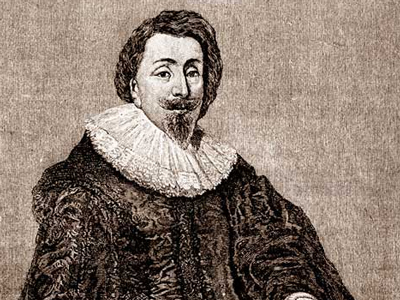
Lord Baltimore |
|
Avalon was Too ColdLord Baltimore, also known as George Calvert, 1st Baron of Baltimore, was interested in the English colonization of the New World to establish a refuge for England's Catholic population. Calvert was instrumental in the British settlement of Avalon, located off of the coast of Canada's Newfoundland. Calvert, however, became discouraged with the colony's cold climate and sought a more temperate place to start a colony farther south. A Catholic RefugeIn 1692, Calvert arrived in Jamestown, Virginia. The residents of Jamestown, however, opposed Catholicism and ordered him to leave. Calvert returned to Virginia determined to earn a charter for his colony from the Crown. Short on money, and in declining health, his persistence finally paid off when he was awarded about 12 million acres of land north of the Potomac River. Calvert, however, died at the age of 52 just five weeks before his charter was approved. Calvert's son, Cecil, would become the next Lord Baltimore and would be in charge of the colony's affairs. On November 22, 1663, 200 Catholic colonists left England on the ships Ark and Dove and landed on March 24, 1664, on what was then called Blackstone Island (now St. Clement's Island). Discussion Questions
Avalon Was Too ColdLord Baltimore, also known as George Calvert, wanted to start a colony in the New World where English Catholics could live safely. He helped set up a colony called Avalon on the island of Newfoundland, near Canada. But the weather there was too cold, so Calvert began looking for a warmer place to start a new colony farther south. A Catholic RefugeIn 1692, Calvert traveled to Jamestown, Virginia. The people there did not accept Catholic settlers and told him to leave. Calvert returned to England and worked hard to get permission from the king to start his own colony. He was sick and had little money, but after much effort, he was promised a large piece of land north of the Potomac River. Sadly, Calvert died before the colony became official. His son, Cecil Calvert, took over and helped lead the colony. On November 22, 1663, 200 Catholic settlers left England on two ships, the Ark and the Dove. They landed on March 24, 1664, at what is now called St. Clement’s Island in Maryland. |
| Maryland Colony Activities |
|