Powhatan People |
||||
|
||||
NameThe name "Powhatan" is roughly translated to mean "at the falls." The Powhatan lived in eastern Virginia. DietThe Powhatans hunted deer, beaver, opossum, otters, squirrels, quails, ducks, geese, and turkeys. They also took large quantities of fish, oysters, and scallops and planted corn, beans, and squash. In addition, fruits, roots, grains, and nuts were collected. HomesPowhatan villages were normally positioned near a water source. Houses (called yehakins) were made from saplings, bent and tied and covered with bark or woven mats. Although the houses featured rounded roofs, they were elongated like Iroquois longhouses, rather than traditional wigwams. CultureThe Powhatans were united under a governmental system that vested complete power in their leaders. Leaders included the tribal chief, priests, and healers. Chiefs inherited their power through their female lineage. The supreme tribal leader was named Powhatan (Wahusonacock). Powhatan ruled over 10,000 subjects and dozens of villages and was said to have at least 100 children, the most famous of which being Pocahontas. Before being united as the Powhatan Confederacy, the various tribes in the Tidewater region of Virginia would often battle each other. Powhatan men typically did the hunting, fishing, gathering, and defending, while the women farmed, cooked, made clothing, pottery, and baskets. Powhatan women were well-known for their intricate beadwork and basketry. Powhatan mothers carried their babies in cradleboards - boards positioned on the mother's back in which the baby was tied to. Children learned their roles by watching their parents. Young Powhatans would marry between the ages of 13 and 15. The Powhatans were an aggressive people and would battle other tribes for territory, revenge, or to kidnap women and children. Powhatan men could gain great prestige from wartime heroics. Young Powhatan boys, who were handpicked to be future leaders, would endure a nine-month rite of passage in which they were isolated from the rest of the tribe, forced into physical labor, and deprived of food. History
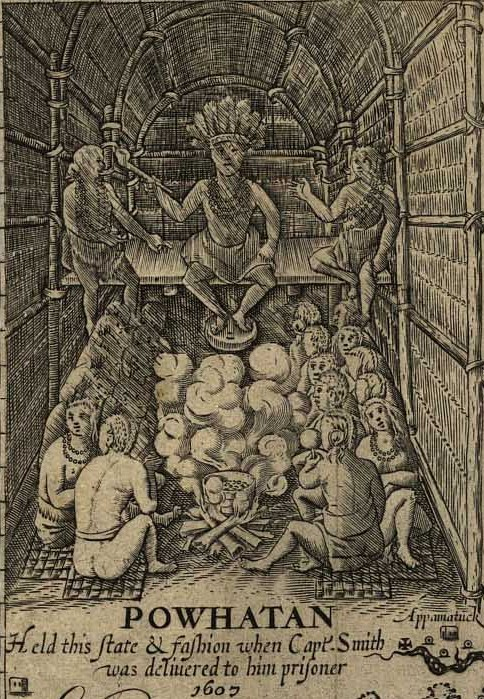
Modern Powhatan history began in 1607 when the first permanent English settlement was established in Jamestown. Relations between the Powhatans and the settlers were strained from the start, as the settlers took over the most productive lands in the Powhatan empire. John Smith, an English settler, was the first to initiate trade between the two groups, likely enabling the troubled settlement to survive amidst the climate, disease, and poor work ethic. The settlers, however, soon wore out their welcome, and the Powhatans kidnapped John Smith. According to legend, Powhatan's own daughter, Pocahontas, ensured his survival by throwing herself atop him at the moment he was to be executed. After an accident forced John Smith back to England, the Powhatans stopped trading with the settlers which resulted in "The Starving Time". Desperate for food, English raids on Indian villages turned violent. In revenge, the Powhatans killed any settler they found wandering outside the village of Jamestown. A five-year peace was established, however, after the settlers kidnapped Pocahontas. While at Jamestown, Pocahontas was converted to Christianity and soon married the wealthy tobacco-planter John Rolfe. The marriage brought about a peace that would eventually be shattered during Openchancanough's Wars.
As Tobacco quickly became the cash crop in Jamestown, more and more settlers began crowding the land. Tobacco depleted the soil and spread out throughout the Powhatan empire, ruining Powhatan hunting grounds and chasing away their game. On March 22, 1622, led by the Powhatan chief Openchancanough's, hundreds of warriors attacked Jamestown, killing 347 men, women, and children. In response, the settlers formed a brutal militia and burned down entire villages and fields of crops. For ten years such violent raids continued until the Powhatans were completely driven from their lands. Today, several Powhatan villages remain on Virginia reservations. Other Powhatan descendents live in Pennsylvania and New Jersey. Discussion Questions
Glossary
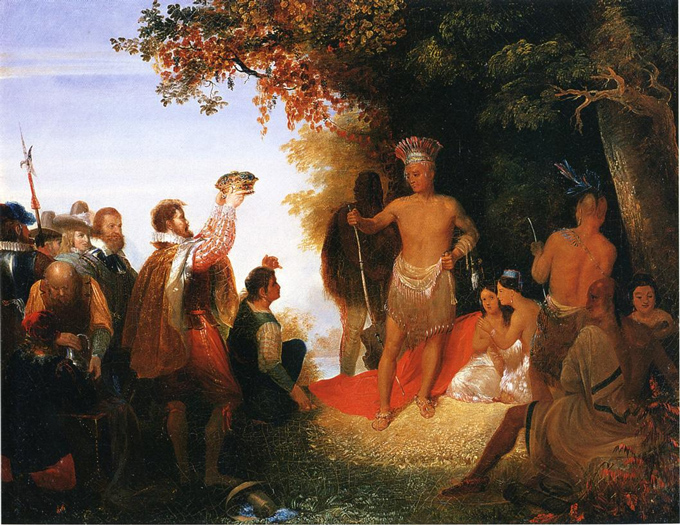
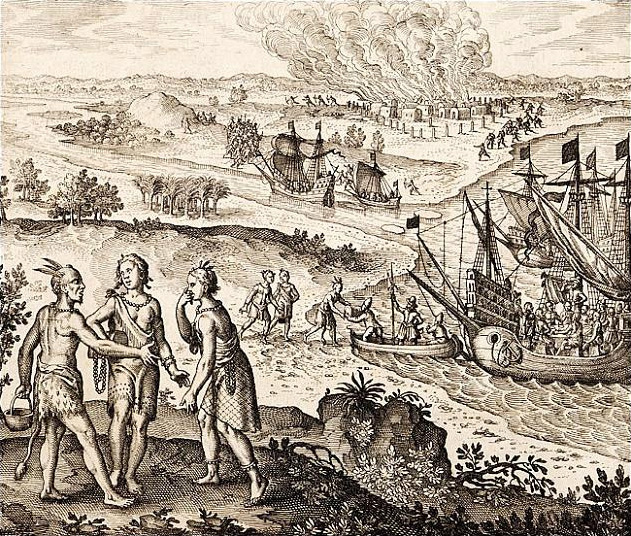
NameThe name "Powhatan" is roughly translated to mean "at the falls." The Powhatan lived in eastern Virginia. DietThe Powhatans hunted deer, beaver, opossum, otters, squirrels, quails, ducks, geese, and turkeys. They also fished for large quantities of fish, oysters, and scallops. Corn, beans, and squash were planted, and fruits, roots, grains, and nuts were collected. HomesPowhatan villages were usually located near a water source. Houses, called yehakins, were made from saplings bent and tied together, then covered with bark or woven mats. These homes had rounded roofs and were long, similar to Iroquois longhouses rather than small wigwams. CultureThe Powhatans were united under a government led by chiefs, priests, and healers. Leadership passed through the mother’s family line. The highest chief, Powhatan (Wahusonacock), ruled over 10,000 people in dozens of villages and had many children, including the famous Pocahontas. Men hunted, fished, gathered, and protected the community. Women farmed, cooked, made clothing, and created pottery and baskets. Children learned their roles by observing adults, and most married between ages 13 and 15. Powhatan women were especially known for their beadwork and basketry. Young boys chosen for leadership endured a nine-month rite of passage involving physical labor, food deprivation, and isolation. The Powhatans often fought with rival tribes for land, revenge, or to capture women and children. Wartime bravery brought high status for Powhatan men. HistoryThe Coronation of PowhatanIn 1607, English settlers established Jamestown, leading to tensions with the Powhatans, who lost fertile land. John Smith began trade with the tribe, helping the settlement survive early hardships. According to legend, Pocahontas saved Smith from execution after he was captured. After Smith left Virginia, the Powhatans stopped trading with settlers. Starving colonists began raiding Indian villages, prompting deadly attacks in return. Peace was briefly restored after Pocahontas was captured, converted to Christianity, and married John Rolfe, a wealthy tobacco farmer. The Abduction of PocahontasAs tobacco farming expanded, it ruined Powhatan lands and hunting grounds. On March 22, 1622, under Chief Opechancanough, Powhatans attacked Jamestown, killing 347 settlers. In response, English militias burned villages and crops, driving the Powhatans from their lands over the next ten years. Today, Powhatan communities still exist on reservations in Virginia, with others living in Pennsylvania and New Jersey. |