The Quakers |
The Birth of Pennsylvania |
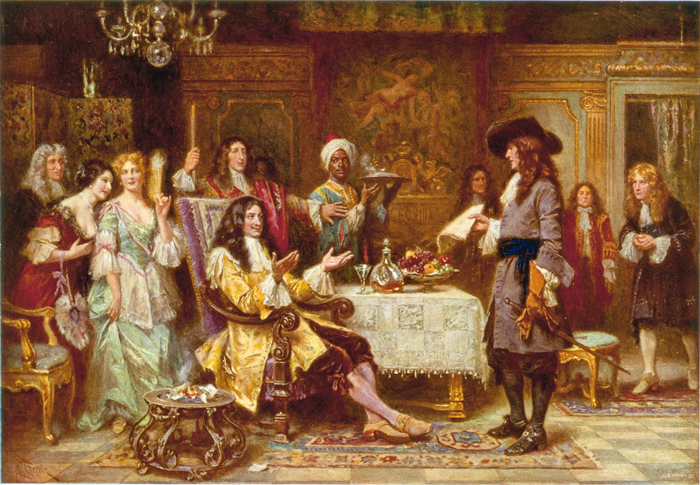
The Birth of the Quaker FaithThe Religious Society of Friends, otherwise known as the Quakers, was founded in England in the mid-1600s by George Fox, as a branch of Christianity. In the 1640s, Fox embarked on a spiritual mission through Europe where he experienced "openings," or times when he felt God was speaking directly to him. Fox shared his beliefs with those who had lost faith in the Church of England, and such beliefs started to spread, despite the fact that Fox was imprisoned for blasphemy. Fox's followers would be persecuted and bullied and the term "Quakers" was an insult used to refer to them. They were derisively called Quakers because they were said to "tremble" while in the path of God or in prayer. Divergent Views From Those of the PuritansTo those in the Church of England, the Quakers espoused radical beliefs. The main difference between the beliefs of the Quakers and those of the Church of England was that the Quakers believed God could speak directly to individuals through Jesus Christ, rather than through ministers or clergy. The Quakers believed that people could have a direct relationship with God. They also believed that women were spiritually equal to men, and rejected elaborate religious ceremonies, taxes, and mandatory church attendance. Quakers were pacifists and refused to sign legal papers. The Boston MartyrsBy the middle of the 17th century, Quakers had begun emigrating to the New World, where they also faced persecution. In fact, in 1660, Mary Dyer was one of three Quakers executed in Puritan Massachusetts for defying Puritan law. The three, and one other, would become to known to the Quakers as the Boston Martyrs. Luckily for the Quakers, however, the teachings of George Fox had influenced at least one individual who was owed a massive debt by the King of England! William Penn and the Holy ExperimentWilliam Penn became a Quaker early in his life. He spent many years traveling through Europe on a mission to convert people to the Quaker faith. When his father died, William was bequeathed a large debt payable by King Charles II. The King agreed to grant Penn over 29 million acres of land between New York and Maryland, making him the largest landowner in the world who was not a monarch. This, of course, would become Pennsylvania, and William Penn was ready to start what he called his "holy experiment." The Quaker WaysPenn quickly established Pennsylvania as a refuge for Quakers and other persecuted religion groups including Jews and Mennonites. Tens of thousands of settlers poured into Pennsylvania for opportunity and religious freedom. The Quakers established positive relations with the Native Americans and insisted on treating them fairly in trade and land dealings. Ultimately, however, quaker influence waned as politics compromised their spiritual beliefs and pacifism. Quakers turned to community improvement and volunteering. The abolishment of slavery became an important Quaker cause and by 1780, Quakers were prohibited from owning slaves. Many would harbor slaves or help slaves escape to freedom on the Underground Railroad.Glossary
Discussion Questions
The Birth of the Quaker FaithThe Quakers, or Religious Society of Friends, began in England in the mid-1600s. George Fox, their founder, believed people could feel God's presence directly. Even though he was jailed, his ideas spread. People called them "Quakers" to mock them because they were said to shake when feeling God's spirit. Different from the PuritansQuakers believed that people could speak to God without a priest or minister. They thought men and women were spiritually equal and didn't like fancy church services or paying church taxes. Quakers were peaceful and wouldn't fight in wars or sign oaths. The Boston MartyrsQuakers came to America but were still treated badly. In 1660, a woman named Mary Dyer and others were killed in Massachusetts for being Quakers. These people became known as the Boston Martyrs. William Penn and His Holy ExperimentWilliam Penn, a Quaker, was given a huge land grant by King Charles II to repay a debt. He started Pennsylvania as a place for Quakers and others to live freely. Penn called it his "holy experiment." The Quaker Way of LifeIn Pennsylvania, Quakers welcomed many groups and tried to live in peace with Native Americans. Over time, politics made it harder to follow their beliefs, but Quakers worked to help others. They became leaders in the fight to end slavery and helped slaves escape on the Underground Railroad. |
| William Penn and the Quakers Activities |
|