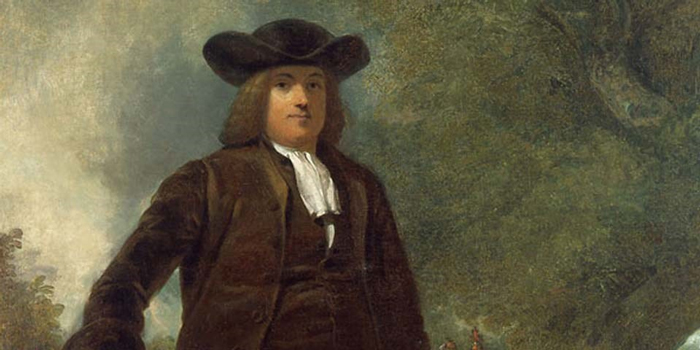
William Penn |
|
Penn's Land-GrantPennsylvania was founded in 1681 by William Penn. Penn was issued a land grant by King Charles II largely because of a significant debt owed to his father, Admiral Penn. At the time, the grant was one of the largest in terms of area ever known. It was named Pennsylvania, which means Penn’s Woods, after Admiral Penn. A Quaker Colony Based on Religious FreedomPenn quickly established a government based on religious freedom for the Quakers. Quakers did not believe in the strict rules imposed by the Puritan church. They believed that people could have a direct relation with God, rather than one mediated by a minister. The colony’s religious tolerance soon attracted German and Scottish immigrants, and promoted more peaceful relations with local Indians. Furthermore, it helped Philadelphia grow into the most important city in the thirteen colonies, and it helped established Pennsylvania Dutch Country, where German “Deutsch” political and religious refugees formed farming communities. Glossary
Discussion Questions
Penn's Land GrantPennsylvania was founded in 1681 by William Penn. The land was given to him by King Charles II to repay a debt owed to Penn's father, Admiral Penn. The name "Pennsylvania" means "Penn's Woods." A Colony for Religious FreedomWilliam Penn started Pennsylvania as a safe place for Quakers. Quakers believed people could connect with God directly, without a minister. They also didn’t follow the strict rules of the Puritan church. The colony welcomed people from different backgrounds, including German and Scottish immigrants. This helped Pennsylvania grow, especially the city of Philadelphia and the farming area known as Pennsylvania Dutch Country. |
| William Penn and the Quakers Activities |