The Stamp Act |
|
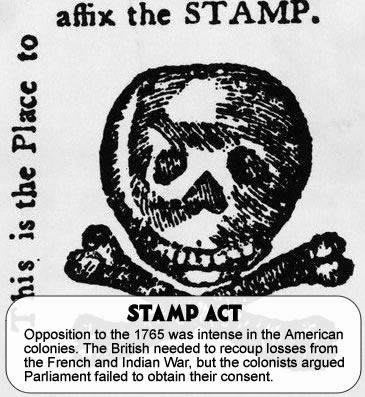
The French and Indian War proved extremely expensive. In fact, Prime Minister William Pitt nearly bankrupted Parliament to pay for fighting a war overseas. Parliament enacted the Sugar Act in 1764. The Sugar Act imposed new duties (taxes) on American commodities such as sugar, molasses, textiles, coffee and indigo. Unlike previous taxes, this tax was enforced and accused smugglers were prosecuted. American colonists were enraged by the Sugar Act because they did not think they should be taxed in the same way British residents were. For the first time, as the Virginia House of Burgesses asserted, the famous words, "no taxation without representation" were uttered. American colonists argued that they should not be subjected to taxes unless they had elected representatives in Parliament. To make matters worse, Parliament passed the Stamp Act on March 22, 1765. The Stamp Act required Americans to purchase tax stamps for any printed documents including newspapers, legal documents, marriage licenses and more. On March 24th, Parliament passed the Quartering Act which required Americans to provide housing and provisions to British soldiers. Colonists wondered why troops were being sent to America after the French and Indian War. Many believed the troops were sent over to suppress freedoms Americans had enjoyed. Opposition to the Stamp Act was universal. In 1765, the Massachusetts General Court organized opposition to the Stamp Act. Representatives from nine colonies drafted a petition calling for the repeal of the Stamp Act. Street mobs, calling themselves the Sons of Liberty, destroyed royal offices in Massachusetts and New York. When the Stamp Act was to be officially implemented, on November 1, 1765, all stamp agents sent over from England had been intimidated into resigning their posts. Meanwhile, Americans increasingly imported goods illegally which caused British merchants and manufacturers to lose business. Some, such as Samuel Adams, began to call for independence because Parliament had exceeded its authority. In March of 1766, Parliament agreed to repeal the Stamp Act, but passed the Declaratory Act which reaffirmed their right to pass any law in America. Discussion Questions
Glossary
The Cost of WarThe French and Indian War cost a lot of money. British Prime Minister William Pitt spent so much that Parliament almost ran out of money. To raise funds, Parliament passed the Sugar Act in 1764. It taxed sugar, molasses, coffee, textiles, and indigo. For the first time, the law was strongly enforced, and smugglers were punished. Colonists were angry because they were being taxed without having a say in Parliament. This led to the famous phrase, "no taxation without representation." The Stamp and Quartering ActsIn 1765, Parliament passed the Stamp Act. This law made colonists buy tax stamps for printed items like newspapers, legal papers, and marriage licenses. Two days later, Parliament also passed the Quartering Act. This law forced colonists to house and feed British soldiers. Many Americans questioned why soldiers were still in the colonies after the war ended. Colonial Anger GrowsMany people across the colonies opposed the Stamp Act. In Massachusetts, leaders from nine colonies met to ask for its repeal. Protesters, called the Sons of Liberty, destroyed royal offices. When the law was supposed to start, all the stamp agents had quit because of threats. Colonists also began smuggling goods, hurting British businesses. Some leaders, like Samuel Adams, started thinking about independence. In 1766, Parliament repealed the Stamp Act but passed the Declaratory Act to say it still had full control over the colonies. |
| Stamp Act Activities |
|