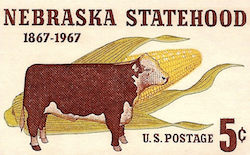
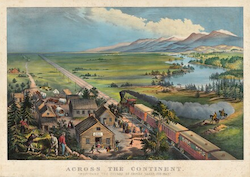
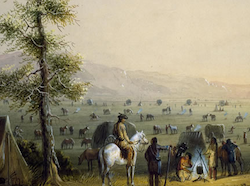
Nebraska's history began with Native American tribes inhabiting the plains for thousands of years before European exploration and westward expansion brought settlers in the 1800s. It became the 37th state in 1867, playing a key role in westward migration as a hub for pioneers traveling the Oregon, California, and Mormon Trails.
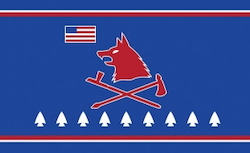
The Pawnee Nation is a Native American tribe originally from present-day Kansas and Nebraska, known for their earth lodge villages and complex social structure. In the 19th century, they were forcibly relocated to Indian Territory in present-day Oklahoma, where the Pawnee Nation is headquartered today.
The Sioux are a group of Native American tribes that traditionally lived in the Great Plains, including present-day North and South Dakota, Minnesota, and Nebraska. Known for their skilled horseback riding, buffalo hunting, and strong warrior culture, the Sioux played a central role in resisting U.S. expansion during the 19th century.
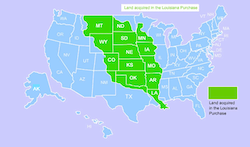
The Louisiana Purchase was a land deal in 1803 where the United States bought a large area of land from France. This purchase doubled the size of the U.S. and included land that would become all or part of 15 states, including Nebraska.
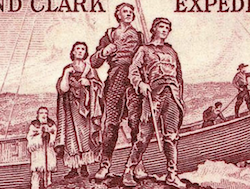
The Lewis and Clark Expedition, led by Meriwether Lewis and William Clark from 1804 to 1806, was a journey to explore the newly acquired Louisiana Territory and find a water route to the Pacific Ocean. Their expedition provided valuable maps, scientific data, and strengthened American claims to the western lands.
Manifest Destiny was the 19th-century belief that the United States was destined by God to expand its territory across North America. It was used to justify westward expansion, the displacement of Native Americans, and wars such as the Mexican-American War.
Westward Trails Interactive Tours
Several of the famed westward trails meandered through the state of Nebraska along the Missouri and Platte Rivers.
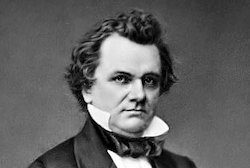
The Kansas-Nebraska Act of 1854 allowed settlers in those territories to decide for themselves whether to allow slavery, effectively repealing the Missouri Compromise. This led to violent conflict in "Bleeding Kansas" and intensified national tensions over slavery, pushing the country closer to civil war.