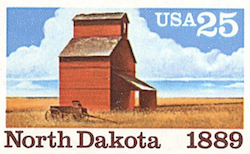
North Dakota became a state in 1889, joining the Union alongside South Dakota as part of America’s westward expansion. Its history is deeply rooted in Native American heritage, farming, and the development of the Great Plains.
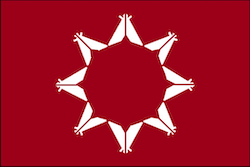
The Sioux are a group of Native American tribes that traditionally lived in the Great Plains, including present-day North and South Dakota, Minnesota, and Nebraska. Known for their skilled horseback riding, buffalo hunting, and strong warrior culture, the Sioux played a central role in resisting U.S. expansion during the 19th century.
The Ojibwe, also known as Chippewa, are one of the largest Indigenous groups in North America, traditionally living around the Great Lakes region. They are known for their rich oral traditions, birchbark canoes, and skilled use of natural resources like wild rice.
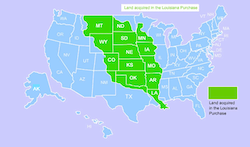
The Louisiana Purchase was a land deal in 1803 where the United States bought a large area of land from France. This purchase doubled the size of the U.S. and included land that would become all or part of 15 states, including North Dakota.
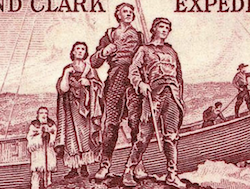
The Lewis and Clark Expedition, led by Meriwether Lewis and William Clark from 1804 to 1806, was a journey to explore the newly acquired Louisiana Territory and find a water route to the Pacific Ocean. Their expedition provided valuable maps, scientific data, and strengthened American claims to the western lands.
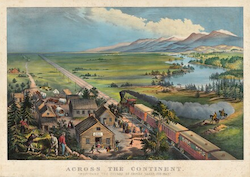
Manifest Destiny was the 19th-century belief that the United States was destined by God to expand its territory across North America. It was used to justify westward expansion, the displacement of Native Americans, and wars such as the Mexican-American War.
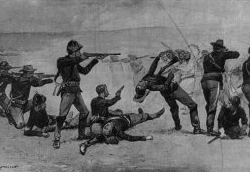
The Dakota Wars were a series of violent conflicts between the Dakota (Sioux) people and American settlers in Minnesota. Sparked by broken treaty promises and widespread starvation, the war led to hundreds of deaths and ended with mass executions and the forced removal of the Dakota from their homeland.