 |
The History of Tennessee
Tennessee was originally part of North Carolina before becoming its own territory in 1790 and achieving statehood in 1796 as the 16th state. It played a key role in westward expansion and was a major battleground during the Civil War. |
|
 |
Shawnee Nation
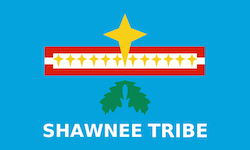
The Shawnee Nation is a Native American tribe originally located in the Ohio Valley region, known for their skilled diplomacy and resistance against colonial expansion. Today, Shawnee communities primarily reside in Oklahoma, preserving their language, culture, and traditions. |
|
 |
Cherokee
The Cherokee are one of the largest Native American tribes, originally inhabiting the southeastern United States, including parts of Georgia, Tennessee, and the Carolinas. Known for their sophisticated society, farming practices, and the creation of a written language by Sequoyah, the Cherokee were forcibly removed from their land in the 1830s during the Trail of Tears. |
|
 |
Treaty of Fort Stanwix
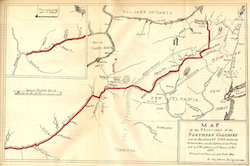
The Treaty of Fort Stanwix was a treaty signed on November 5, 1768, between representatives of the British Crown and the Iroquois Confederacy, which established a boundary line between British colonial settlements and Indian lands in what is now western New York state. |
|
 |
Secession of the Southern States
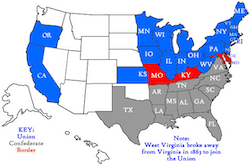
The secession of Southern states in 1860 and 1861, initiated by South Carolina, was a direct response to the election of Abraham Lincoln, whose anti-slavery stance threatened the institution central to the Southern economy and way of life. This collective withdrawal from the Union led to the formation of the Confederate States of America, setting the stage for the outbreak of the Civil War. |
|
 |
Civil War
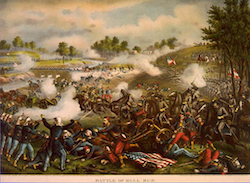
The American Civil War (1861–1865) was fought between the Northern states (Union) and the Southern states that seceded to form the Confederacy, primarily over the issues of slavery and states’ rights. It resulted in the preservation of the Union and the abolition of slavery, but at the cost of over 600,000 lives. |
|
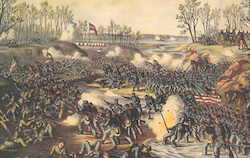 |
Battle of Shiloh Church (Pittsburg Landing)
The Battle of Shiloh Church, fought on April 6–7, 1862, was a brutal clash in Tennessee where Confederate forces launched a surprise attack against Union troops under General Ulysses S. Grant. Although the Confederates gained early ground, Union reinforcements arrived overnight, leading to a powerful counterattack that forced a Confederate retreat and resulted in over 24,000 casualties—the bloodiest battle in American history up to that point. |
|
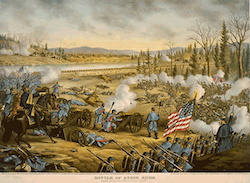 |
Battle of Stones River
The Battle of Stones River, fought from December 31, 1862, to January 2, 1863, was one of the bloodiest battles of the Civil War, with nearly one-third of all soldiers killed, wounded, or captured. Though the battle ended in a tactical draw, it gave the Union control of Nashville and middle Tennessee, a key strategic victory.
|
|
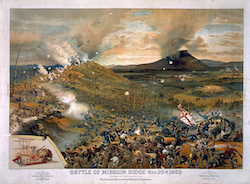 |
Battle of Chattanooga
The Battle of Chattanooga took place in November 1863 and resulted in a major Union victory that broke the Confederate siege of the city. This victory gave the Union control of a key railroad hub and opened the gateway for General Sherman’s advance into the Deep South. |
|
|