Illinois became a U.S. state in 1818, growing rapidly due to its central location and transportation networks like the Illinois and Michigan Canal. It played a key role in westward expansion and was home to Abraham Lincoln before he became president.
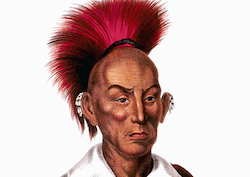
The Fox people, also known as the Meskwaki, originally lived in the Great Lakes region, including parts of present-day Illinois. They were known for their resistance to French colonization and later allied with the Sauk tribe after being driven from their homeland.
Robert Sieur de La Salle was a French explorer who claimed the entire Mississippi River Basin for France in 1682, naming it Louisiana. His ambitious expeditions expanded French influence in North America, though his final colonization attempt ended in disaster and his own death.
The Northwest Territory was a vast area of land in the early United States, stretching from the Great Lakes to the Ohio River and including parts of modern-day Ohio, Indiana, Illinois, Michigan, Wisconsin, and Minnesota. It was gained after the British ceded it following the French and Indian War and eventually became the foundation for several new states.
The Black Hawk War was a conflict between the U.S. military and the Sauk and Fox tribes in 1832, led by the Sauk leader Black Hawk, as they resisted being displaced from their lands in Illinois. After a series of battles, Black Hawk and his followers were defeated, and the U.S. government forced them to surrender and give up their land.
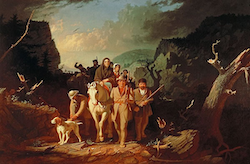
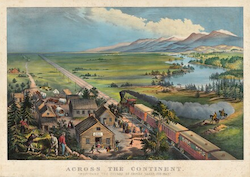
Manifest Destiny was the 19th-century belief that the United States was destined by God to expand its territory across North America. It was used to justify westward expansion, the displacement of Native Americans, and wars such as the Mexican-American War.
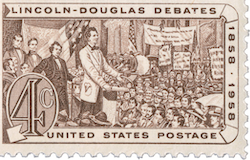
The Lincoln-Douglas debates of 1858 highlighted the deep national divide over slavery, with Lincoln opposing its expansion and Douglas defending popular sovereignty. These public debates intensified sectional tensions and helped shape the political conflict that would eventually lead to the Civil War.
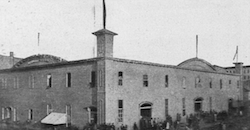
The Republican National Convention of 1860 marked the rise of a political party firmly opposed to the expansion of slavery, with the nomination of Abraham Lincoln symbolizing a clear challenge to Southern interests. Lincoln’s selection deepened sectional tensions and led many Southern states to view his potential presidency as a threat, prompting the move toward secession and ultimately the Civil War.