 |
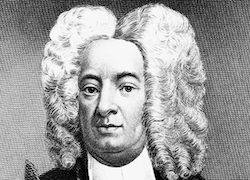
Cotton Mather
Cotton Mather was a prominent Puritan minister and author in colonial Massachusetts, known for his influence during the Salem Witch Trials. He also supported science and public health, including promoting smallpox inoculation. |
|
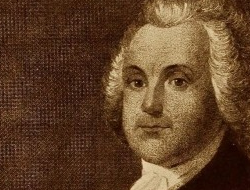 |
Roger Williams
Roger Williams was a Puritan minister who was banished from Massachusetts for his views on religious freedom and separation of church and state. He founded Rhode Island, where people of all faiths could worship freely. |
|
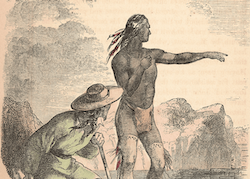 |
Squanto
Squanto was a member of the Patuxet tribe who was kidnapped, taken to England, and later returned to North America, where he helped the Pilgrims survive by teaching them how to farm and fish. He played an important role as a translator and peacemaker between the Wampanoag people and the English settlers. |
|
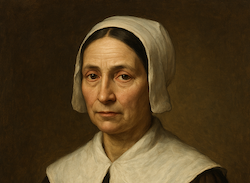 |
Anne Hutchinson
Anne Hutchinson was a Puritan spiritual leader who challenged the strict religious rules of the Massachusetts Bay Colony in the 1630s. Her outspoken beliefs led to her trial and banishment, making her an early symbol of religious freedom in America. |
|
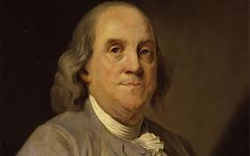 |
Benjamin Franklin
Benjamin Franklin was a Founding Father, inventor, writer, and diplomat who played a key role in drafting the Declaration of Independence and the U.S. Constitution. He is also known for his scientific discoveries, including experiments with electricity, and for founding institutions like the first public library and the University of Pennsylvania. |
|
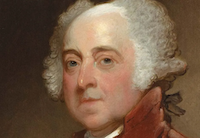 |
John Adams
John Adams (1735–1826) was a Founding Father, the 2nd President of the United States, and a leading advocate for American independence. He played a crucial role in drafting the Declaration of Independence and negotiating the Treaty of Paris, which ended the Revolutionary War. |
|
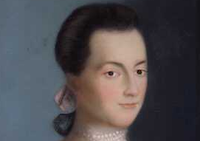 |
Abigail Adams
Abigail Adams (1744–1818) was the wife of President John Adams and one of the most influential First Ladies in U.S. history. She is remembered for her extensive letters advocating for women’s rights, famously urging her husband to “remember the ladies” when forming the new nation’s laws. |
|
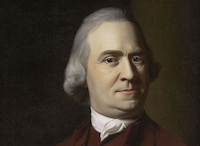 |
Samuel Adams
Samuel Adams (1722–1803) was a Founding Father and a key organizer of resistance to British rule in the years leading up to the American Revolution. He helped coordinate the Boston Tea Party and was a strong advocate for colonial independence. |
|
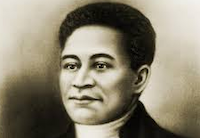 |
Crispus Attucks
Crispus Attucks (c. 1723–1770) was a dockworker of African and Native American descent who is widely regarded as the first person killed in the Boston Massacre. His death made him an early martyr for the cause of American independence. |
|
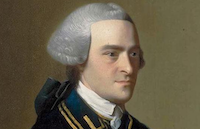 |
John Hancock
John Hancock (1737–1793) was a wealthy merchant, patriot leader, and president of the Second Continental Congress. He is best remembered for his bold and prominent signature on the Declaration of Independence. |
|
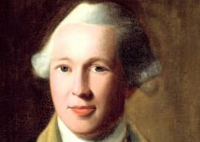 |
Dr. Joseph Warren
Dr. Joseph Warren (1741–1775) was a Boston physician, patriot leader, and early hero of the American Revolution. He played a key role in organizing resistance to British rule and was killed while fighting at the Battle of Bunker Hill. |
|
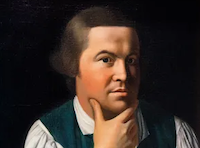 |
Paul Revere
Paul Revere (1734–1818) was a Boston silversmith, patriot, and Revolutionary War messenger. He is most famous for his “Midnight Ride” on April 18, 1775, warning colonial militias that British troops were advancing toward Lexington and Concord. |
|
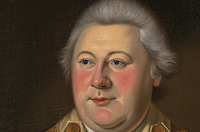 |
Henry Knox
Henry Knox (1750–1806) was a Continental Army general and close aide to George Washington during the American Revolution. He is best known for transporting captured artillery from Fort Ticonderoga to Boston, a feat that helped drive the British from the city. |
|
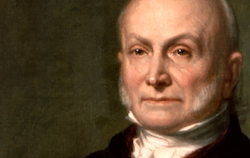 |
John Quincy Adams
John Quincy Adams was the sixth president of the United States, serving from 1825 to 1829. He was known for his strong stance against slavery and later served in the U.S. House of Representatives for many years. |
|
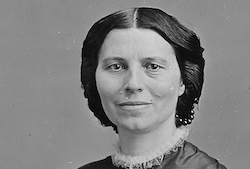 |
Clara Barton - Angel of the Battlefield
Clara Barton was a pioneering nurse and humanitarian who founded the American Red Cross. Known as the “Angel of the Battlefield,” she provided critical medical supplies and support to soldiers during the Civil War. |
|
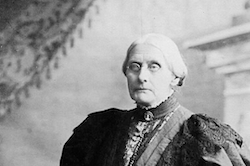 |
Susan B. Anthony
Susan B. Anthony was a leading activist in the women’s suffrage movement who fought tirelessly for equal rights. She played a key role in helping women gain the right to vote, and her efforts helped lead to the passage of the 19th Amendment in 1920. |
|
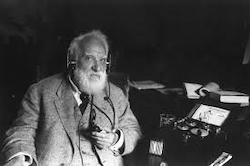 |
Alexander Graham Bell
Alexander Graham Bell was an inventor and scientist best known for inventing the first practical telephone in 1876. He also worked on groundbreaking projects in communication for the deaf, aviation, and hydrofoils. |
|
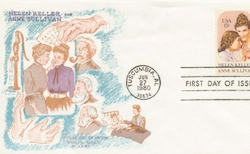 |
Helen Keller
Born in Tuscumbia, Alabama, Helen Keller was a deaf-blind author, activist, and lecturer who overcame extraordinary challenges to become a global advocate for people with disabilities. She was the first deaf-blind person to earn a college degree. |
|
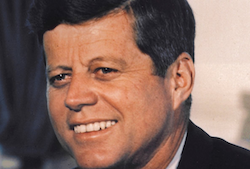 |
John F. Kennedy
John F. Kennedy was the 35th president of the United States, serving from 1961 until his assassination in 1963. He is remembered for events like the Cuban Missile Crisis, the Space Race, and his call to “ask not what your country can do for you.” |
| |
|
|
| |