 |
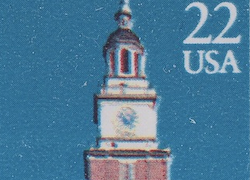
The History of Pennsylvania
Pennsylvania was founded in 1681 by William Penn as a haven for Quakers and a colony promoting religious freedom and tolerance. It became an important center for trade, agriculture, and politics, later playing a key role in the American Revolution as the site of the Continental Congress and the signing of the Declaration of Independence. |
|
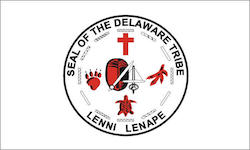 |
Lenni Lenape Nation
The Lenni Lenape, also known as the Delaware people, originally lived in the Northeastern United States, including present-day New Jersey, Pennsylvania, and New York. They were known for their farming, clan-based society, and early treaties with European settlers, including a famous agreement with William Penn. |
|
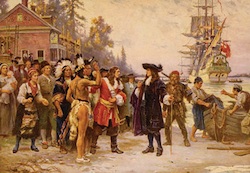 |
Pennsylvania Colony
The Pennsylvania Colony was founded in 1681 by William Penn as a haven for Quakers and others seeking religious freedom. It quickly grew into a prosperous and diverse colony known for its tolerance, fertile farmland, and thriving city of Philadelphia. |
|
 |
Establishment of the Mason-Dixon Line - The War for Delaware
The Mason-Dixon Line was established in the 1760s by surveyors Charles Mason and Jeremiah Dixon to settle a boundary dispute between Maryland and Pennsylvania. Over time, it became an important symbolic divider between the Northern and Southern states. |
|
 |
The Quakers
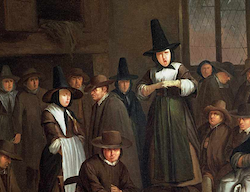
The Quakers, also known as the Religious Society of Friends, were a Christian group that believed in equality, nonviolence, and direct communication with God without formal clergy. They played a key role in founding Pennsylvania and were known for their tolerance and opposition to slavery. |
|
 |
French and Indian War
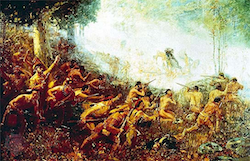
The French and Indian War, also known as the Seven Years War, began in the Spring in 1754. The dispute arose over the presence of British and French settlers in the Ohio River Valley (in and around present day Pittsburgh, Pennsylvania), but resulted in battles that were fought far from there. |
|
 |
Fort Duquesne
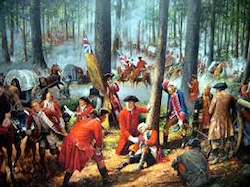
The Battle of Fort Duquesne (1758) was a key clash during the French and Indian War, where British forces attempted to capture the French stronghold at the forks of the Ohio River. Although the British eventually seized and rebuilt it as Fort Pitt, their initial assaults were repelled by French troops and Native American allies.
|
|
 |
Pontiac's Rebellion
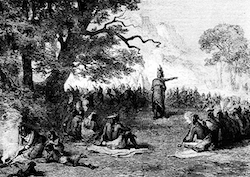
Pontiac's Rebellion was a war waged by Indians of the Great Lakes region against British rule after the French and Indian War. The Indians, who had formed alliances with the defeated French, were dissatisfied with treatment from British officials. |
|
 |
The First Continental Congress
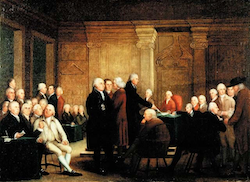
In response to the Intolerable Acts, America’s first Continental Congress met on September 5, 1774. 56 delegates from 12 colonies met at Carpenter’s Hall in Philadelphia to discuss a unified position and Parliament’s assertion that it could control the colonies. Georgia was the only colony that refused to send a delegate. |
|
 |
Second Continental Congress
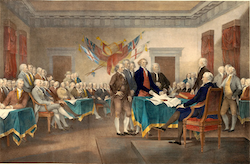
The Second Continental Congress met in 1775 after the start of the American Revolution and began acting as the government for the colonies. It created the Continental Army, appointed George Washington as its leader, and eventually approved the Declaration of Independence in 1776. |
|
 |
Revolutionary War
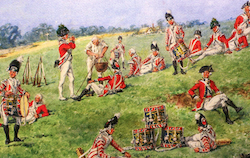
The American Revolutionary War (1775–1783) was a conflict between the thirteen American colonies and Great Britain, resulting in the colonies gaining independence. It began with growing tensions over British taxation and governance and ended with the Treaty of Paris, which recognized the United States as a sovereign nation. |
|
 |
The Declaration of Independence
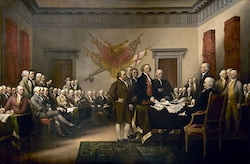
The Declaration of Independence is a historic document written in 1776 that explained why the American colonies chose to break away from British rule. It stated that all people have rights and that governments must have the consent of the governed to be legitimate.
|
|
|
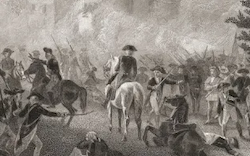
Battle of Brandywine Creek
The Battle of Brandywine Creek, fought on September 11, 1777, was a major British victory during the American Revolutionary War, where a surprise flanking maneuver overwhelmed George Washington’s forces and led to the capture of Philadelphia. |
|
 |
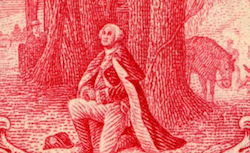
The Battle of Germantown
he Battle of Germantown, fought on October 4, 1777, was a bold attempt by George Washington to surprise the British. Though the attack failed due to heavy fog and confusion, it helped gain international attention for the American cause. |
|
 |
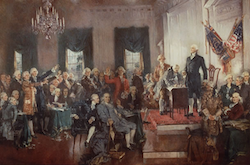
The Winter of 1777-1778 at Valley Forge
Although not a battle in the traditional sense, the Winter at Valley Forge was a battle for survival. One in six soldiers who spent the winter here died of exposure, disease, or starvation. Those who survived, however, became part of a capable military machine. |
|
 |
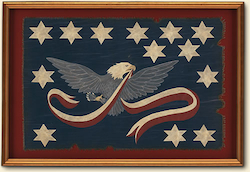
Constitutional Convention
The Constitutional Convention was held in Philadelphia in 1787 to address the weaknesses of the Articles of Confederation. Delegates from twelve states ultimately created a new U.S. Constitution, establishing a stronger federal government with three branches. |
|
 |
Whiskey Rebellion
The Whiskey Rebellion of 1794 was a protest by farmers in western Pennsylvania against a federal tax on whiskey, which they saw as unfair and harmful to their livelihoods. President George Washington led federal troops to suppress the uprising, demonstrating the new government's strength and ability to enforce its laws. |
|
 |
Civil War
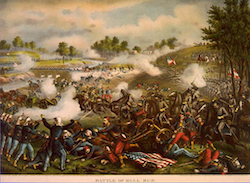
The American Civil War (1861–1865) was fought between the Northern states (Union) and the Southern states that seceded to form the Confederacy, primarily over the issues of slavery and states’ rights. It resulted in the preservation of the Union and the abolition of slavery, but at the cost of over 600,000 lives. |
|
 |
The Battle of Gettysburg
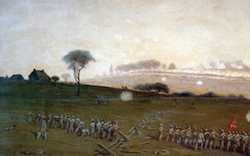
The Battle of Gettysburg, fought from July 1–3, 1863, was the largest and deadliest battle of the American Civil War, resulting in over 50,000 casualties. It marked a turning point in the war, ending General Robert E. Lee’s invasion of the North and giving the Union a critical strategic victory.
|
|